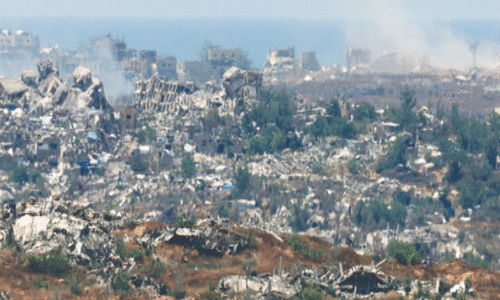
Gaza faces ‘critical risk of famine’: UN report


BEIRUT: Half a million people in the Gaza Strip face starvation, a global hunger monitor said on Monday, warning the Israeli-blockaded enclave faces a high risk of famine by the end of September.
The Integrated Food Security Phase Classification (IPC) report cited a significant deterioration since October. It forecast that 2.1 million people across Gaza — roughly the entire population — will likely experience high levels of acute food insecurity, with 469,500 projected at “catastrophic” levels — the most severe stage. The previous IPC analysis in October found 133,000 people in that category.
Israel sealed off Gaza in early March when it resumed military action against Hamas after a ceasefire collapsed.
Israeli government spokesperson David Mencer said the IPC had “constantly talked about famine; famine has never happened because of Israel’s efforts to get more aid in.” He blamed Hamas for causing hunger by allegedly stealing aid. Hamas denies this, accusing Israel of using starvation as a weapon.
Warns half a million people face starvation
The IPC report stated that Israeli military plans and aid agencies’ “persistent inability” to deliver essential goods mean a “high risk” of famine during the May 11 to Sept 30 projection period.
“Immediate action is essential to prevent further deaths, starvation and acute malnutrition, and a descent into famine,” the report urged. Famine declaration requires at least 20 per cent of people facing extreme food shortages, high child malnutrition, and elevated death rates from starvation or related diseases.
The report projected that nearly 71,000 cases of acute malnutrition, including 14,100 severe cases, among children, aged 6 to 59 months, were expected to occur between April 2025 and March 2026.
The report “really demonstrates that the situation in Gaza has deteriorated quite dramatically in recent months,” said Beth Bechdol, deputy director of the UN Food and Agriculture Organisation. She noted the blockade since early March “has really prevented the delivery of essential humanitarian and even commercial supplies.”
While noting that the two-month-long ceasefire had allowed for a temporary alleviation of acute food shortages and malnutrition, the IPC report said the ongoing blockade had reversed the situation. The key findings showed that 1.95 million people, or 93pc of the population in the coastal enclave, are living through high levels of acute food insecurity, including 244,000 experiencing the most severe, or “catastrophic”, levels.
Published in Dawn, May 13th, 2025