THOUGH the guns may have fallen silent on both sides, the Indian state continues to dangle the threat of stopping Pakistan’s rightful access to transboundary rivers.
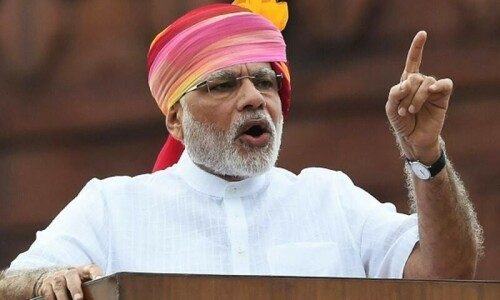
Speaking at an event in Rajasthan recently, Indian Prime Minister Narendra Modi is reported to have said that Pakistan would not have access to ‘Indian rivers’, in a reference to New Delhi’s holding ‘in abeyance’ the Indus Waters Treaty.
Mr Modi also threatened to make Pakistan’s economy ‘pay’ for ‘terrorism’. Such bombast repeatedly being deployed by the Indian leader, perhaps to mollify domestic critics, after India’s less than stellar military performance during the recent hostilities, will further poison ties, and set the stage for a fresh conflict.
Simply put, India’s attempt to unilaterally scrap or alter the IWT is legally indefensible, while threatening to stop Pakistan’s share of water is tantamount to a declaration of war against this country.
India had been wanting to alter the IWT for some time; arguably, the post-Pahalgam hostilities gave New Delhi a convenient chance to ditch its legal commitments. As legal experts have observed, India cannot unilaterally hold the IWT in abeyance, while tinkering with river flows to Pakistan and thereby weaponising water contravenes the relevant Geneva Convention.
Moreover, the UN’s SDG 6.5 urges parties to “implement integrated water resources management … including through transboundary cooperation”. In the light of these multilateral treaties and international conventions, India’s aggressive posture vis-à-vis shared waters has very shaky legal standing, if not being blatantly illegal, while Pakistan ethically has the moral high ground, being the lower riparian.
South Asia’s waters are a common, shared resource, and must be distributed justly and equitably for the well-being of its people. However, if India insists on weaponising water, it will create a permanent state of hostility and conflict in the subcontinent, as Pakistan cannot afford to surrender its legitimate rights over the waters of the Indus system.
There is no need to panic, as experts say it will take time for India to divert the waters. However, Pakistan cannot be complacent either, as in the long term, the country may face serious problems if the IWT is not upheld.
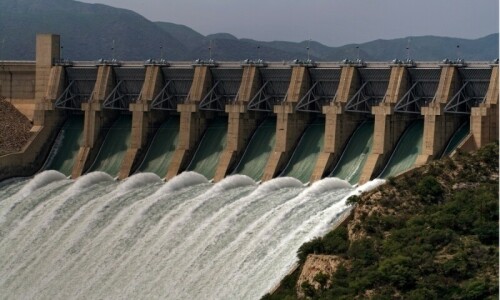
India has already given a ‘preview’ of its intentions by blocking the flows of the Chenab to Pakistan. It could also cause havoc by releasing water downstream without warning.
Therefore, as it emerged in a Senate discussion on Friday, there is a need to rise above party lines to secure our water rights. The prime minister and other representatives have embarked on a regional outreach mission. Among other issues, Pakistan must brief its foreign friends about India’s dubious intentions regarding shared waters, and how these reckless moves can sow the seeds of a fresh conflict in South Asia.
Published in Dawn, May 25th, 2025