The province of Sindh, a traditional favourite for migratory birds, saw the most drastic decline in the number of migratory birds due to climate change, with a staggering drop of over 50 per cent in two years.
The country’s once-thriving wetlands, long a sanctuary for millions of migratory birds fleeing Siberia’s brutal winters, are witnessing a disturbing decline in avian visitors.
Experts warn that a mix of prolonged drought, receding water levels, and growing habitat degradation is driving away these seasonal guests — some possibly for good.
According to the Sindh Wildlife Department’s 2024-25 waterfowl count, the number of migratory birds fell sharply from 1.2 million in 2023 to 603,900 in 2024 and just 545,000 this year, a staggering drop of over 50pc in two years.
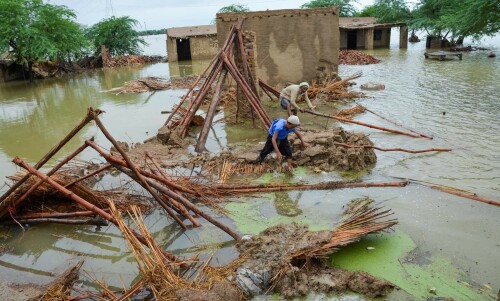
In 2023, the region experienced an exceptional influx of birds, buoyed by the lingering effects of the catastrophic 2022 floods that, while devastating for communities, temporarily revived Pakistan’s lakes, streams, and lagoons.
The excessive rainfall had replenished many wetlands, making them ideal resting spots for birds making the 4,500-kilometre journey from Siberia to India via the Indus flyway, with stopovers at various lakes and water reservoirs in Pakistan.
However, this year tells a different story.
“Sindh has long been a refuge for migratory birds because of its unique biodiversity and its many lakes, lagoons and other waterways,” Mumtaz Soomro, an official from the Sindh Wildlife Department, told Anadolu Agency.
“But those numbers have seen a gradual decline since 2023 due to receding water levels and droughts.”
Soomro explained that the latest survey — covering 40pc of Sindh’s territory — found notable shortages at key bird habitats, including Manchar, Keenjhar, Hamal and Haleji lakes, Nareri lagoon, and the Rann of Kutch wildlife sanctuary.
These sites, some of which are Ramsar-certified wetlands of international importance, have been pivotal stopovers for migratory birds for decades.
According to Britannica, the Ramsar Convention is an intergovernmental treaty signed in Ramsar, Iran, in 1971 to guide national and international wetland-conservation measures.
“During the survey, our teams reported water shortages at most of the sites, including the marshy Rann of Kutch wildlife sanctuary,” he said.
Shadow of past flocks
The migration is seasonal, with birds arriving by late August and departing by February. Among the over 50 recorded species were gulls, mallards, plovers, snipes, cormorants, cranes, and storks.
The highest number of birds — 112,000 — was spotted at Nareri lagoon, followed by 91,000 at Rann of Kutch.
But even these numbers are a shadow of past flocks.
Zohaib Ahmed, a Karachi-based ornithologist, said climate change is not the only factor pushing migratory birds away from Pakistan, as man-made habitat degradation, pollution, and illegal hunting also play a significant role.
“Human-induced changes and rampant human interference, often in the name of development, has exposed these fragile ecosystems of wetlands to a string of threats,” Ahmed told Anadolu.
He emphasised that if the current trends of environmental neglect persist, Pakistan could lose its status as a preferred stopover for these avian travelers.
While the situation is particularly dire in Sindh, other provinces are also feeling the effects.
In Punjab, although the latest survey is still underway, officials estimate a similar downward trend.
“The decline is not sudden. It’s gradual, and the outcome of climate change, mainly water shortages, seasonal disturbances, and lingering heat spells,” said Mudasser Hasan, deputy chief at the Wildlife Rangers Punjab.
Hasan confirmed that the health of Pakistan’s wetlands has deteriorated in recent years, largely due to climate-related shifts.
“The arrival of these birds in Pakistan is a seasonal migration, and it has understandably been disturbed because of seasonal disturbances,” he noted.
Pakistan ranks among the top 10 countries globally most vulnerable to climate change, with experts warning that erratic monsoon patterns, glacial melt, and rising temperatures are placing unprecedented pressure on natural ecosystems, including those vital to bird migration.
Despite the alarming trends, some officials argue that threats like poaching and trapping have been brought under control.
“Hunters and poachers are there but they do not pose a major threat to migratory birds. It’s climate change that really haunts them,” said Hasan, adding that provincial authorities have tightened anti-wildlife hunting laws in recent years.
But not everyone agrees.
Ahmed, the ornithologist, contests this assessment, particularly in Sindh: “At least for Sindh, I can say with surety that there is no drop in hunting and trapping of migratory birds, especially in the Kirthar mountain range and Karachi’s coastal belt.”
He added that several migratory species are still being openly sold at illegal bird markets, undermining conservation efforts and contributing further to the birds’ decline.