Chenab inflows from India reduce by 91,000 cusecs in last two days: Wapda


A reduction of 91,000 cusecs in water flows from India into Chenab River was recorded in the past two days, the Water and Power Development Authority (Wapda) said on Saturday.
Delhi suspended its participation in the 1960 Indus Waters Treaty (IWT), which governs the usage of the Indus river system, on April 23, shortly after 26 civilians were killed in India-held Kashmir. Delhi, without evidence, blamed Islamabad for the attack. The latter has denied the allegations and called for a neutral probe.
Despite the two nuclear-armed neighbours agreeing to a ceasefire this month following the worst fighting between them in decades, the accord remains “in abeyance” by India.
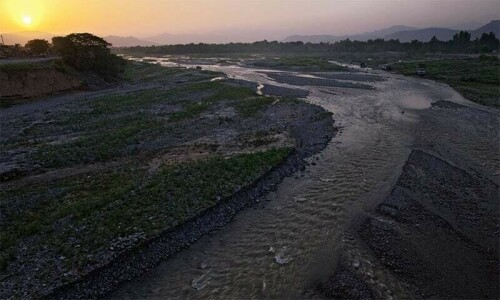
According to data provided by Wapda today, the inflow of water at Chenab River at Marala Headworks was 98,200 cusecs on May 29, before dropping to 44,800 cusecs yesterday. The inflows plunged further to 7,200 cusecs today, with no water discharged.
Overall, a reduction of 91,000 cusecs in the inflow of water at Chenab River at Marala Headworks was recorded in the last two days.
The Flood Forecasting Division of the Pakistan Meteorological Department categorised the flow at Marala Barrage as “normal” and showed a falling trend.
Chenab River water flows had also been impacted when India virtually stopped water discharges from it into Pakistan without prior notice on May 5, just before the two countries’ military escalation.
A senior official of the Punjab irrigation department had said at the time that India was using Pakistan’s water “to fill up their dams/hydropower projects in the Chenab basin”.
He noted that Marala Headworks was located 76 kilometres away from Salal Dam, one of India’s three hydropower projects in the Chenab basin.
According to the official, Chenab is very important for Pakistan’s irrigation system as its canals, including the Upper Chenab and Bambawali-Ravi-Bedian canals, irrigate a vast tract of agricultural land in Punjab.
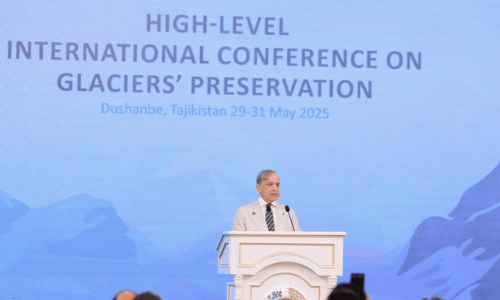
Rejecting the weaponisation of water by India, Prime Minister Shehbaz Sharif yesterday warned that Pakistan would not allow Delhi to cross the red line by holding the IWT in abeyance and endangering millions of lives for narrow political gains.
His statement came after India’s PM Narendra Modi threatened that Pakistan would not get water from rivers over which India had “rights”.
Even after the ceasefire, Modi had ordered officials to expedite the planning and execution of projects on the Chenab, Jhelum and Indus rivers — three bodies of water in the Indus system that are designated primarily for Pakistan’s use, six people told Reuters.
The Pakistan Commission on Indus Waters (PCIW) has finalised a detailed report on the IWT violations by India, including the construction of three hydroelectric projects at the western rivers, including Jhelum and Chenab.