The last email Naim Sahib sent me is dated June 29, 2025 with the subject ‘an extraordinary novel.’ He seemed animated after having finished The Return of Faraz Ali by Aamina Ahmed.
A recommendation from Naim Sahib for a book of fiction or non-fiction or an article or a feature to be read was not unusual. He remained a voracious reader all his life but it seems that his pace of reading increased as he grew older, because of fewer academic and tutorial responsibilities. He would also send weblinks to articles, essays, news stories and music compositions — sometimes with a qualification that these were pieces which he entirely or partly may not agree with.
Naim Sahib would only get excited about a work if he had either enjoyed the narrative and style or felt provoked by the rigorous arguments and informed assertions made by the writer. On another occasion, he insisted that I read and then also write about Manan Ahmed Asif’s The Loss of Hindustan: The Invention of India.
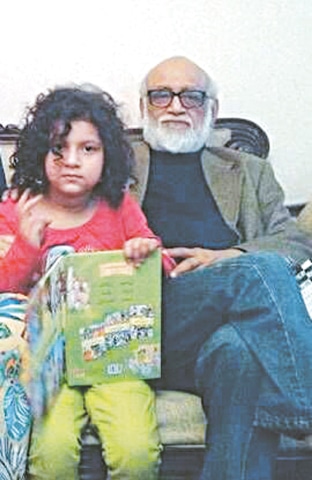
Choudhri Mohammed Naim, or C.M. Naim as he was widely known, was a giant of a scholar on oriental languages and the history of the Subcontinent whose impact on Urdu pedagogy cannot be overestimated. Born in 1936 in Barabanki, Uttar Pradesh, India, he studied at Lucknow University and Deccan College in Pune. After moving from India to the US, he completed his doctoral thesis at the University of California, Berkeley. He taught and researched across many prominent American and Indian universities but remained primarily associated with the University of Chicago since 1961. Readers can find many of his publications online and also through a website made in his pen name, cmnaim.com.
C.M. Naim was a giant of a scholar whose range of interests was large and expansive — from oriental literature and languages to fine arts, history and politics. He breathed his last on July 9, 2025 in Chicago, at the age of 89
Naim Sahib was steeped in Urdu literature, literary history and literary criticism with an equal grasp over Arabic, Persian and Sanskrit. He was a master of Urdu and Hindi etymologies. But his range of interests was large and expansive, both in terms of his reading and and his writing. From the different genres of fine arts to history and politics and the wider landscape of South Asian languages and literature, he embraced every discipline with equal passion.
Last month, he shared a link to a feature published in the UK newspaper Guardian, on how some Pakistanis have fallen in love with Japanese cuisine. Earlier, this year he sent me a reconstruction by Samungla Damodaran of a version of the epic Punjabi poem Heer. This version was first composed and sung by the left-wing activists of Lahore in 1943 to express solidarity with the victims of the Bengal famine.
I am proud to be one of those lucky individuals who Naim Sahib kept in touch with until the end of his life on July 9. The last time I met him in person was about 10 years ago, in his apartment in Chicago. Since 2001, he had been professor emeritus at the University of Chicago, after retiring as a professor of South Asian Languages and Civilisations. When he came to know about my stint as a writer-in-residence at the University of Iowa, he asked me to come to Chicago. When a mutual friend and his student Taimoor Shahid and I arrived at his place, Naim Sahib, who was about 80 then, was in the kitchen frying pakorras for us.
Another student of Naim Sahib joined us that day and what was supposed to be a brief meeting over coffee turned into a long evening of rich conversations about rising right-wing populism in the world (it was about a year before Donald Trump was elected as the US president for the first time), the new challenges that Indian Muslims must become aware of after Narendra Modi’s ascent to power, different shades of Urdu literature — including both its conservatism and progressivism — and the never-ending myopia of mainstream Urdu journalism.
Naim Sahib was completely secular and pluralistic without being apologetic about his cultural and linguistic inheritance. This demands problematising and dealing with the question of faith in South Asia on a regular basis, which he successfully did.
Naim Sahib visited Pakistan a number of times. Once, he had come to Pakistan in search of some books and manuscripts. He was staying with Dr Tariq Hussain in Islamabad and joked that he would agree to come for dinner at my place the next day if I facilitated his visit to the Rawalpindi Cantonment Library. During the same trip, economist Dr Nadeemul Haque had organised Naim Sahib’s visit to the Punjab Public Library in Lahore after he was denied access for being unknown to them as a scholar. Naim Sahib was among the few in our world of letters who knew what referencing meant before narrating facts, analyses or opinions.
Besides being a literary historian and researcher, Naim Sahib was an exceptional translator and editor. He translated a variety of texts from Hindi and Urdu into English — from those by Qurratul Ain Hyder to Vibhuti Narain Rai and many more. He was the founding editor of the prestigious The Annual of Urdu Studies, published by the University of Wisconsin, Madison, in addition to other journals. He served on various academic and consultative boards of leading universities and publishing houses.
His contributions, primarily to language and linguistics but also on the subjects of politics and society, with a great concern for the development of Muslim women, can be found in more than 20 original works, edited volumes and translated books that he produced and published over his career.
The master poet Jalaluddin Rumi once said: “The way of our prophets is the way of love.” Naim Sahib was a seeker of knowledge, a creator of knowledge, a benefactor of humanity and a true dervish. Naim Sahib was a man in the way of love.
The writer is a poet and essayist
Published in Dawn, Books & Authors, July 20th, 2025