Weak Indian rupee may blunt US tariff bite, say economists
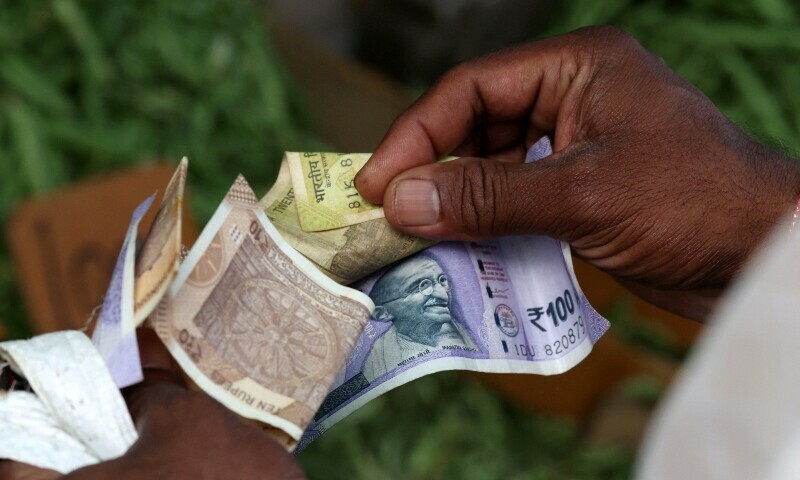

The Indian rupee’s recent slide may help soften the blow from higher US tariffs, economists said, with trade tensions between New Delhi and Washington intensifying under President Donald Trump.
The Indian rupee dropped to 87.8850 per US dollar on Tuesday, nearing its all-time low of 87.95 hit in February. Bankers said the currency would probably have breached the 88 mark if not for likely intervention by the Reserve Bank of India via state-run banks.
The Indian rupee is the worst-performing major Asian currency so far this year. While peers such as the Taiwanese dollar, South Korean won, Singapore dollar and Thai baht have appreciated between 6 per cent and 10pc, the rupee has declined by 2.5pc against the dollar.
The steeper US tariffs imposed on India last week, compared to other Asian countries — along with Trump’s threat of further penalties — are seen keeping the Indian rupee under pressure.
Against a basket of Asian currencies, many of which compete with India in export markets, the rupee has declined 3.9pc since April 1, according to HDFC Bank.
This depreciation provides India a competitive price advantage over trading partners, potentially offsetting at least some part of the impact of higher US tariffs, economists say. India currently faces US tariffs that are about 5-6 percentage points higher than those levied on most other major economies, HDFC Bank said.
“In cases where US consumers try to renegotiate contracts and ask for cost-sharing of tariff burdens, the rupee’s depreciation could provide a meaningful cushion,” said Sakshi Gupta, principal economist at HDFC Bank.
The bank estimates that a sustained 1pc decline in the rupee could offset 2–3 basis points of the drag on GDP growth from higher US tariffs.
“From a structural perspective, it would be helpful if India maintained a competitive real effective exchange rate,” said Dhiraj Nim, forex and rates strategist at ANZ.
Nim noted that most studies show Indian exports are sensitive to real effective exchange.
India’s real effective exchange rate, as per the Reserve Bank of India’s July bulletin, stood at 100.36 in June, suggesting the rupee was broadly fairly valued. In contrast, the rate had touched 108.14 last November, indicating the currency was about 8pc overvalued at the time.
Faced with low domestic inflation and uncertainty over the impact of US tariffs, economists expect the RBI may prefer a weaker rupee over a fairly or over-valued one.