• Diplomatic sources say it was US that ‘blocked’ exemption which would’ve allowed Muttaqi to tour Pakistan
• Spokesperson hints that Pakistan will continue US-Iran messaging role
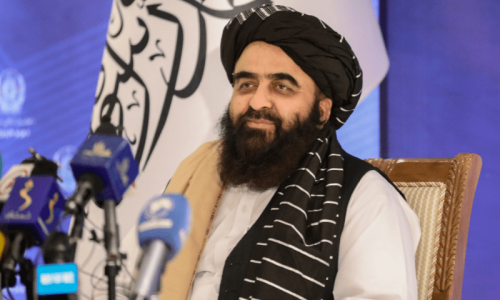
ISLAMABAD: Although a UN Security Council travel ban is widely thought to be behind the cancellation of a planned visit by Afghan Foreign Minister Amir Khan Muttaqi to Islamabad, the Foreign Office on Friday hinted that “procedural issues” had hindered the trip.
“There are certain procedural issues we are working through,” Foreign Office spokesman Shafqat Ali Khan told reporters at the weekly media briefing when pressed about media reports on Muttaqi’s aborted trip.
Mr Muttaqi was expected in Islamabad on August 4, continuing the recent high-level contacts initiated by Deputy Prime Minister and Foreign Minister Ishaq Dar’s visit to Kabul earlier this year, a move that led to a thaw in ties. The rapprochement was brokered by China.
However, the spokesperson clarified that no official dates had been confirmed for the Afghan foreign minister’s visit, so there was “no question of cancellation or postponement”.
However, diplomatic sources told Dawn that the United States had blocked a UN Security Council exemption that would have allowed Mr Muttaqi to travel to Pakistan.
As the Afghan foreign minister is under international sanctions, he requires special approval from the UN sanctions committee for any foreign travel. According to the source, Washington delayed its decision until the last moment and ultimately refused to grant the waiver, scuttling the trip.
As a key player in the UN Security Council, US holds significant sway in the 1988 Sanctions Committee, which manages sanctions like travel bans, asset freezes, and arms embargoes targeting Taliban-linked individuals and groups under UNSC Resolution 1988 (2011). It is believed the US blocked the waiver for Taliban’s FM to visit Pakistan, driven by worries about their growing ties with China.
US has often clashed with China and Russia at the committee, who advocate for more lenient exemptions, creating tensions within the committee’s efforts to promote stability in Afghanistan.
Mr Khan said that both Kabul and Islamabad are working to address the matter and added, “Once these procedural matters are resolved, we look forward to welcoming the Afghan foreign minister to Pakistan.”
When asked whether Washington had blocked Muttaqi’s visit to Pakistan at a recent briefing, a State Department spokesperson had simply responded with: “We do not comment on rumours”.
Iran mediation
The spokesman also confirmed that Pakistan was helping defuse tensions between the United States and Iran for the sake of the region’s stability.
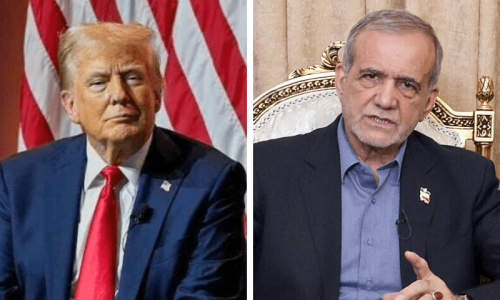
“We want stability in the neighbourhood, and Iran is a very critical element of the stability in the region,” Mr Khan said. Pakistan’s mediation appears to have continued after Iranian President Masoud Pezeshkian’s two-day visit to Islamabad last weekend.
Although officials did not publicly acknowledge Pakistan’s role during the trip, both Washington and Islamabad had confirmed such efforts earlier.
Notably, after the visit, Foreign Minister Dar held a phone conversation with US Secretary of State Marco Rubio, further fueling speculation that Pezeshkian may have conveyed messages to Washington.
In an interview with China’s Phoenix Television during Pezeshkian’s visit, senior Iranian foreign ministry official Saeed Khatibzadeh said Tehran was in no hurry to engage with the United States and warned it would respond strongly if Washington maintained its “aggressive stance.”
He made it clear that Iran would not engage in direct or indirect talks without sufficient guarantees for productive talks.
An Iranian diplomat in Tehran confirmed to Dawn that Khatibzadeh’s remarks reflected the government’s official position.
Explaining Pakistan’s involvement, Mr Khan said Iran is “a very important country in the region” and that Pakistan would “do all what we can to bring tensions down and work for stability and a diplomatic solution to problems”.
“We have been doing that and will continue to do that,” the spokesman asserted, signalling the intended continuation of the role.
Published in Dawn, August 9th, 2025