COAS says India won’t be allowed to choke Indus River

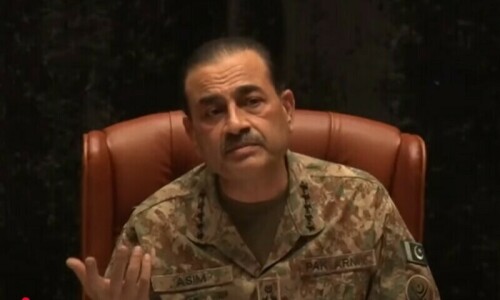
WASHINGTON/RAWALPINDI: Chief of Army Staff Field Marshal Syed Asim Munir has reportedly warned that Pakistan will never allow India to choke the Indus River and will defend its water rights at all costs even if the forces will have to destroy any controversial dam that India sought to build on it.
“We will wait for India to build a dam, and when they do so, we will destroy it,” he reportedly told members of the Pakistani-American community in Tampa, Florida. “The Indus River is not the Indians’ family property. We have no shortage of resources to undo the Indian designs to stop the river.”
Field Marshal Munir, who visited two US cities over the weekend, flew to Brussels, Belgium, on Sunday after completing his second high-profile trip to the United States in less than two months. Like his previous visit, he engaged with both political and military leadership in the host country.
Attends Centcom ceremony
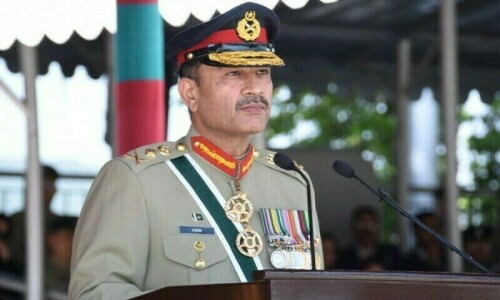
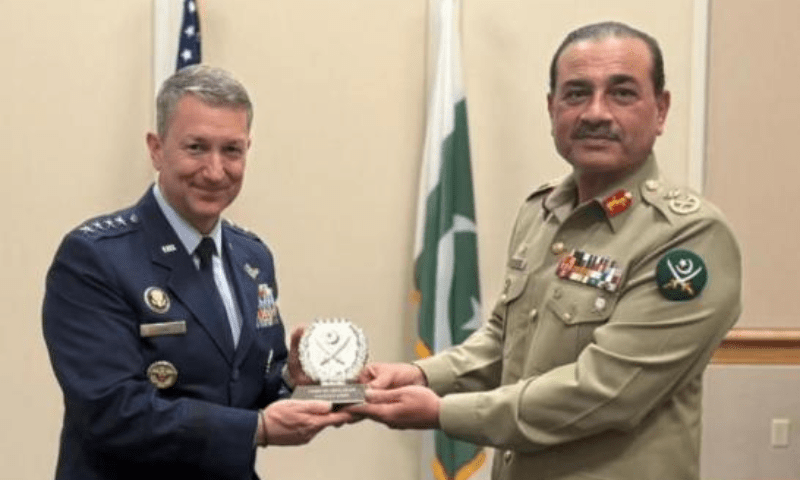
In Tampa, the army chief attended US Central Command (Centcom) change of command ceremony. According to the Inter-Services Public Relations (ISPR), his engagements included the retirement ceremony of General Michael E. Kurilla, Commander of CENTCOM, and the Change of Command in which Admiral Brad Cooper assumed charge.
His visit to US highlights military cooperation, diaspora outreach
The ISPR said FM Munir praised Gen Kurilla’s “exemplary leadership and invaluable contributions in strengthening Pakistan-US military relations” and expressed confidence that Admiral Cooper “would take this partnership forward to address shared security challenges”.
On the sidelines, FM Munir met US Chairman of the Joint Chiefs of Staff General Dan Caine and chiefs of defence from other friendly countries, inviting Gen Caine to visit Pakistan and reaffirming Islamabad’s role as a key regional security stakeholder.
Meets Pakistani-Americans
The army chief’s most closely watched appearance came later at a black-tie dinner hosted by Adnan Asad, Pakistan’s honorary consul in Tampa, attended by about 150 guests, including Interior Minister Mohsin Naqvi, Ambassador Rizwan Shaikh, embassy officials, and prominent members of the diaspora.
The army chief described overseas Pakistanis as “a source of dignity and pride” and “a brain gain, not a brain drain,” crediting them with unwavering commitment to the homeland and quick mobilisation in national emergencies. He urged them to “remain confident in Pakistan’s bright future” and actively attract investment, highlighting untapped potential in mineral resources, energy, and emerging technologies.
He cautioned that social media, while powerful, was often exploited by anti-state actors to spread “manufactured chaos”. With 64pc of Pakistan’s population under 30, he said, the youth’s talent and energy would shape the country’s future.
Addressing the broader regional context, the COAS accused India of projecting itself as a “Vishwa Guru” while its intelligence agency RAW was involved in transnational terrorism — citing incidents in Canada, Qatar, and the arrest of Indian spy Kulbhushan Jadhav.
He condemned India’s “unprovoked aggression” across the Line of Control. Referring to the recent four-day war, he mocked New Delhi’s reluctance to admit battlefield losses. He thanked US President Trump for his “strategic leadership” in preventing an India-Pakistan war and other global conflicts. He said held Kashmir was “not India’s internal matter but an unfinished international agenda”, vowing support for UN resolutions.
He told the Tampa audience that his second US visit marked “a new chapter” in bilateral ties, aimed at building a constructive, long-term partnership. He highlighted prospects for major investments from the US, Saudi Arabia, the UAE, and China.
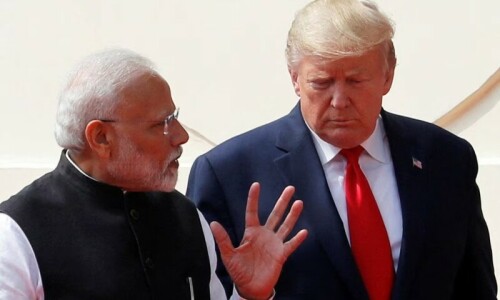
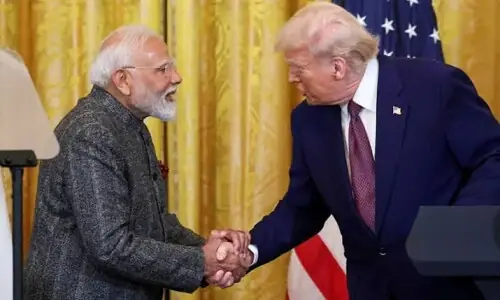
His trip came six weeks after his unprecedented lunch with President Trump at the White House — a privilege usually reserved for heads of state or government — which Bloomberg reported may have influenced Indian PM Narendra Modi’s decision to skip a meeting with Trump during that period.
Published in Dawn, August 11th, 2025
An earlier version of this story erroneously mentioned US President Trump as former president. The error is regretted and has been rectified.