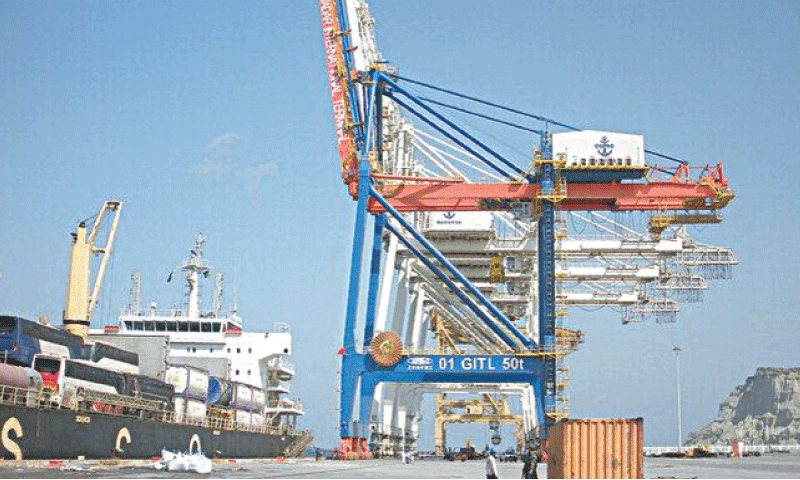
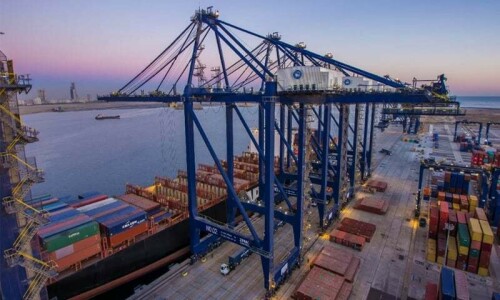
ISLAMABAD: Ahead of the Independence Day celebrations, experts have called for urgent action to unlock the potential of Pakistan’s maritime sector, which they believe could contribute over $100 billion annually to the national economy. The blue economy, they argued, offers a significant opportunity for sustainable growth.
The call was made during a joint session held on Wednesday, titled “Unlocking Pakistan’s Blue Economy: Harnessing Maritime Potential for Sustainable Growth,” hosted by the Sustainable Development Policy Institute (SDPI) and Blue Economy Services.
The session brought together policymakers, maritime experts, environmentalists, and security professionals to discuss a comprehensive roadmap for developing Pakistan’s maritime sector, which remains largely untapped despite its vast potential.
SDPI Executive Director Dr Abid Qaiyum Suleri pointed out that while Pakistan had declared 2020 the “Year of the Blue Economy,” the Covid-19 pandemic had slowed progress. He highlighted that the blue economy extends beyond ports to include untapped maritime resources, carbon sinks, and mangrove ecosystems, urging a balance between environmental sustainability and infrastructure development.
Engr Ahad Nazir, an Associate Research Fellow at SDPI, explained that the session aimed to foster collaboration between various sectors to develop a strategic plan for the maritime industry. He noted that Pakistan’s maritime resources have long been overlooked, even though they hold immense growth potential.
Former Karachi Port Trust Chairman and CEO of Blue Economy Services, Nadir Mumtaz, stressed Karachi’s strategic importance as Pakistan’s maritime and aviation hub. He called for targeted investments in mega shipping projects, commercial shipyards, offshore oil exploration, ferry services, and digital infrastructure.
Mumtaz revealed that Pakistan’s freight fleet has decreased from 36 ships in previous years to just 13 today. He argued that reviving Karachi’s position as a regional trade and maritime centre could enhance food and energy security, boost seafood exports, and expand digital trade, particularly through initiatives like the Digital CPEC Corridor.
Vice Admiral (Retd) R. Ahmed Saeed, President of the National Institute of Maritime Affairs (NIMA), highlighted the fact that 80-90% of global trade is conducted via sea routes. He called for the digitisation of port systems, improved tariff structures, and alignment with international performance standards to make Pakistan’s ports more competitive and integrate them into global supply chains.
Published in Dawn, August 14th, 2025