Digital tracking to end fuel black market

ISLAMABAD: In a landmark reform, the government will launch real-time digital tracking of every litre of petroleum products — from import and production to storage, transport, and final sale — within a month, in a bid to curb rampant smuggling, theft, misappropriation, and adulteration, which are estimated to cause annual revenue losses of Rs300-500 billion.
A senior government official told Dawn that the National Assembly passed the Petroleum (Amendment) Act 2025 on Wednesday, empowering authorities to deploy information technology-based systems for continuous monitoring of petroleum products. The law aims to coordinate the efforts of various enforcement agencies to regulate storage, transportation, and sale, both jointly and independently.
The new legislation amends the nearly century-old Petroleum Act 1934, introducing provisions for digital tracking and granting enforcement powers to deputy commissioners, assistant commissioners, and designated officers under the Customs Act 1969, allowing them to seize smuggled or illegally stored fuel and related infrastructure before and after conviction.
The Oil and Gas Regulatory Authority (Ogra), along with market stakeholders, has been working for months on the technical side of the rollout to ensure smooth implementation. The system will cover monitoring at petrol stations, en route transportation, and designated storage facilities.
New law introduces real-time tracking of petroleum products from import to retail, aims to curb Rs300-500bn in annual losses
Local refineries and oil marketing companies have long pushed for stricter controls on smuggling — particularly at borders and key domestic points — citing severe damage to their businesses and the resultant loss of government revenue. The illicit trade of petroleum products, including liquefied petroleum gas (LPG), remains a persistent issue.
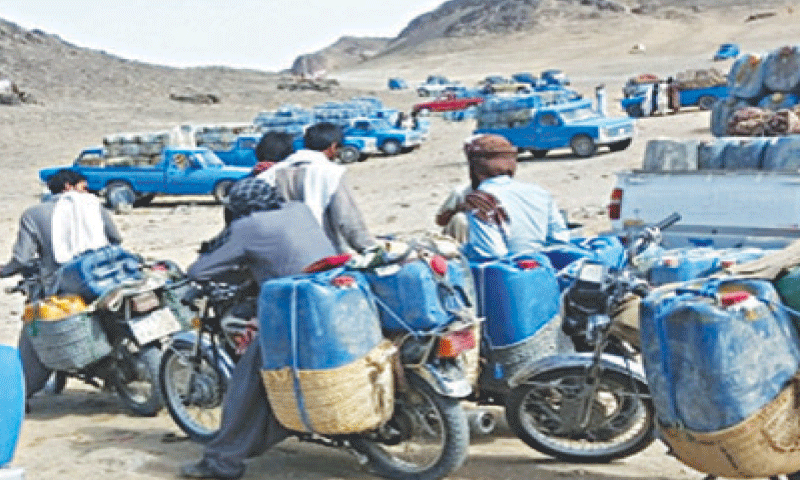
A 2020 inquiry, commissioned by then-Prime Minister Imran Khan, revealed oil smuggling worth over Rs250bn annually from Iran and exposed the absence of oversight in the sector. A more comprehensive intelligence report submitted in April 2024 noted that around 10 million litres of Iranian petrol and diesel were being smuggled into Pakistan daily, resulting in a revenue loss of over Rs227bn.
The report also identified the involvement of 533 illegal petrol stations, 105 known oil smugglers, and complicit personnel in more than a dozen law enforcement agencies. It detailed informal border crossings and established smuggling routes across the country.
The amended law introduces severe penalties for violators. Individuals involved in the illegal import, transport, storage, sale, refining, or blending of petroleum products will face fines of Rs1m, with repeat offenders subject to Rs5m penalties. Facilities operating without valid licences will face closure and the confiscation of all machinery, storage tanks, and petroleum products. Owners of such facilities will be fined Rs10m.
For facilities with expired or cancelled storage licences (issued under Form K by the Department of Explosives), a six-month grace period has been granted for renewal or restoration. Failure to comply will result in the sealing of the facility, confiscation of assets, and a fine of Rs1m. The Department of Explosives is required to renew licences within 30 days of receiving complete documentation and payment.
In cases where premises are found storing or selling smuggled fuel, the law mandates immediate closure, confiscation of assets, and a fine of Rs100m. Furthermore, the Department of Explosives must cancel the operating licence of such a facility.
Vehicles involved in smuggling activities will also be confiscated under the provisions of the Customs Act 1969. Any seized goods will be handed over to customs officers for further action under applicable laws. Importantly, confiscation proceedings can begin before any conviction.
Additionally, the law vests the trial of accused individuals with the Sessions Court, while administrative powers will be exercised by deputy or assistant commissioners. Aggrieved parties will retain the right to appeal to the High Court within 30 days of receiving a decision.
The reform is seen as a long-overdue step to bring order to Pakistan’s petroleum supply chain, reduce environmental and engine damage from adulterated fuel, and plug significant leakages in public revenue.
Published in Dawn, August 15th, 2025