Large-scale manufacturing growth decelerates on flood impact

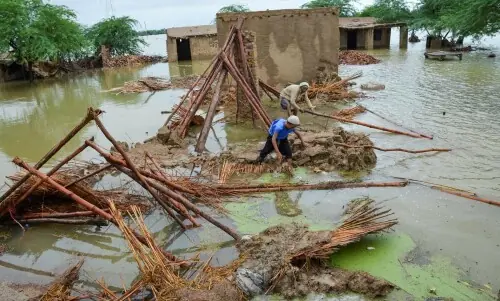
ISLAMABAD: Growth in Pakistan’s large-scale manufacturing (LSM) sector slowed to 0.54 per cent year-on-year in August, compared to an 8.99pc rise in July, due largely to the impact of recent flooding on industrial activity, official data showed on Friday.
On a month-on-month basis, output declined by 2.75pc in August, highlighting a deceleration in momentum at the start of FY26.
However, cumulative growth for the first two months of the fiscal year (July-August) stood at 4.44pc, driven mainly by improvements in the automobile and cement sectors.
LSM, which contributes around 8pc to GDP, posted a contraction of 0.74pc in FY25, falling short of its 3.5pc growth target. In FY24, the sector had also declined marginally by 0.03pc after recording 0.92pc growth in FY23.
The food group posted a year-on-year increase of 7.77pc in July-August. Wheat and rice milling rose by 9.83pc, supported by improved harvests. Cooking oil production grew 8.56pc, while vegetable ghee rose 3.43pc.
Tea blending, however, fell 5.20pc.
Textiles, the largest industrial group, showed a marginal decline of 0.15pc. Cotton yarn and cotton cloth rose by 2.94pc and 0.31pc, respectively.
A decline in export unit values and soft global demand contributed to the overall economic slowdown. While garment exports grew by 4.92pc year-on-year, garment production fell by over 10pc in August, raising concerns for value-added exports.
Coke and petroleum output dropped 2.69pc during the period. Petrol production declined by 4.19pc, kerosene by 16.86pc, and jet fuel by 9.70pc. In contrast, high-speed diesel production increased 6.55pc and LPG output rose 9.58pc.
Auto sector drives growth
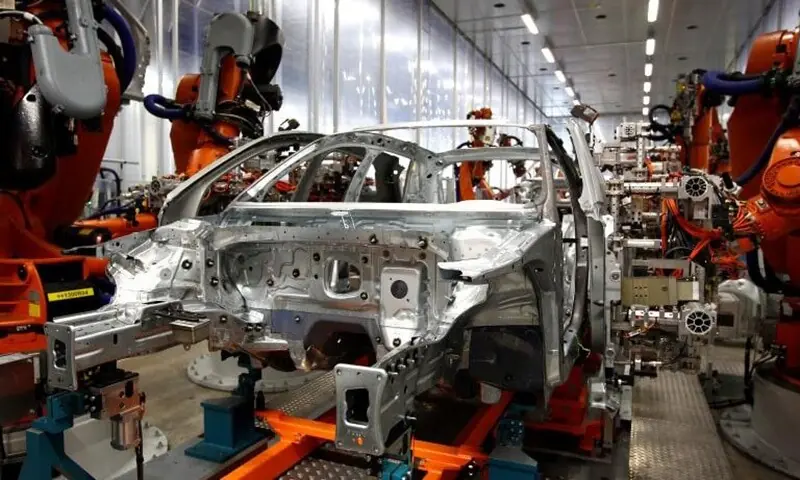
The automobile sector recorded a strong rebound, growing by 90.40pc in July-August. This included a 95.47pc rise in cars and jeeps, 100pc growth in truck production, 38.58pc in light commercial vehicles, and 13.53pc in buses. Diesel engine production increased slightly by 2.37pc.
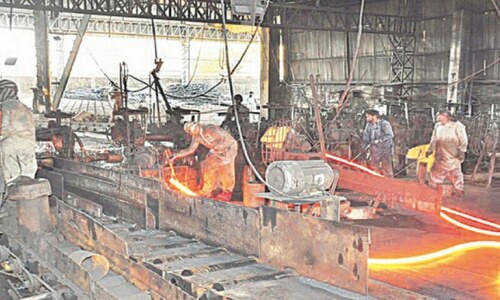
In other sectors, pharmaceutical production declined by 1.77pc, while fertiliser output rose by a modest 0.60pc. The iron and steel sector contracted by 3.44pc, with billets and ingots — key construction materials — falling 10pc. Cold-rolled and hot-rolled steel products dropped by 0.73pc.
Non-metallic minerals, supported by demand in construction, increased by 17.31pc. Rubber products surged by 24.90pc, and electrical equipment output rose by 2.79pc.
Published in Dawn, October 18th, 2025