Global warming is pushing planet to the brink, UN chief says
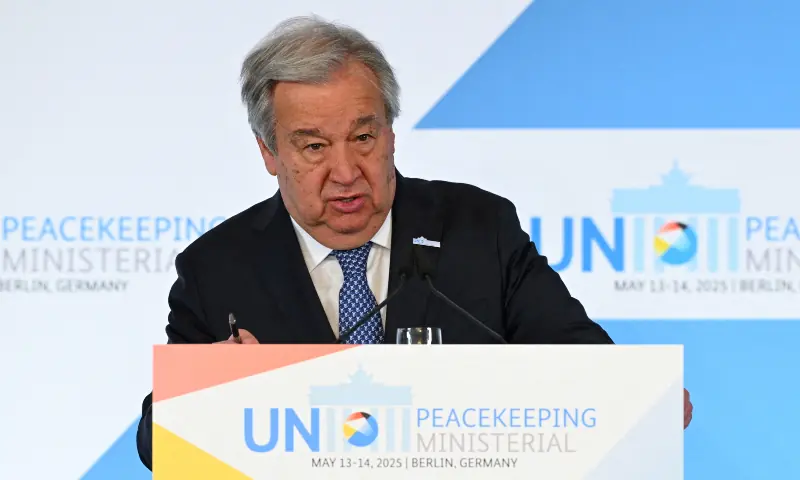

GENEVA: The United Nations Secretary General Antonio Guterres warned on Wednesday that global warming is pushing the planet to the brink and urged countries to implement disaster warning systems to protect people against extreme weather.
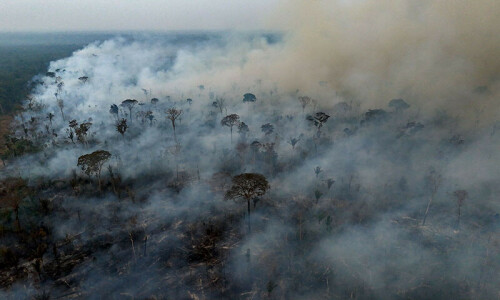
“Every one of the last ten years has been the hottest in history. Ocean heat is breaking records while decimating ecosystems. And no country is safe from fires, floods, storms and heatwaves,” he told delegates at the UN World Meteorological Organisation’s extraordinary conference in Geneva to mark its 75th year.
Guterres urged countries to mobilise funding to enable a global system of surveillance, known as Early Warning Systems, to protect people from extreme weather.
“They give farmers the power to protect their crops and livestock. Enable families to evacuate safely. And protect entire communities from devastation,” Guterres said.
Getting notice 24 hours before a hazardous event can reduce damage by up to 30pc, he added. Over 60pc of countries have introduced multi-hazard Early Warning Systems since Guterres launched an initiative in 2022 for all countries to have these in place by 2027.
In the past five decades, weather, water and climate-related hazards have killed more than two million people, with 90pc of those deaths occurring in developing countries, the WMO said on Monday.
Predictable impacts
Ahead of next month’s COP30 climate summit in Brazil, Guterres said going beyond 1.5C would result in “devastating” yet predictable impacts. “One thing is already clear: we will not be able to contain the global warming below 1.5 degrees in the next few years,” Guterres said. “Overshooting is now inevitable. Which means that we’re going to have a period, bigger or smaller, with higher or lower intensity, above 1.5 degrees in the years to come.”
However, if leaders start taking the problem seriously by driving towards net zero greenhouse gas emissions, “the 1.5 still remains — according to all the scientists I met — possible before the end of the century”.
The 2015 Paris climate accords aimed to limit global warming to well below 2C above pre-industrial (1850-1900) levels — and 1.5C if possible. Guterres said the latest national pledges to slash carbon emissions come nowhere near meeting the 1.5C target.
The United Nations is in the process of appraising these plans, which put forward a 2035 carbon-cutting target and details for getting there. Many countries have missed repeated deadlines this year to put forward their commitments, and an official report of those already received is expected within days.
Guterres said pledges covering 70 per cent of global emissions suggested a cut in carbon pollution by some 10pc by 2035. But the UN’s Intergovernmental Panel on Climate Change has said emissions must fall 60pc by 2035, from 2019 levels, for a good chance of limiting warming to 1.5C with no or limited overshoot.
Scientists emphasise that each fraction of a degree of temperature increase worsens the risks of disasters such as heat waves, or the destruction of marine life. Containing warming to 1.5C rather than 2C would significantly limit its most catastrophic consequences, according to the IPCC, which collects the work of scientists worldwide.
Published in Dawn, October 23rd, 2025