
KARACHI: As the current auto policy nears its expiry in June 2026, the government is finalising the Auto Industry Policy 2026-31, with the Engineering Development Board (EDB) holding extensive consultations with vehicle assemblers, parts vendors and importers of used vehicles.
Officials said the new policy will align with the National Tariff Policy (NTP), introduced under Pakistan’s current $7 billion Extended Fund Facility with the International Monetary Fund, which caps tariff rates on finished goods at 15pc and calls for the removal of concessionary SROs. The move marks a shift towards a more open, market-driven automotive sector.
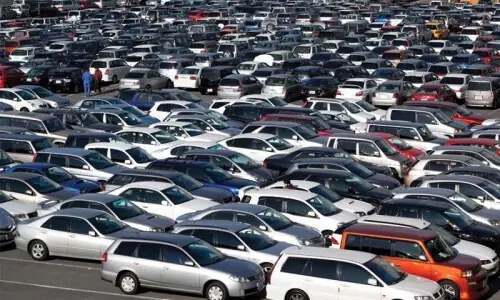
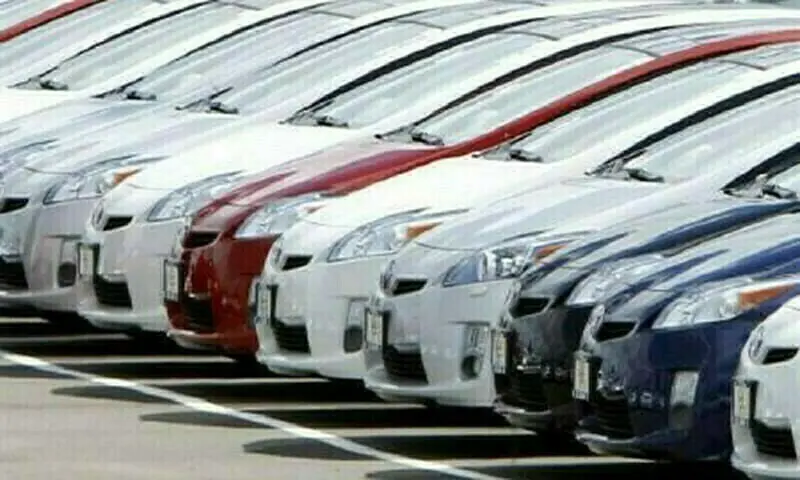
At the same time, the government has allowed the commercial import of used vehicles and is likely to continue baggage and gift schemes for overseas Pakistanis — a mechanism local assemblers allege is being misused by traders for commercial imports. The rising influx of used vehicles, often undervalued at customs, has intensified competition for locally assembled models.
Assemblers vs parts manufacturers
Industry insiders say a rift has emerged between automakers and parts manufacturers. Nine out of 11 local assemblers — representing 15 global brands from Japan, China and South Korea — have jointly proposed lowering duties and taxes to ensure fair competition with used imports, reduce prices and expand the market.
New policy to align with IMF-backed tariff reforms
These assemblers suggest capping duties on completely knocked down (CKD) kits and localised parts at 10pc or less, and scrapping duties on safety-related components. They argue that more than 50pc of a vehicle’s price comprises government duties and taxes, making affordability impossible without tariff rationalisation. Localisation, they contend, should only continue where it enhances global competitiveness.
In contrast, two major Japanese assemblers and several parts manufacturers favour retaining high tariff protection, lobbying for rates as high as 35pc on localised components. Policymakers, however, view this approach as protectionist and counterproductive, saying it has discouraged exports, limited product diversity and allowed outdated models to persist.
Officials involved in the policy process said the government has made clear that prolonged protection is no longer sustainable. Ministries have asked long-established assemblers and vendors to justify how decades of localisation have benefited consumers. Despite claims of high local content, many models remain uncompetitive internationally and fall short of global safety and emission standards.
Localisation and export gap
According to Topline Securities, Indus Motor Company (IMC) reported over 60pc localisation in Corolla, Cross and Yaris models, and 40-50pc in Hilux and Revo due to lower volumes. Honda Atlas Cars Ltd (HACL) said localisation stands at over 60pc for Civic, 73pc for City, and below 50pc for BR-V and HR-V. Pak Suzuki Motor Company Ltd (PSMCL) — delisted from the Pakistan Stock Exchange in 2024 — had earlier reported localisation of 35pc for Swift, 51pc for Cultus and 62pc for Alto 660cc. Discontinued models such as WagonR, Bolan and Ravi had local content of 61pc, 72pc and 69pc, respectively.
Despite these claims, data show that none of these models have recorded significant exports in the past five years, raising questions about the effectiveness of localisation as a development strategy.
Diplomatic sources said Japan lodged a WTO complaint against Pakistan’s proposal to link tariff benefits with export performance — a condition local policymakers argue is necessary to ensure accountability for long-term incentives.
New entrants and policy outlook
New entrants in the market have introduced hybrid and plug-in hybrid vehicles, enhanced safety features, and globally competitive designs, while also starting small-scale exports of locally assembled units. Their success has strengthened the case for tariff rationalisation and a level playing field.
Analysts note that the current policy has already broken long-standing monopolies and diversified consumer choice. The next phase, they argue, should focus on improving competitiveness rather than continuing protection for legacy players.
Published in Dawn, November 9th, 2025