Gurdwara Panja Sahib: where politics, partition and borders dissolve
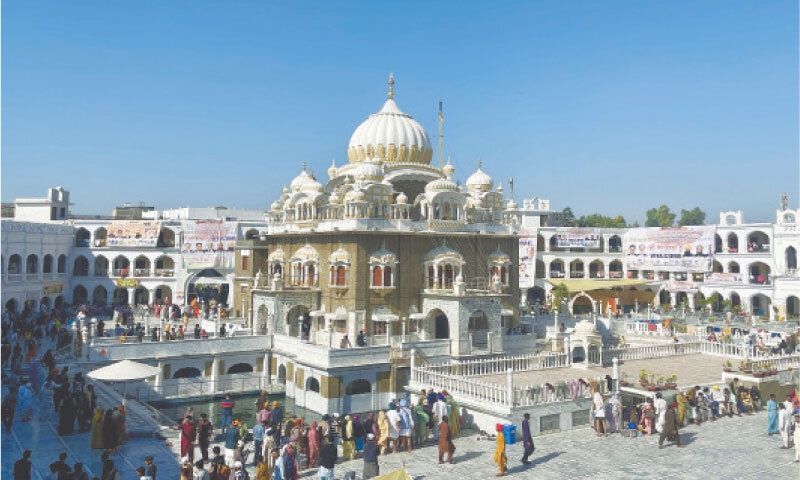

For the global Sikh community, Gurdwara Punja Sahib in Hasanabdal is a place where faith is not narrated, but witnessed.
For them, it is not just a shrine. It is where their belief becomes tangible. If there is any place in Pakistan that serves as a living bridge between people divided by politics, partition, passports and visa regimes, it is Punja Sahib, they say.
This is where faith becomes visible. This is where the divine touch of Baba Guru Nanak Dev Ji is carved into stone. His handprint, the Punja Sahib, can still be seen today.
This centuries-old temple is among the most revered religious sites in the Sikh faith. Its significance runs so deep that every Sikh child grows up knowing its reference before even understanding scripture.
For the devotees coming here, that visible, carved, eternal print is not a story; it is a presence.
For Sikhs around the world, Punja Sahib is the beating heart of faith.
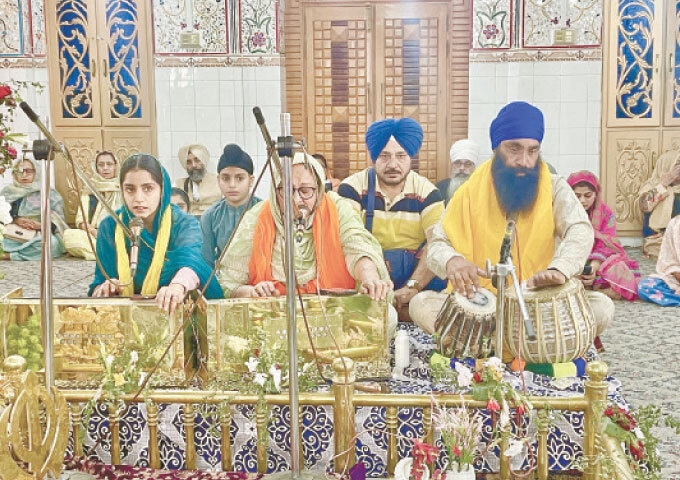
That is why, when pilgrims leave the shrine, they do not feel as if they are going back. They feel as if they are being separated from something within their own hearts.
When Indian Sikh pilgrims arrive each year, especially during the birth anniversary celebrations of Guru Nanak, something extraordinary happens. Those who travel hundreds of kilometres from Amritsar, Delhi, Ludhiana, or Mumbai step into the courtyard of Punja Sahib not as visitors, but as children returning home.
They stand in silence before the sacred stone, their eyes filled with tears. Some tremble. Some bow with folded hands. Others cry quietly.
One Indian pilgrim said during last year’s pilgrimage, “Jab hum iss pattar ko chhoonay ke liye nazdeek hotay hain, lagta hai ham apni dhadkan ko pakar rahay hain” (When we come close to touch this stone, it feels as if we are touching our own heartbeat).
According to Sikh tradition, the stone softened beneath the touch of Guru Nanak himself centuries ago, when a raging saint sought to test his spiritual truth. Nanak calmly raised his hand, and the boulder melted like wax.
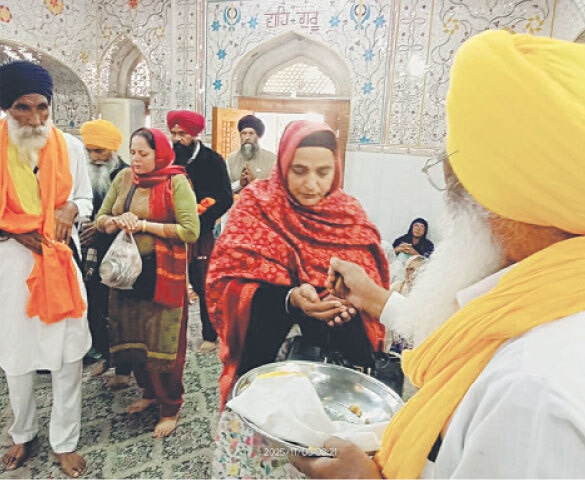
From that sacred stone, sweet spring water continues to flow, not as a metaphor, but as a living miracle.
Ravinder Singh Sweeta, a leader of the Delhi Gurdwara Management Committee, said, “This place is not history, it is living proof.” He added that Sikhs regard Punja Sahib as the living monument of Guru Nanak’s divine truth, peace and calm; not folklore, but visible spiritual evidence.
Every year, tens of thousands of Sikh pilgrims from India, Europe, the United States, Canada, Australia, and Southeast Asia travel to Pakistan to witness this miracle, to bow their heads, and to spiritually connect with the founder of their faith.
More than two thousand Indian pilgrims arrive annually during Guru Nanak’s birth anniversary, describing their visit to Punja Sahib as the most profound moment of their pilgrimage.
“When we see the punja, all borders dissolve,” said one pilgrim. “Politics dissolves. Partition dissolves. Only the Guru remains. Only peace remains.”
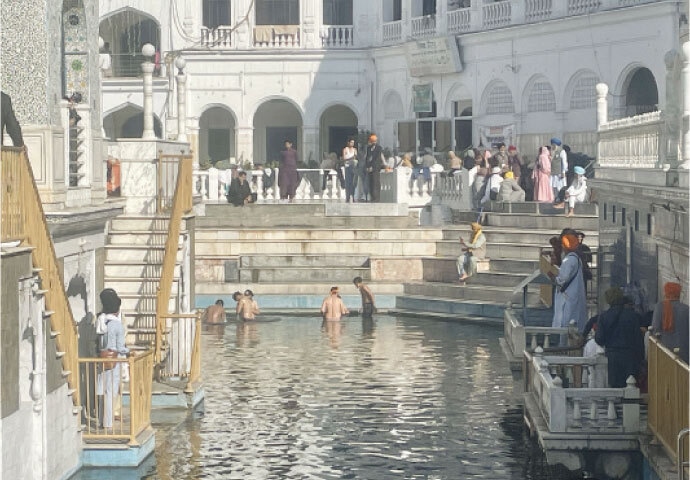
Another pilgrim from Haryana, Prabhjot Kaur, said while leaving Punja Sahib this year, “This is not a land for us, it is home to our soul.”
For Pakistan, this shrine is not only a heritage site but an emotional bridge, a form of spiritual diplomacy that no speech, government, or policy can replace. “This place softens hearts, connects nations and heals wounds that politics created,” said Deputy Secretary Shrines, Syed Faraz Abbas.
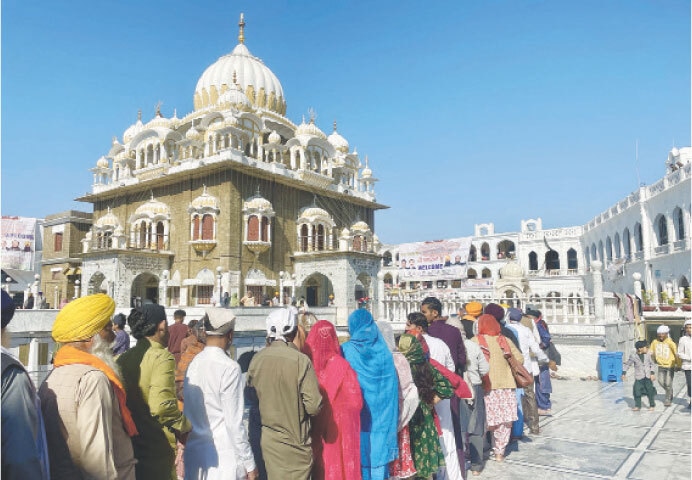
In modern times, Punja Sahib has quietly become Pakistan’s soft power engine in South Asia’s religious diplomacy. The respect, protection and development Pakistan offers for this gurdwara sends a powerful message to the world that religious heritage belonging to minorities does not merely survive here, but thrives with dignity and honour.
The visiting Sikh pilgrims will complete their 10-day religious journey and return to India on November 13 (Thursday) after performing rituals in connection with the birth celebrations of Baba Guru Nanak, known as Parkash Gurpurab, at various gurdwaras across Pakistan.
The pilgrims expressed their heartfelt gratitude to the Government of Pakistan and the Evacuee Trust Property Board (ETPB) for their arrangements. “Pakistan has touched our hearts. We feel the same love, peace and comfort here as we do at home,” said Gurpreet Kaur from New Delhi.
She added, “The way Pakistan has preserved and maintained our gurdwaras with respect and sincerity is a source of pride for the Sikh community worldwide.”
Harmanpreet Kaur from Amritsar emotionally remarked, “We have come to the house of Guru Nanak Dev Ji, and the affection shown by the people here has reminded us of the true message of humanity.”
Additional Secretary Shrines, ETPB, Nasir Mushtaq, said the board is making every effort to provide the best facilities to Sikh pilgrims.
“Pakistan holds its spiritual and cultural bond with the Sikh community in the highest regard,” he said. “This tradition of respect and hospitality will continue.”
Published in Dawn, November 10th, 2025