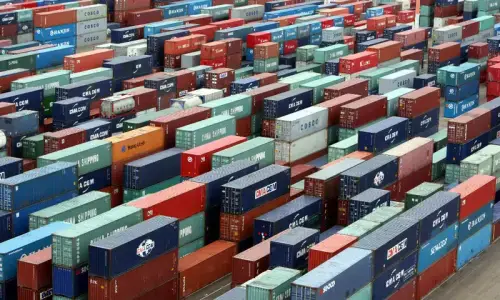

HOW can we discern the quality of a good, without measuring it in an objective manner? As consumers, we go to a store, look for a product, find competing products, and make a quick subjective judgement about the quality, and buy the one our budget allows. While the price of a product always matters in our decision, the quality too figures if competing goods are available. Sometimes we do not buy a high-quality product because it is too expensive, and are content with low-quality but affordable substitutes. What if a better-quality product is available at the same price as that of a low-quality good? We simply ditch the low-quality product. Frequently, we compare the quality of a product to that of competing domestic and imported goods. In this way, we compare the quality of goods which foreign countries have exported to our domestic market.
Meanwhile, we need to be abroad and buy (or review) something made in our country to assess its quality. It is always thrilling to find something ‘made in Pakistan’ in big stores abroad. I was thrilled to find Himalayan salt, in Northfield, Minnesota, in a Target outlet, over 11,000 kilometres away from Pakistan’s Khewra salt mines. Target is a big store chain in the US known for selling quality products at reasonable prices. The pink Himalayan salt was neatly packaged in a disposable but good quality small bottle with a built-in grinder for seasoning. The bottle clearly displayed “product of Pakistan” but qualified it immediately with “packaged in France”.
Our Himalayan salt is recognised all over the world as the best kind. However, our salt-packaging abilities, ie, value addition, even after 78 years of independence, appear primitive. The small bottle contained only a few grams of pink salt granules, not worth a lot. But its packaging, with a little grinding attachment that smoothly crushed the salt to allow it to be sprinkled evenly over food is what mattered most with regard to the quality of this product. This small salt bottle, bought in a country far from the Khewra mines, contained our sad 78-year story of manufacturing and export: our manufacturing, despite making progress, had failed to add sufficient value and quality to our natural bounties, crops and (crudely) manufactured products.
According to a report on the website of the Trade Development Authority of Pakistan, “The miners in Khewra still use the same old traditional way — drilling/ blasting followed by excavation by hand. Perhaps this is the reason that despite having the second largest salt mines of the world and having salt [reserves] of 10 billion tons (6.68bn tons alone hidden in the jagged rocks of Salt Range in Khewra), Pakistan is still listed as 17th in salt production in the world. It contributes hardly one per cent [to] the total global salt production”.
I was able to find few other products from our country in Northfield and areas around the twin cities of Minneapolis-St Paul. In Dollar General (a store chain), I only found a pack of grey towels used for washing cars. There was hardly anything remarkable about this product, except that it had made its way to the Midwest, showing that Pakistan is still competitive in its export supply to the US in this category. I could not find bath towels made in Pakistan at stores like Macy’s, JC Penny, Target, Home Goods or Marshalls, let alone high-end stores like Nordstrom, Saks Fifth Avenue, or Bloomingdales. All these had many varieties of garments from Bangladesh, India, Indonesia, Vietnam and other countries. There was one exception: I found jeans from our country at Macy’s, which is known for selling quality products. The jeans from other countries, however, seemed better but were more expensive, ie, higher value addition.
The fault lies in our economic policies, which have been destroying our export competitiveness.
While these examples can easily be dismissed on grounds of not being based on a scientific survey, they nevertheless contain some seeds of truth. I was a visitor to the US for a few months, but the Pakistani diaspora residing there for many years would have a better idea about our quality of exports. Here’s what an analytical report (Knowledge Brief, March 2023) by the Pakistan Institute of Development Economics says: “Pakistan’s low export values are due to low-quality products and lack of innovation in exported products which leads to the lack of value addition”.
While winter jackets may be too sophisticated for our garment manufacturers to produce and export, it is difficult to understand why simple shirts and trousers do not find their way to stores abroad. Surely, this is not due to the lack of access for our products abroad. The fault lies in our economic policies, which have been destroying our manufacturing and export competitiveness for the last few decades, as highlighted by the PIDE brief.
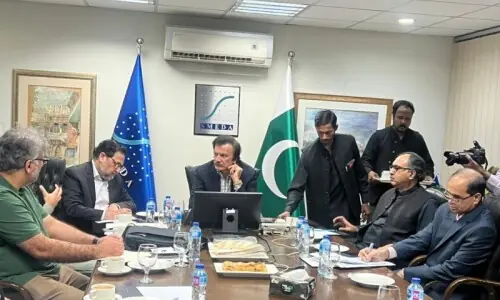
As opposed to our abundant pink Himalayan salt — hardly meant to be presented on a platter — rare earth minerals were recently offered (going by a widely circulated photograph) in a wooden tray, and looking like exotic gourmet bakery products, to American President Donald Trump, who fixed his gaze on this rarity while listening attentively to our field marshal. The first batch of these expensive minerals was also exported recently to the US as a precursor to a joint venture for exploration and the mining of rare earth elements. Is this a harbinger of good tidings on the export and economic front?
Or does the modest, though abundant, salt, which contains the story of our exports, point to a future with hardships it has already witnessed? The mining and export of critical elements carry potential for development. The path to development through extraction and export of minerals, however, is no less complex than other paths, and it is certainly not a royal road to prosperity. Our economic authorities, currently fixated on keeping the rupee overvalued, will have to tackle the additional intensity of the Dutch disease caused by export earnings from minerals in future. If not managed wisely, our manufactured exports may risk declining further in quality. If rare earth minerals and gold and diamonds were the quick way to economic prosperity, a few countries in Africa would have been dominating the world by now.
The writer is a former deputy governor of the State Bank of Pakistan.
Published in Dawn, November 13th, 2025