Afghan regime’s move to suspend trade sends shock waves through KP

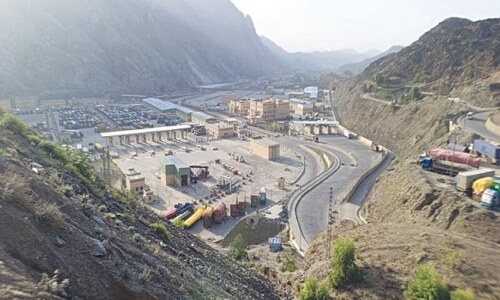
KHYBER: The sudden announcement of the Afghan Taliban regime about abrupt suspension of trade ties with Pakistan on Thursday sent shock waves through the trading, industrial and transportation circles in Khyber Pakhtunkhwa, with the reopening of Pak-Afghan border points out of sight.
Traders and customs clearing agents expressed serious apprehensions about grave economic implications of Kabul’s move for Khyber Pakhtunkhwa in particular and the country in general.
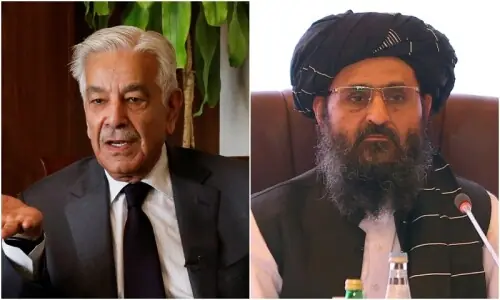
In a video message on Thursday, Afghan Taliban regime First Deputy Prime Minister for Economic Affairs Mulla Abdul Ghani Baradar warned all Afghan traders and industrialists against maintaining any trading relationship with Pakistan and warned that his government would not be responsible for any trouble or losses faced by Afghan exporters and importers.
Announcing an end to the country’s all trading contracts with Pakistanis in three months’ time, he asked Afghan traders to explore “new avenues” and approach other countries for trading items needed by the people of Afghanistan.
Business leader fears country will lose big market in both Afghanistan, Central Asia
Reacting to the Afghan Taliban regime’s announcement regarding abrupt suspension of trade with Pakistan, Ziaul Haq Sarhadi, senior vice-president of Pak-Afghan Joint Chamber of Commerce and Industry, feared that Pakistan would lose a big market in both Afghanistan and Central Asian States, with whom Pakistan just recently signed trade agreements worth millions of dollars.
He said that Afghanistan had the option to sign business deals with almost all Central Asian States along with Iran and Turkiye on easier terms than Pakistan’s, with Pakistan permanently losing the Afghan market, much to the displeasure of the local trading community and colossal financial losses to the country’s industry.
Mr Sarhadi said that Pakistan was exporting fresh fruits, cement, medicines, surgical items, agricultural tools, fabrics, shoes, plastic pipes and sanitary items, cosmetics and a number of locally manufactured items valuing around $100-200 million per month.
“We are the ultimate losers due to the closure of our border with Afghanistan as Kabul has more choices than us,” he argued.
Zahidullah Shinwari, a former president of Sarhad Chamber of Commerce and Industry, said that besides losing the Afghan and Central Asian States markets, the suspension of trade with Afghanistan would also seriously affect the tax collection of Federal Bureau of Revenue, which was collecting millions of rupees on a daily basis from both exports and imports at all border points.
He said that industry in KP would be particularly hit hard by the trade suspension with Afghanistan as the KP industry was heavily reliant on its products to Afghanistan, while they couldn’t compete with industry in Punjab and Sindh due to several reasons.
“Much of our big industry, especially cement factories, are run by coal imported from Afghanistan, so suspension of coal import from Afghanistan will adversely affect the production capacity of our big industries,” he said.
He warned if the trade with Afghanistan ended permanently, it would result in the closure of a majority of industrial units in KP with hundreds of industrial labour becoming jobless, while the owners would go bankrupt.
The SCCI leader said that the continued border disturbance and subsequent closure was ‘a losing bargain’ for Pakistan as it would do away with its grip and monopoly over the Afghan and Central Asian States markets.
“We need to rethink our security policies as our financial losses are much bigger than any political point scoring on the diplomatic front over the security issues against Afghanistan,” he said.
Mujeebullah Shinwari, president of Torkham Clearing Agents’ Association, argued that the border closure and subsequent trade suspension had confronted local traders and transporters with huge financial losses.
He said that local transporters were heavily rallied on trade with Afghanistan and therefore, the trade suspension would render thousands of tribesmen jobless in the acute financial crises facing the country.
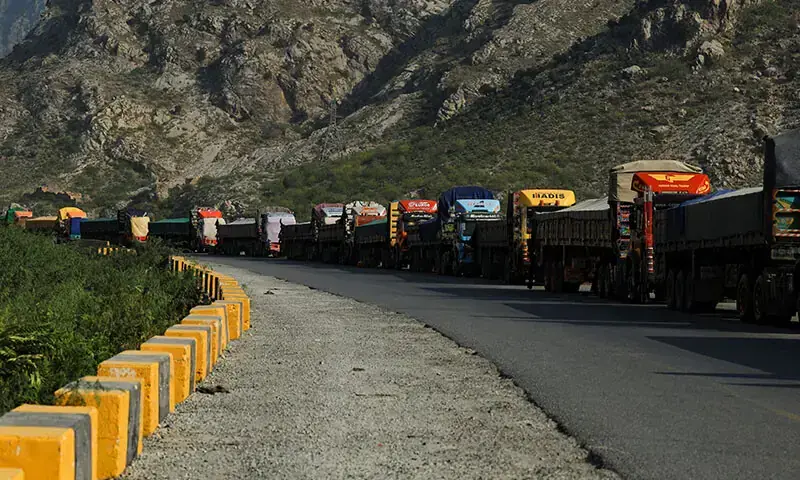
Mr Shinwari said that around 500 vehicles loaded with a variety of export goods were stranded on the Pakistan side of the border as they had no choice but to wait for a reopening of the border.
He said that neither the exporter nor the industrials were now willing to take back the merchandise they had sold to Afghanistan while the transporters too had received their fare up to Kabul and were now under contractual obligation to deliver the consignment to the designated firm in Afghanistan.
“This is a very uncertain situation and also very unfortunate for the local traders and transporters as they are now caught between the devil and deep sea”, he said.
Published in Dawn, November 14th, 2025