The gruelling search for Gaza’s dead under the rubble
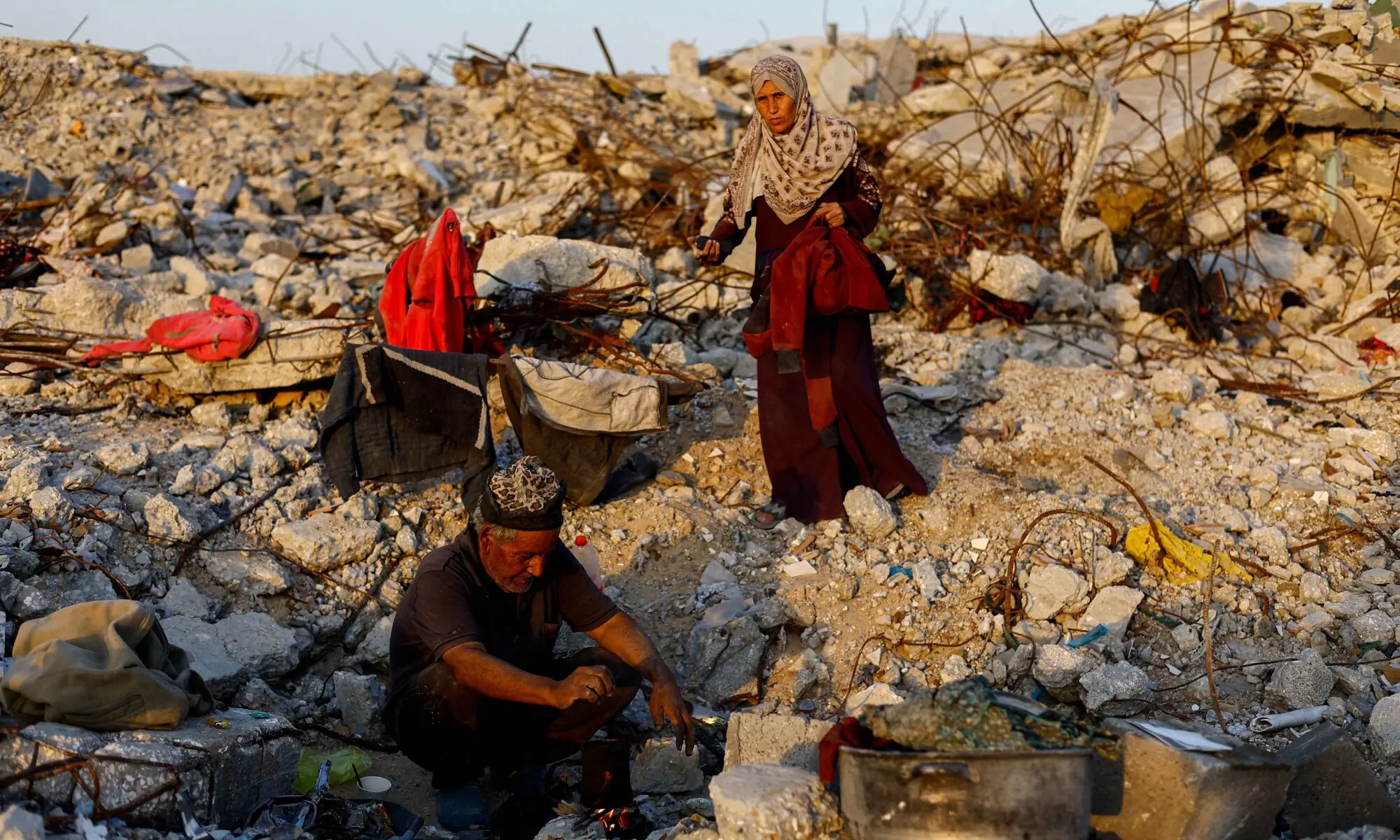

GAZA CITY: Standing beside the mound of rubble that was once his home, Ahmed Salim cannot hold back the tears as he struggles to retrieve the bodies of loved ones trapped underneath tonnes of debris.
Over 30 people were killed when his home was struck, he recalled, among them “my wife, my children, my mother, my father”.
“I’m the only one who survived,” he said, pointing to the pile of broken concrete and twisted metal that was once a five-storey building in Gaza City’s Zeitoun neighbourhood.
The building was destroyed on Dec 24 last year and he has been waiting ever since to retrieve their bodies and give them a proper burial.
“The only thing that matters to me is to be able to bury them,” the 43-year-old said. Thousands of other Palestinians are in a similar situation.
According to UN data, the Israeli military had damaged or destroyed around 83 per cent of the buildings in Gaza that stood before the conflict started in Oct 2023.
The densely-populated Palestinian territory is covered in 61.5 million tonnes of debris: nearly 170 times the weight of New York City’s Empire State Building.
Mahmud Bassal, spokesman for Gaza’s civil defence agency, estimates that about 10,000 bodies are buried under the rubble.
“We cannot extract thousands of bodies without heavy machinery. We need the means to lift the roofs and the tonnes of cement,” said Bassal, whose organisation conducts search and rescue operations in Gaza.
‘Help me retrieve them’
Iyad Rayan holds out the same hope as Salim: burying his wife and children with dignity.
“My wife, my son Samir and my daughter Lana are still here under the rubble,” he said by the wreckage of his Gaza City home, which he said was destroyed in early October this year.
“I want to send an appeal to the whole world: help me retrieve them,” the 55-year-old said.
Amal Abdel Aal is waiting for heavy equipment to enter the Gaza Strip so the bodies of her son and brother can be recovered.
They have been under the rubble in the Sabra neighbourhood of Gaza City since the early days of the two-year conflict.
“They never leave my thoughts. My heart aches at the thought of dogs reaching their bodies and eating them,” said the 57-year-old woman now living in southern Gaza, where hundreds of thousands of people have sought shelter.
“I will only find relief when I have buried them, even if only a single bone remains.”
After the ceasefire began on Oct 10, Israel allowed Egyptian bulldozers to enter Gaza to help recover the remains of prisoners, to be returned under the US-brokered truce deal.
“The world is unfair. We see bulldozers digging to retrieve the Israeli prisoners, while no one cares about the thousands of our martyrs,” said Abdel Aal.
Sadness, loss and pain
Since the ceasefire, Palestinians have been able to recover around 500 bodies in areas that emergency workers could access following the partial withdrawal of Israeli forces, Bassal said.
The halt in fighting allowed Amer Abu al Tarabish to return to Beit Lahia in northern Gaza, he said, to extract the bodies of his parents from the ruins of their family home “with my bare hands”.
“My parents, my brother and his children, his wife, my uncle, his wife and their children… Thirty people remained under the rubble for more than a year,” he said.
“I pulled out their bodies intact; they were not decomposed,” he recounted, adding that he was “overwhelmed by sadness, loss and pain”.
“I was able to bring them out one by one, say goodbye to them, and imprint their faces in my memory before burying them.”
For other Gaza residents, even this small consolation may never come.
Bassal noted that thousands of people had been reported missing, especially during major population displacements as the fighting shifted.
“We don’t know whether they were killed or arrested” by Israeli forces, he said.
As for families who buried their loved ones hastily during the conflict, many consider those graves to be temporary, or feel that proper rites have not yet been observed.
Mohammed Naim, 47, said his family had to bury 43 relatives in just seven graves.
“We placed the remains of each family in a single grave,” he said.
“But we swore over their graves that we would exhume them and rebury them, with dignity, in Gaza City.”
Published in Dawn, November 20th, 2025