PTI’s Jhagra assails govt; says judicial distrust creating hurdles in foreign investment
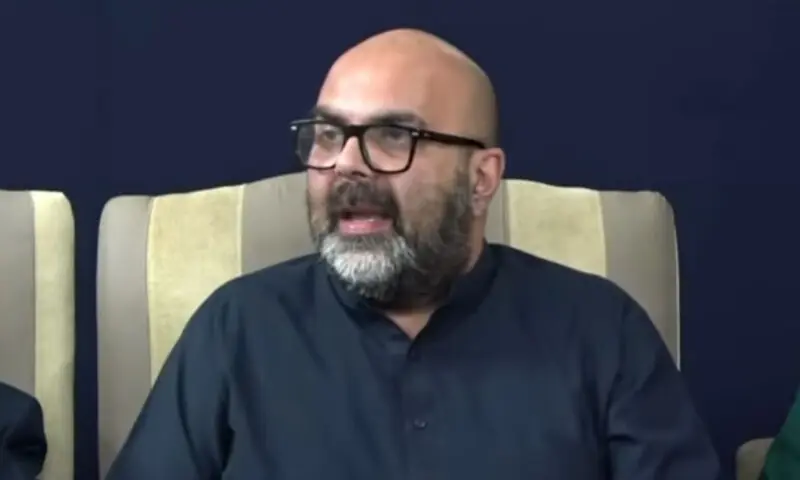

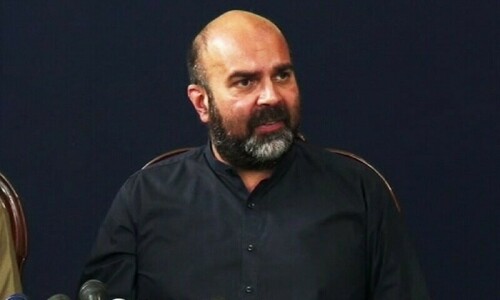
PTI leader Taimur Saleem Jhagra said judicial corruption and institutional distrust were barriers to capital investment in the country, while he assailed the government on Saturday following the release of the International Monetary Fund’s (IMF) Governance and Corruption Diagnostic Assessment (GCDA) report.
The report, published earlier this week, highlighted persistent corruption challenges in Pakistan driven by systemic weaknesses across state institutions and demanded immediate initiation of a 15-point reform agenda to improve transparency, fairness and integrity.
Speaking at a press conference today about the report in Islamabad with former Sindh governor Mohammad Zubair, Jhagra highlighted a portion of the report that said: “The judicial sector that is organisationally complex is not able to [reliably] enforce contracts [or protect property rights] due to problems with efficiency, antiquated laws and the integrity of judges and judicial personnel.”
“[The report] also points out how capital investments in the country have been undermined by concerns over vulnerability to corruption of judicial institutions,” said the PTI leader.
“A barrier for investment in Pakistan is that the investor is scared of the fact that your judicial institutions are corrupt,” Jhagra said.
He added that according to the IMF, the judiciary was also unable to play a role in the economy besides political issues and those related to justice in society, as distrust in the system drove investors and businessmen away.
Speaking about the role of the National Accountability Bureau, he said the report criticised its structure and said anti-corruption efforts were constrained by “heavy reliance on a single institution exposed to strong political influence”.
“When IMF is saying there is corruption in Pakistan, and IMF states that the institutions in Pakistan, meant to fight corruption, have no coordination, and their actions are influenced politically; do you accept that or not?”
“If there is one thing that is written about the most, it is that everything is in the government’s hands,” said the former finance minister of KP.
As per the IMF, “state domination extends to employment, where the state employs 72 per cent of individuals with formal jobs”. In reference to this part, Jhagra said undue favours were inevitable when the state ran sectors that it should not.
The IMF pointed out, as emphasised by Jhagra, that the country’s sugar sector was a case study of how the intertwined relationship between economic and political elites and state regulators had combined to capture public benefits at deep cost to the populace.
“Firms in the sugar sector benefited from favourable government policies, subsidies and regulatory loopholes for decades, mainly due to the nexus between industry magnates and political leaders,” as per the report.
Jhagra also pointed out how the report criticised the role of the Special Investment Facilitation Council (SIFC), saying that it operated with “untested transparency and accountability provisions”.
Giving his own thoughts on the matter, Jhagra said the SIFC was brought about by the PML-N government to keep the stakeholders of the self-admitted current hybrid setup placated and content.
“They knew that it would not bring a penny’s worth of investment and neither have they tried.”
Jhagra said there were only two paths left after the report’s release, one was for the government to begin working on the issues and solutions outlined or to give answers to the questions being raised since the revelations were made public.
However, he quipped that the first was unlikely since “the government won’t remain and the SIFC won’t remain”.
Meanwhile, Zubair alleged that the IMF report was only disclosed by the government after “immense pressure” from the institution.
He further alleged that the SIFC awarded contracts to favourite contractors and that those who were involved in the sugar scandal were protected.
The former PML-N stalwart said 240 million people were suffering because of the policy failure of the current government, which had converted into an economic crisis.
He also said that it was unfortunate that no government representative had denied the report even after the passage of 48 hours. The former governor demanded an investigation after the report’s disclosures.
The politicians, under the banner of opposition alliance Tehreek Tahafuz Ayeen-i-Pakistan, lashed out at the government and accused it of hiding the report for three months.
They also alleged that the report had identified corruption worth Rs5,300 billion in the governance system and termed it the “worst financial scandal” of the country’s history, demanding that the names of those responsible be made public.