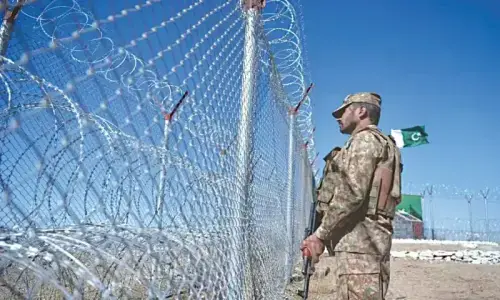
WITH the Pakistani state hardening its position against the Afghan Taliban, and the Kabul regime accusing this country of bombing its territory, the already limited space for a negotiated, peaceful settlement with Afghanistan is closing fast.
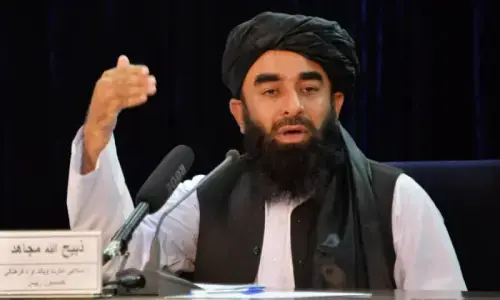
On Tuesday, the Taliban said that Pakistan had bombed several Afghan provinces, allegedly causing civilian casualties. The state swiftly denied these accusations, with the military spokesperson saying Pakistan had not attacked Afghan civilians, and adding that this country announces its strikes.
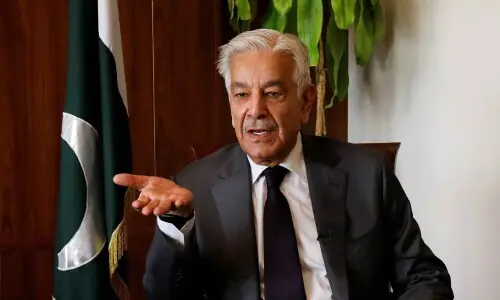
Defence Minister Khawaja Asif, who also denied hitting Afghan civilians, was blunt in his criticism of the Taliban. He said Pakistan had “no good hope from them” while noting that it would be “idiocy” to trust Kabul’s current rulers. Despite the Afghan claims, the ceasefire reached between both states last month is holding, and it is hoped matters do not escalate further.
There can be little argument with the official demand that the Taliban stop TTP and other terrorists based in Afghanistan from attacking Pakistan; the state must remain vigilant to prevent violent actors from carrying out attacks in the country. But combative rhetoric and exchanges of fire between the two countries is hardly in anyone’s interest; if matters deteriorate further, it would result in a permanently hostile state on Pakistan’s western border at a time when the situation on the eastern frontier, too, is unsettled.
Islamabad’s growing rift with Kabul calls for greater diplomatic efforts by this country. While Pakistan in 2021 had hailed the Taliban’s recapture of Kabul, today the government feels that it is useless to talk to them. True, the Taliban’s obduracy and denialism cannot be put aside. But Pakistani officialdom’s at times strong commentary can further alienate ordinary Afghans, undermining whatever remains of the goodwill built after decades of hosting Afghan refugees, for example.
Moreover, strikes inside Afghanistan have failed to deter the TTP, as the banned terrorist outfit is getting more brazen in its attacks. It is also worth considering that closing channels with Kabul is pushing the Taliban further into the Indian embrace, which presents a fresh strategic dilemma for Pakistan.
The Taliban are difficult customers, but ‘writing them off’ will not help. In the long term, it is primarily diplomacy, as well as collective regional pressure, that can address the issue of cross-border terrorism, and restore harmony to the Pak-Afghan relationship.
Published in Dawn, November 27th, 2025