What we know about the US National Guard shooting suspect
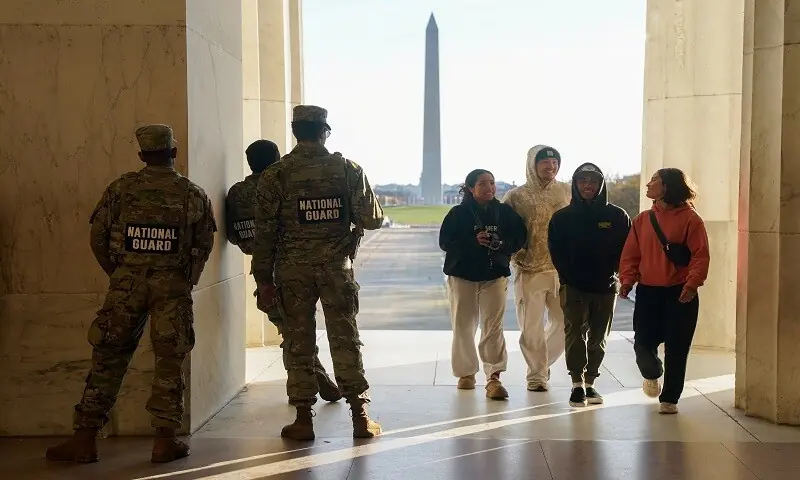

The man suspected of shooting two National Guard soldiers near the White House on Wednesday was an Afghan national who worked alongside US forces in Afghanistan, US media reported.
Washington has labeled the violence an “act of terror” and announced increased oversight of foreigners who entered the United States from Afghanistan in recent years.
What we know about the suspected shooter
Multiple media outlets, including CNN, The New York Times, CBS and NBC identified the man as 29-year old Rahmanullah Lakanwal and say he arrived in America in 2021.
A relative of Lakanwal told NBC that he arrived after serving in the Afghan army for 10 years in support of US Special Forces.
The relative told NBC that Lakanwal originally came from Afghanistan’s southeastern Khost province and had spent some of his military service at a base in the southern province of Kandahar.
Kandahar is the birthplace of the Taliban and was the center of heavy fighting during the 20-year war between the then-insurgents and foreign-backed forces.
2021 arrival
US Secretary of Homeland Security Kristi Noem said the suspected shooter “was one of the many unvetted, mass paroled into the United States under Operation Allies Welcome.” She said the Afghan national, whom she did not name, entered the United States on September 8, 2021, less than a month after Afghanistan fell to the Taliban.
US President Donald Trump signed an agreement with the Taliban in February 2020 to pave the way for the significant drawdown of US troops in Afghanistan by the end of that year – though the timeline was pushed back and conducted under the subsequent Biden administration.
‘Operation Allies Welcome’
Shortly after the Taliban took over Kabul on August 15, 2021, and as US forces withdrew, then-president Joe Biden introduced “Operation Allies Welcome” to coordinate efforts across the multiple government agencies resettling Afghans, including those who worked with US forces.
At the time, more than 40 percent of Afghans included in the program were eligible for “Special Immigrant Visa” (SIVs) for those who took “significant risks to support our military and civilian personnel in Afghanistan” on behalf of the US government in Afghanistan, as well as their family members.
Other vulnerable groups, such as advocates and journalists, also entered the US under the program. Authorities have not confirmed whether Lakanwal received an SIV.
Those who entered the United States under Operation Allies Welcome received security vetting from several government agencies, including the FBI and the National Counterterrorism Center.
The Biden administration renamed the efforts in September 2022 “Enduring Welcome” (EW) to signify a pivot to a long-term strategy that would focus on helping Afghans obtain more durable, long-term legal status, primarily through the SIV program or the US Refugee Admissions Program (USRAP).
Mass evacuations
During the turbulent US withdrawal from Afghanistan that saw Kabul’s airport deteriorate into chaos as thousands tried to evacuate, Biden pledged his administration would find a way out for those who helped the US.
Hundreds of thousands of Afghans worked for foreign forces and embassies and joined US-funded NGOs throughout the 20-year foreign presence. Many feared that made them a target for violence, including by the Taliban.
The United Nations has reported extrajudicial killings and disappearances of former Afghan officials under the Taliban authorities, despite them declaring an amnesty against former enemies.
More than 190,000 Afghans have been resettled to the United States through EW and its predecessor Operation Allies Welcome since the Taliban takeover, according to the US State Department.
Tens of thousands more, including many former military translators and members of the Afghan security forces, are in the pipeline for resettlement, according to advocacy groups.
In June, Trump declared a sweeping new travel ban on 12 countries, including Afghanistan, which complicated matters, according to Shawn VanDiver, the president of the AfghanEvac non-profit group.
VanDiver said it was especially hard for some 12,000 people awaiting reunification with family members already living in the United States.