Lawmakers grill Trump officials on US alleged drug boat strikes
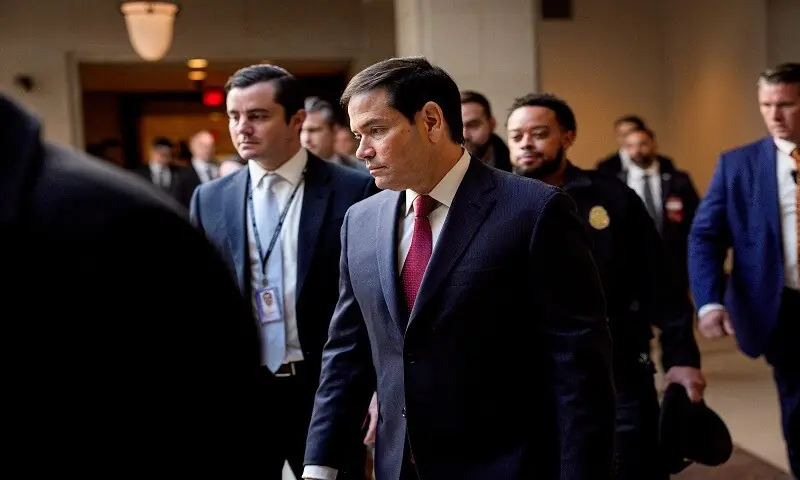

Donald Trump’s top national security officials faced a grilling from lawmakers Tuesday on US strikes against alleged drug boats in the Caribbean and Pacific — operations that have raised alarms about escalating military force near Venezuela.
The House and Senate briefings, led by Defense Secretary Pete Hegseth and Secretary of State Marco Rubio, came amid mounting unease in Congress over the president’s widening campaign in waters off Latin America, and as lawmakers weigh measures to curb Trump’s authority to act without their approval.
US officials say the operations target narcotics bound for American shores.
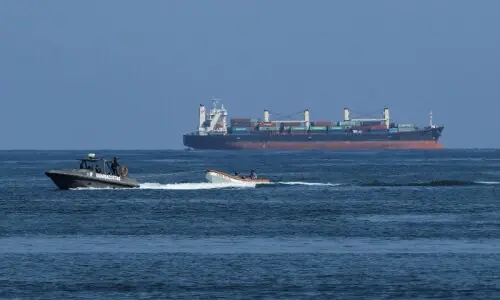
Critics counter that the campaign — which has destroyed at least 26 boats and killed at least 95 people, according to US military figures — is legally ambiguous and strategically unclear.
The classified sessions preceded a possible Senate vote on resolutions aimed at restricting Trump from launching military action against Venezuela without congressional consent.
But Senate Democratic Minority Leader Chuck Schumer told reporters as he left the room that the officials had offered nothing new.
“The administration came to this briefing empty handed… and if they can’t be transparent on this, how can you trust their transparency on all the other issues swirling about in the Caribbean?” Schumer said.
The boat strikes have drawn particular scrutiny over a September 2 operation in which US forces carried out a follow-up attack on a disabled boat, killing two survivors of the initial strike.
Lawmakers from both parties have demanded answers on the legal basis for that attack and why Congress has been denied full access to video footage, which so far has been shown only to a handful of senior lawmakers.
Schumer has warned that secrecy – combined with the presence of US troops and a carrier group in the region — risked dragging the country into another open-ended conflict.
He told reporters he reiterated the demand for every senator to be given access to the complete, unedited tape of the September 2 strike but was rebuffed.
‘Highly successful mission’
Rubio and Hegseth defended the “highly successful mission” as they left the briefing, and said the Pentagon would allow the House and Senate Armed Services Committees to view the video alongside the commander who ordered them, Admiral Frank Bradley.
“But, in keeping with longstanding… Department of Defense policy, we’re not going to release a top secret, full, unedited video of that to the general public,” Hegseth added.
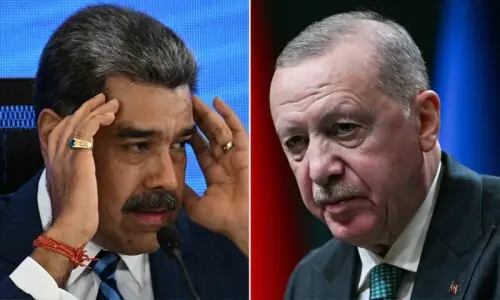
Beyond the boat strikes, the administration has ratcheted up pressure on Venezuelan President Nicolas Maduro — deepening sanctions, deploying warships and aircraft near his coastline and seizing an oil tanker linked to Caracas.
Trump has declared that Maduro’s “days are numbered” and pointedly refused to rule out a US ground invasion.
Legal experts say the case highlights a central tension in Trump’s approach — that treating drug trafficking as an act of war may violate international law.
This week, Trump signed an executive order classifying fentanyl — which is stocked and administered by hospitals — as a “weapon of mass destruction,” an escalation supporters say reflects the gravity of the opioid crisis.
Specialists note, however, that most of the intercepted boats were believed to be carrying cocaine, not fentanyl.
Despite mounting scrutiny, the campaign shows no sign of slowing.
On Monday, the Pentagon said it had carried out fresh strikes against alleged drug boats in the Pacific, killing eight people described as “narco-terrorists.” The Senate briefing also follows last week’s dramatic US seizure of an oil tanker accused of transporting sanctioned Venezuelan fuel in a network linked to Iran.
Republican senator and staunch Trump ally Lindsey Graham said as he emerged from his briefing that the video was the least of his concerns, asserting that the September 2 strike was lawful.
“Most Americans want to know what’s going to happen next. I want to know what’s going to happen next. Is it the policy to take Maduro down? It should be, if it’s not. And if he goes, what’s going to happen next?”