‘High-tech services key to Pakistan’s growth’

• Prof Amir Sufi urges shift from low-tech industry to innovation-driven services
• Calls for new lending models for intangible assets
• SBP official stresses financial access to SMEs, youth and women for inclusive growth
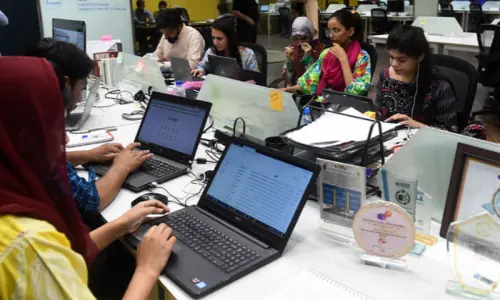
KARACHI: Pakistan must rethink its economic policies to focus on high-tech services such as information technology (IT) and professional scientific services if it hopes to rapidly transition from traditional manufacturing to a more diversified, high-value economy, observed a leading economist Prof Amir Sufi.
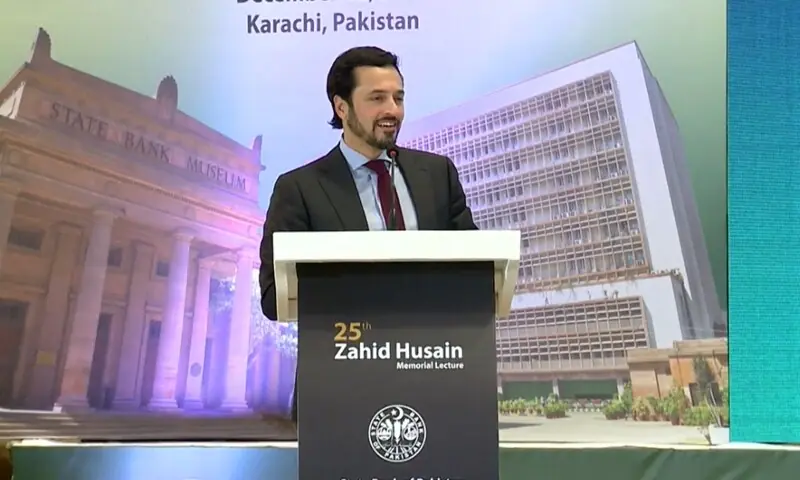
Speaking at the 25th Zahid Hussain Memorial Lecture on Monday, Prof Sufi, the Bruce Lindsay Distinguished Service Professor at the University of Chicago and recipient of the 2017 Fischer Black Prize, stressed that the country’s economic future depends on embracing high-tech industries.
“High-tech is driving economic change,” Prof Sufi said, pointing to the limitations of Pakistan’s industrial structure, which relies on low-tech services and stifles growth potential. He argued that investments in high-tech services are crucial not just for national development but for positioning Pakistan among the world’s wealthier nations.
He also emphasised the importance of supporting small and medium-sized enterprises (SMEs), calling them central to fostering broader economic transformation. The government, he argued, needs to create a financial system that encourages investment in intangible capital and improves access to funding for such enterprises.
“The economy is rapidly changing, and so is the role of finance,” he remarked. “We must ensure that financial arrangements are made to facilitate economic prosperity.”
To this end, Prof Sufi advocated for strengthening Pakistan’s financial institutions, which he said could play a key role in providing businesses with the capital necessary for innovation and growth. He underlined that financial structures must adapt to the changing landscape, with an emphasis on facilitating the flow of capital to sectors reliant on intangible assets such as research and development (R&D) and specialised knowledge.
He also cited the success stories of Pakistan’s two leading companies, Netsole Technologies and Systems Ltd.
Addressing a question during the lecture, Prof Sufi pointed out that emerging economies, including Pakistan, should evolve a financial system that ensures access to capital for pivotal sectors like IT. “The transformation of savings into the production of high-tech goods and services should be the focus of policymakers,” he added.
Answering to Dawn’s queries over Pakistan’s financial system and government’s growing reliance on bank borrowings, Prof Sufi noted that many banks prefer to lend to the government rather than private enterprises, citing risk-free profits from government borrowing to bridge budget deficits. This, he said, restricts access to financing for high-growth industries, which rely heavily on intangible assets rather than physical collateral.
He called for the development of financial systems that are more inclusive of innovative sectors. He also praised Pakistan’s growing freelance sector, where many individuals are earning substantial sums by exporting their skills and services. However, he argued that to capitalise on this potential, policymakers must provide better professional training, guidelines, and access to finance for freelancers.
The lecture also discussed how the financial sector needs to adapt as global markets increasingly shift towards high-tech services. Prof Sufi explained that traditional banking systems are often ill-suited to support innovative businesses, which depend more on future prospects than physical assets that can be collateralised.
“Pakistan needs to establish financial intermediaries that specialise in intangible capital,” he said, proposing a shift towards cash flow-based lending and external equity financing, such as venture capital (VC) and private equity (PE), to support high-growth sectors.
In his address, SBP Deputy Governor Saleemullah acknowledged the country’s current macroeconomic stability but stressed that deeper reforms are required to ensure sustainable growth. He highlighted the need for capital to be directed toward the “real economy” to break the cycle of boom-and-bust economic patterns seen in recent years.
“Expanding financial access to SMEs, youth, and women is critical for inclusive growth,” Saleemullah said. He encouraged banks to move away from traditional collateral-based lending and instead adopt cash flow-based lending models that consider the risks specific to each business.
He also outlined the SBP’s ongoing initiatives, such as the risk coverage facility for SME and agricultural finance, the Banking on Equality policy, and the Regulatory Sandbox for fintech. These efforts are supported by digital infrastructure like e-KYC and faster payment systems, all aimed at fostering technology-driven growth in Pakistan.
The lecture concluded with an interactive fireside chat in which Prof Sufi elaborated on key policy priorities for Pakistan. He addressed questions from a diverse audience, including diplomats, academics, banking leaders, business figures, and the family of the late Zahid Hussain, the former governor of SBP, in a session that explored the evolving landscape of financial systems in an era dominated by high-tech growth.
Published in Dawn, December 23rd, 2025