
Photography has long functioned as both visual expression and confrontation. In moments of war and political upheaval, the photographer’s presence shaped documentary practice — from Josef Koudelka’s visceral images of the Prague invasion to Cartier-Bresson’s post-war work. In today’s political and social climate, resistance feels more urgent than ever, rendering photography an act of bearing witness.
But what happens when the artist becomes the lone witness to the crashing tides within? In such moments, photography becomes a way to hold on to parts of the self that slip away — memory, identity, desire, grief. By turning the lens inward, the artist resists the quiet erasures taking place within.
In this vein, the group exhibition ‘Intimate Resistance’ at Karachi’s Vasl Gallery brings together four photographers, each anchoring themselves to these inner tides.
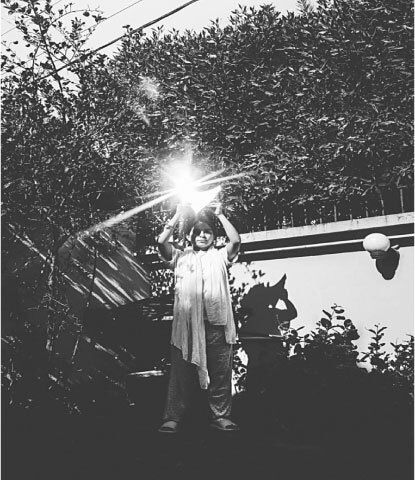
Arif Mahmood is a veteran Pakistani photographer with a focus on portraiture and photojournalism. His style of photography is very distinct, due its theatrical play of light and shadows with deep tones and strong monochrome images. Mahmood responds to the idea of intimate resistance by re-encountering a series of silver gelatin prints salvaged from a fire that damaged his photographic archive.
Four photographers turn the camera inwards to chart memory, labour and loss as forms of resistance
Through a series of colour images, Mahmood follows the delicate dance of evening light falling upon salvaged silver gelatin prints. One such image is that of a clarinet player juxtaposed with a personal journal with fading ink. The tenderness of these images becomes a quiet reconciliation with impermanence, extending beyond the damaged prints into the photographer’s own nostalgia.
Hassaan Gondal is a young photographer from Dandot, a remote industrial town at the foothills of the salt range in central Punjab. A business school graduate, Gondal felt his values were at odds with the neo-liberal influence around him. Rich in colour and often nocturnal, his photographs carry a cinematic use of light, shaped by his experience as a filmmaker. The exhibition powerfully links the personal to the systemic: the narrator’s father, a union leader, represents the ‘disappearance’ of organised labour.
Gondal’s lens contrasts the security of the past (union-funded education) with the generational poverty and precarity of the minimum-wage contract labour today. One of the most captivating photographs from the exhibition is a close-up of a mine worker’s eyes with salt-crusted lashes. Their unblinking clarity holds the evidence: wages that have shrunk, unions that have vanished and rights that have been steadily erased. In contrast, his other images, such as that of a dusky dirt track, carry the fading memory of a forgotten place.
Malika Abbas is an educator, visual artist and a curator. Although her primary medium is photography, Abbas has a background in miniature painting. Her work, in both colour and black-and-white, carries a consciousness shaped by loss, maternal resonance and everyday lived experience.
Abbas takes her viewer into a deeply personal space, as she reflects on the abruptness of transitioning into adulthood and stepping out of the fairy-tales of childhood. She tackles this new reality with the irony of fiction that almost borders on absurdity. A set of staged black-and-white photographs layered over a larger colour image of Hyderabad Zoo at twilight creates a disquieting tension between what is real and what is staged.
Wendy Marijnissen is a Belgian documentary photographer who, for over a decade, has been dividing her time between Antwerpen and Karachi. Her work has focused on women’s struggles, particularly gender-based vulnerabilities and reproductive health. Her time in Pakistan has helped her process and string together a body of work in a book titled Always the Guest. This project provided her with the opportunity to explore and process her personal trauma revolving around the loss of her parents and the unfulfilled desire of motherhood.
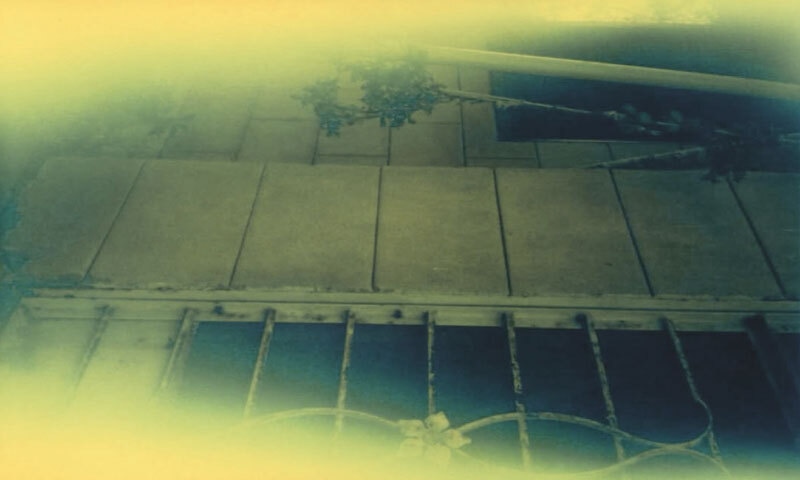
Using the polaroid, Wendy negotiates the geography of her two homes. The soft, poetic quality of the polaroid becomes a resistance to homesickness and loss, while also serving as a visual record of Karachi for friends and family in Belgium, who may encounter the city through more politically turbulent narratives.
The Vasl Gallery’s compact space compliments the intimate nature of these works. It lets the viewer confront the vulnerabilities of the artist. The act of paying attention becomes a prayer and resistance.
‘Intimate Resistance’ was on display at the Vasl Gallery from November 25-December 20, 2025
The writer is a university student with an interest in urban history, culture and public spaces. He can be contacted at pakistaniumer04@gmail.com
Published in Dawn, EOS, January 4th, 2026