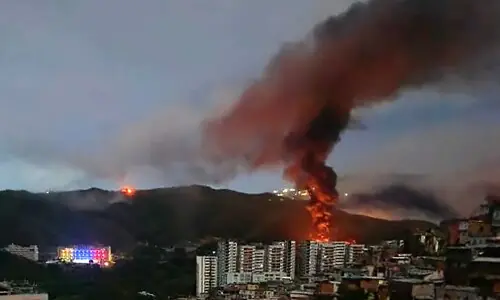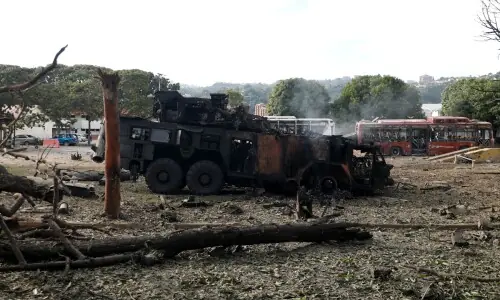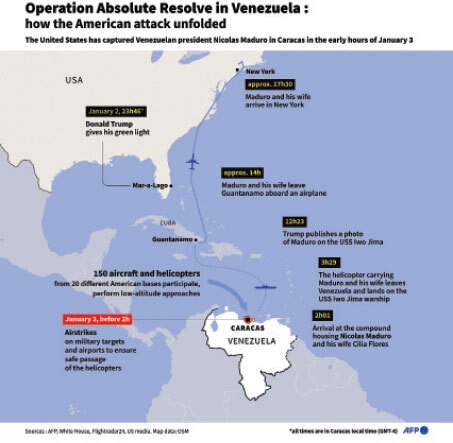
The dramatic capture of Nicolás Maduro and his wife follows weeks of intensifying pressure in which President Donald Trump and his top advisers openly targeted a different prize: the country’s vast oil reserves.
While the White House stated the overnight extraction was necessary to halt narcotics flow, the operation serves as the culmination of a campaign justified by claims that Venezuela stole American oil assets through nationalisations decades ago.
Reports from The New York Times and The Washington Post detail how the administration intertwines these military actions with demands to reclaim what officials term “stolen” wealth, challenging the sovereign foundations of the South American nation.
In his Truth Social posts, Trump said the South American country must return all the oil, land, and other assets it had previously stolen from the United States. “We had a lot of oil there. As you know they threw our companies out, and we want it back,” he wrote.
However, historical records analysed suggest a more complex reality.
The US presence in Venezuela dates back to the early 20th century. NYT reported that under dictator Juan Vicente Gómez, foreign companies were granted sweeping concessions, eventually controlling 98pc of the Venezuelan market.
These companies, particularly from the US, did not just own wells; they built entire English-speaking enclaves known as “oil camps”.
The first major wave of nationalisation occurred in 1976 under President Carlos Andrés Pérez. According to WaPo, this move followed a trend of “resource nationalism” seen in Saudi Arabia and Mexico, aimed at achieving economic sovereignty.
Contrary to the current administration’s description of theft, this process was largely a negotiated transition. Venezuela created the state oil company, Petróleos de Venezuela S.A. (PDVSA), and assumed control of operations previously run by Exxon, Mobil (now ExxonMobil), and Shell.
WaPo reported that these companies, which accounted for more than 70 per cent of crude production, lost roughly $5 billion in assets. However, they were compensated approximately $1bn each. At the time, companies did not aggressively pursue larger sums, partly because they lacked modern legal mechanisms to sue sovereign governments.
Relations deteriorated significantly in 2007 under socialist leader Hugo Chávez. Chávez launched a new phase of nationalisation targeting the Orinoco Belt, home to the country’s largest oil deposits, to fund his “Bolivarian revolution”.
This move dismantled the reopening of the industry that had occurred in the 1990s. While some companies like Chevron accepted new minority stakes to remain in the country, others refused. WaPo noted that ExxonMobil and ConocoPhillips rejected the new contract terms and departed.
This led to protracted legal battles. International arbitration tribunals eventually awarded ConocoPhillips $8.7bn and ExxonMobil $1.6bn in compensation. Venezuela, crippled by economic mismanagement, has yet to pay the full amounts.
NYT reported that for Venezuelans, oil is often viewed as a “birthright”.
Published in Dawn, January 5th, 2026