Brick kilns blamed for worsening air quality in Nepal
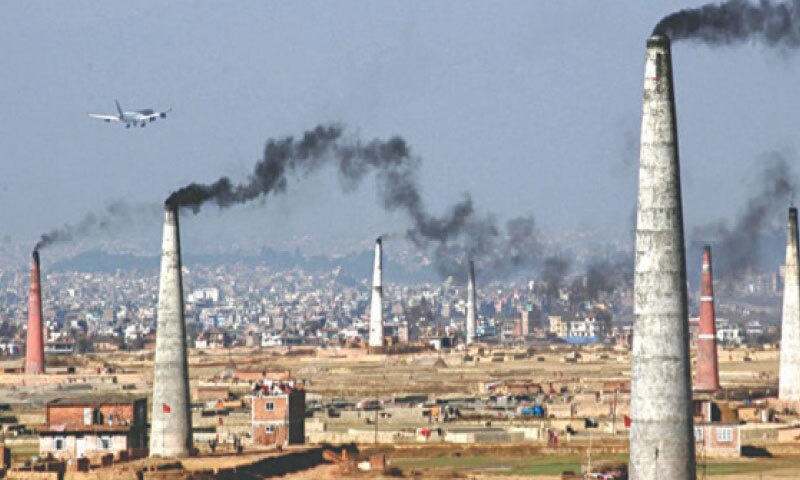

NEARLY 1,200 brick kiln operators across the country are set to start seasonal firing, further exacerbating air quality, which is already worsening every day. Brick kilns began operations on Jan 15, a deadline agreed upon by the industry, government, and environmentalists.
Brick kilns are among the major contributors to the country’s deteriorating air quality, including in the Kathmandu Valley. Due to delays in establishing minimum standards, many kilns use low-quality, low-cost coals that further degrade the air quality.
Officials at the federation said the Department of Industry had asked the Nepal Bureau of Standards and Metrology to set minimum coal standards a year ago, but the standards have yet to be drafted.
“As brick factory owners and their family members are also citizens of Nepal, polluted air affects their health too,” said Chand. “Had the concerned agencies enforced minimum standards for coal, factories would have followed them.”
Most brick kilns use coal as the primary fuel, which is imported mainly from India. Low-grade coal contains high levels of sulphur, which, when burned, can be hazardous to human health.
Air quality in the Kathmandu Valley has been deteriorating sharply, reaching very unhealthy levels in the morning. Brick factories in the valley are the third largest source of suspended particulate matter (SPM) and PM10 emissions. PM10 refers to particulate matter or solid and liquid droplets in the air that are less than 10 micrometres in diameter.
A recent study shows there are 89 brick kilns in three districts of the Valley —Kathmandu, Lalitpur, and Bhaktapur. The valley’s kilns are estimated to consume over 56,100 tons of coal and 330 tonnes of other local fuels, including sawdust and wood, every year, according to a study carried out by the Department of Environment.
The brick industry is one of the largest coal-consuming sectors in Nepal, with annual consumption estimated at 504,000 tonnes of coal and hundreds of tons of biomass. Across Nepal, there are 1,349 brick factories that produce 5.14 billion bricks a year. Nepali brick industry emits about 1.25 million tons of carbon dioxide annually, according to a study.
Experts say a number of airborne toxins and pollutants — mercury, sulphur dioxide, nitrogen oxides, particulates and various other heavy metals — generated from the burning of coal contribute to acid rain, respiratory illness, smog, and lung disease. Using high-sulphur coal results in higher sulphur dioxide emissions.
“Deteriorating air quality affects everyone’s health,” said Bhupendra Das, an air quality expert. “As the issue is too serious and related to everyone’s health, authorities must take the issue seriously.” He said that, in addition to setting minimum coal standards, authorities should make emission-monitoring mechanisms effective and encourage factories to use briquettes instead of coal.
In recent years, air pollution has emerged as the number one risk factor for death and disability in Nepal, surpassing malnutrition and tobacco use, according to a new World Bank report.
Published in Dawn, January 19th, 2026