Courts should not convert divorce cases into ‘khula’: SC
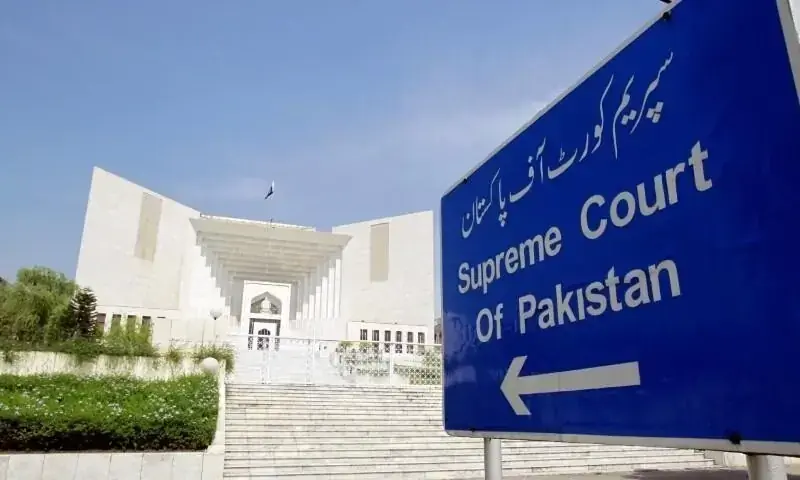

ISLAMABAD: The Supreme Court has ruled that the family courts must not, on their own motion, convert a wife’s demand for divorce into ‘khula’ proceedings, as doing so would deprive her of her right to dower.
Consequently, the apex court overturned the decisions of the lower forum and dissolved a marriage on the grounds of “talaq” (divorce) instead of khula, since the husband had contracted a second marriage. The Supreme Court also ordered awarding the wife her full unpaid dower of Rs1.2 million through the executing family court.
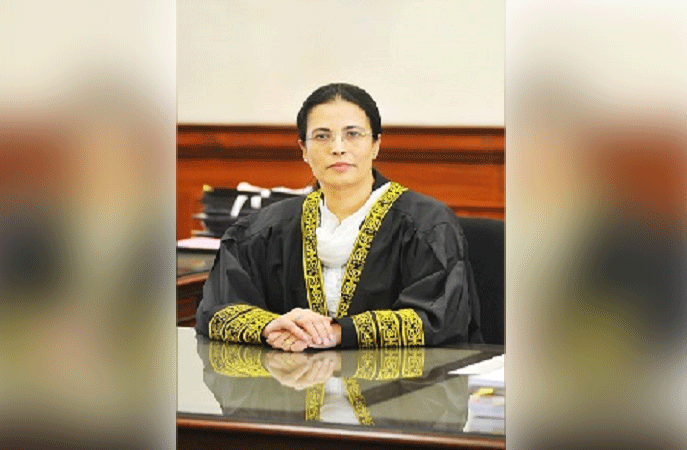
“We have noted that where a wife expresses aversion, the family court dissolves the marriage on the grounds of khula and the wife is deprived of her dower,” observed Justice Musarrat Hilali in a five-page judgment on Friday.
Headed by Chief Justice of Pakistan (CJP) Yahya Afridi, the two-judge Supreme Court bench had taken up an appeal by Naila Javed against the June 30, 2025 Peshawar High Court (PHC) Abbottabad Bench’s maintaining of the dissolution of her marriage by the family court on the basis of khula, with a decree to forego her remaining dower as a condition of khula.
Apex court says granting khula without petitioner seeking it legally unsustainable
The Supreme Court emphasised that if the aversion was the outcome of some reasons, then dissolution should be based on those particular reasons. The courts should not, on their own motion and without the statement of the wife, convert the demand for divorce into khula.
Through her petition, Ms Javed contended that she never sought khula and that her case was rather based on the grounds pleaded under the Dissolution of Muslim Marriages Act, 1939 (DMMA). And, more importantly, her husband had contracted a second marriage without complying with the mandatory procedure under Section 6 of the Muslim Family Laws Ordinance, 1961 (MFLO). Thus, she was entitled to dissolution of marriage under Section 2(iiia) of the DMMA with full retention of her dower.
The judgement noted that the marital union was solemnised between the parties on Dec 16, 2013, but irreconcilable differences arose between them. Upon the irretrievable breakdown of the marriage, the petitioner instituted a suit before the family court seeking a decree of dissolution of marriage on the grounds of cruelty, non-payment of the remaining dower, non-payment of maintenance, and that the respondent had contracted a second marriage during the pendency of the case without her permission.
The family court, however, did not rule on the merits of these pleaded grounds; instead, it concluded that the petitioner had failed to substantiate the allegations of cruelty and had expressed an unequivocal unwillingness to live with the respondent, the judgement observed.
Subsequently, the family court granted a decree of dissolution of marriage by way of khula, with a direction to the wife to relinquish her claim of outstanding dower.
During the hearing, the Supreme Court formulated a number of questions for consideration, namely whether the petitioner had discharged the burden of proof to establish her claim of cruelty, whether the court could exercise suo motu powers to convert the plaintiff’s claim for divorce into khula, and whether a wife’s averment of irreconcilable aversion towards her husband constituted a legally sufficient ground to initiate khula proceedings and relinquish dower.
The judgement said the petitioner did not plead for dissolution of marriage in her original suit. However, during the pendency of the suit, when the respondent contracted a second marriage without her permission, she sought dissolution of marriage.
Referring to the second marriage, the Supreme Court said Section 2(iiia) of the DMMA expressly provides that a woman is entitled to dissolution of marriage if the husband has contracted a second marriage in contravention of the MFLO.
Under Section 6 of the MFLO, contracting a second marriage without the written permission of the arbitration council constitutes a contravention, attracting both penal and civil consequences, including dissolution, the judgement noted.
In the present case, the respondent neither obtained the permission of the existing wife nor sought a declaration from the arbitration council. There is thus no dispute that the second marriage was contracted without obtaining the written permission of the council. This conclusively establishes a violation of the statutory ground under Section 2(iiia) of the DMMA, the judgement said.
The family court and the appellate court failed to adjudicate this ground despite its clear availability on the record, the judgement noted, adding that a lower court cannot convert a suit under the DMMA into one for khula in the absence of a clear and unequivocal statement by the wife. Thus, the concurrent judgements of the courts below granting khula without the petitioner seeking it are legally unsustainable, the Supreme Court held.
Published in Dawn, January 25th, 2026