Bipartisan unity on display over Balochistan issue
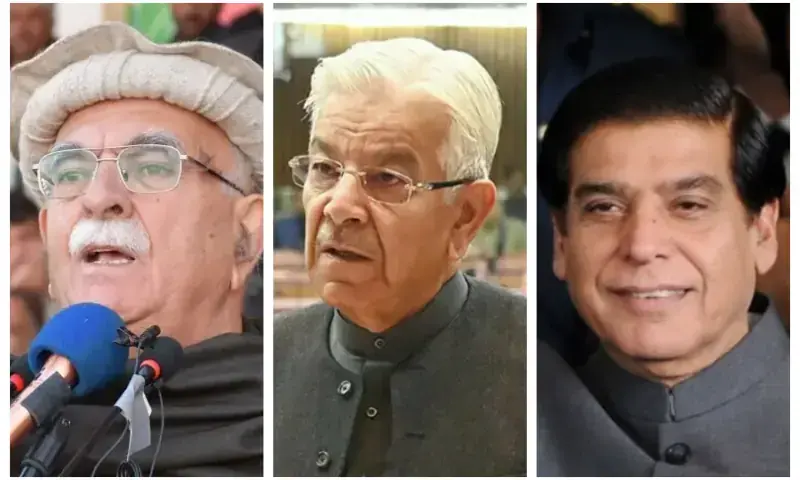
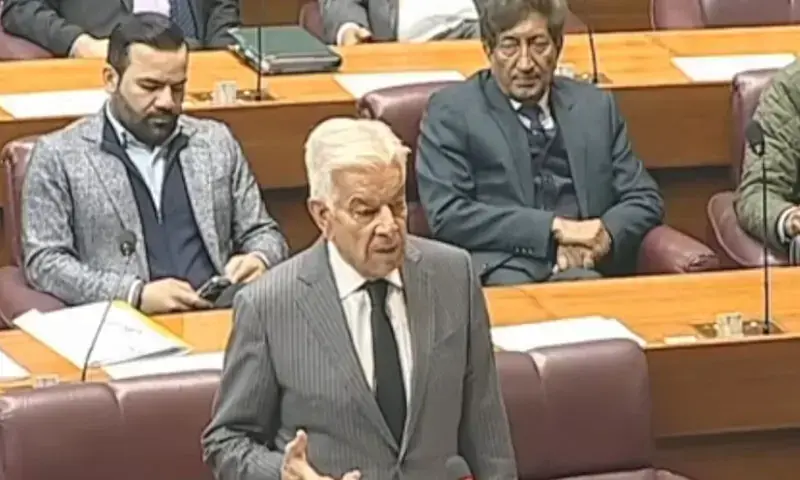

• Achakzai terms murder of innocents ‘inhuman act’; says sense of deprivation has fuelled terrorism
• Khawaja Asif rejects disparity narrative, says it is being used to exploit sympathies of Baloch youth
• PPP’s Ashraf suggests parties should avoid confrontation on issues of national import
• Senate adopts resolution against terror attacks
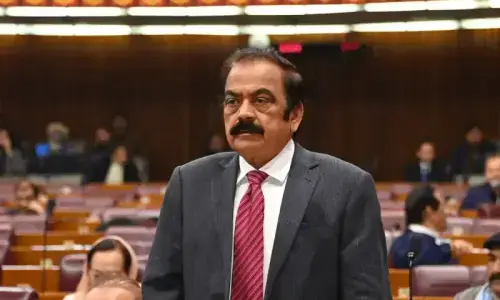
• Sana insists on calling spade a spade ‘without ifs or buts’
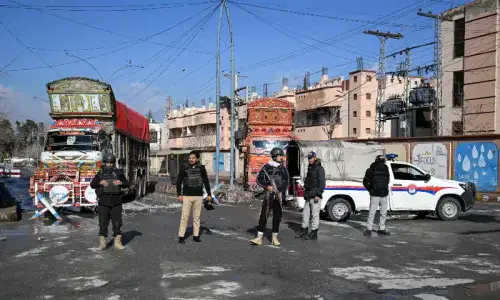
ISLAMABAD: As lawmakers on both sides of the aisle in the lower house of parliament exhibited rare unity on Monday in condemning the deadly terror attacks in Balochistan, with varying opinions on the way of tackling the menace, Defence Minister Khawaja Asif asserted that backwardness of any area was no justification to stand against the state.
Suggestions came from across the aisles that instead of a mere debate on the grave issue of terrorism, the government should take decisive action to eliminate terrorists with full force so that the life of a common man could be safeguarded.
However, when proceedings concluded, only 10 members were sitting in the house, indicating the seriousness of lawmakers in addressing one of the biggest challenges confronting Pakistan.
Speaker Sardar Ayaz Sadiq, who was presiding over the NA session, earlier suspended its agenda and confined its proceedings to the issue of fresh terror attacks in Balochistan.
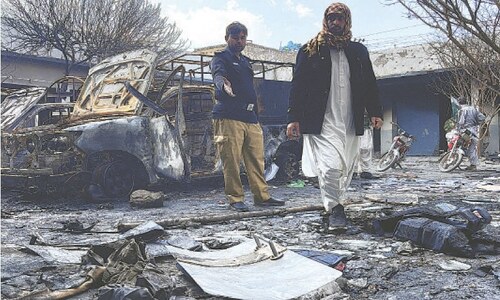
In his speech on the floor of the house, the defence minister said a total of 177 terrorists were killed within a few days following the deadly attacks in Balochistan that claimed the lives of 10 policemen, one Levies man, six FC personnel and as many as 33 civilians.
The defence minister warned that political polarisation and fragmented national narratives were undermining Pakistan’s fight against terrorism, cautioning that internal divisions only served the interests of militant groups and hostile foreign actors.
He said the country continued to pay a heavy price for past policy decisions, particularly those linked to regional conflicts, adding that the burden of those choices was being borne by civilians and security personnel rather than by those who had made the decisions decades ago.
He urged parliamentarians to demonstrate unity on matters of national security, saying a divided political discourse weakened public confidence and emboldened hostile forces.
Highlighting the human cost of terrorism, the defence minister said civilians in affected areas faced daily threats, while members of the armed forces continued to make sacrifices to safeguard national security.
He ruled out the narrative of disparity and backwardness in Balochistan, saying that banned Balochistan Liberation Army (BLA), which he described as India-sponsored, exploited this narrative to gain the sympathy of Baloch youth.
While presenting a comparison between the current situation and that at the time of independence in 1947, he said, “In 1947, there were only 114 schools in Balochistan, whereas today there are 1,596. There was no university in the province at that time, but now there are 12 universities.
Today, Balochistan has five medical colleges, 145 other colleges, 13 cadet colleges, 21 technical institutions, 13 hospitals, 18 teaching hospitals, 23 district headquarters hospitals, 756 basic health units, 841 dispensaries, four cardiac centres and 24 dialysis centres,” he added.
But Leader of the Opposition in the National Assembly Mehmood Khan Achakzai rejected the claims and figures presented by the defence minister, saying Mr Asif had no understanding of the situation in the province.
He said the unjust distribution of resources had created a sense of deprivation among the people, which fuelled terrorism. “The first right over resources rests with the people of the areas from where those resources are extracted. We can overcome terrorism in a short time by giving due rights to the people,” he added.
An ‘inhuman’ act
Mr Achakzai, however, condemned the attacks and said the killing of innocent labourers, teachers and people from other provinces in Balochistan was an inhuman act and could not be justified.
He urged the National Assembly speaker to hold a marathon session on terrorism lasting two days and to allow all members to speak on the issue.
Tracing the history of Balochistan since the British Raj, the opposition leader claimed that the Pashtun population was equal to the Baloch population in the province.
When Mr Achakzai held the country’s intelligence agencies responsible for failing to prevent the attacks, Speaker Sadiq commended the role of the security forces and intelligence agencies and urged the defence minister to provide details of how many terrorist attacks had been thwarted in the recent past.
A critical moment
Taking part in the debate, senior PPP leader Raja Pervez Ashraf said political disagreements were a part of democratic life, but should not overshadow issues of terrorism, national integrity and security.
He cautioned against targeting national institutions for political gain, saying such actions damaged morale and could be exploited by hostile neighbours. He warned that political infighting and confrontational narratives were weakening the country at a critical moment.
Referring to the sacrifices of soldiers deployed along the borders and in terrorism-affected areas, the PPP lawmaker said any impression that their sacrifices were being undermined could have serious consequences for national resolve. He urged all political parties, including the opposition parties, to rise above partisan interests and present a united front on matters of national security.
The PPP leader called for comprehensive parliamentary engagement on security challenges, proposing that the House hold full debates and form committees to examine the situation and present concrete recommendations.
He stressed that Balochistan’s stability must remain a national priority and should be addressed through consensus rather than political confrontation.
The debate was held following the adoption of a motion to discuss the prevailing law and order situation in the country.
During their speeches, Mehmood Achakzai and Barrister Gohar demanded the release of incarcerated PTI founder Imran Khan and called for him to be allowed to meet his doctors and family particularly in light of reports that he was suffering from ‘a serious medical condition’.
Published in Dawn, February 3rd, 2026