THE coordinated terrorist attacks across Balochistan on Saturday should serve as a wake-up call to the state: unless the counterterrorism approach is fine-tuned and recalibrated to meet the needs of the day, we may see repeats of such violent episodes.
The attacks in the province did not just occur in some far-flung corner of Balochistan; the terrorists managed to hit Quetta and Gwadar, indicating their reach and level of preparedness. The administration, therefore, needs to stay two steps ahead of violent actors not just in Balochistan, but across the country.
Security forces have managed to neutralise nearly 180 terrorists over the past two days in the province. While this may quell the immediate threat, in the long run better intelligence is needed to thwart violent elements before they can strike.
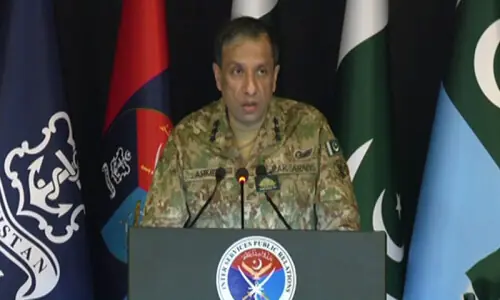
The year 2025 was exceptionally bloody where terrorist violence is concerned. As the military’s spokesman’s told a presser last month, there were nearly 5,400 terror incidents last year. This has resulted in the loss of over 1,200 security men and civilians, according to ISPR’s count.
In the first month of the current year, the signs do not look promising. As per the Pakistan Institute for Conflict and Security Studies, there were at least 87 terrorist attacks in January, up from 68 in December 2025, resulting in the martyrdom of at least 119 civilians and security personnel. And in keeping with past trends, the bulk of terrorist activity occurred in KP and Balochistan. Meanwhile, the US publication Foreign Affairs has said Pakistan could face more terrorist attacks originating from across the border in Taliban-ruled Afghanistan.
In light of these grim details, the state must act with alacrity. As many observers are pointing out, the Balochistan attacks signal a major security failure, and had LEAs not reacted in time, greater havoc could have been caused. The Balochistan chief minister highlighted the LEAs’ role while speaking on Sunday.
Whether it is Baloch terrorists backed by India, TTP terrorists supported by Kabul or any other terrorist group working to destabilise Pakistan, the state must shore up its defences to prevent more loss of innocent life. The ISPR head has said there were over 75,000 intelligence-based operations in 2025. The state — both its civilian and military arms — as well as counterterrorism experts, needs to examine the gaps that allowed such a large number of terrorist attacks last year despite such a high frequency of IBOs, and how violent actors continue to organise, as the Balochistan episode has shown.
Far too many security personnel have fallen fighting terrorists, while a large number of civilians have also been martyred. A revised and more effective CT policy is, therefore, needed to permanently quell the terrorist menace.
Published in Dawn, February 3rd, 2026