Iran-US talks ‘back on track’ after setbacks
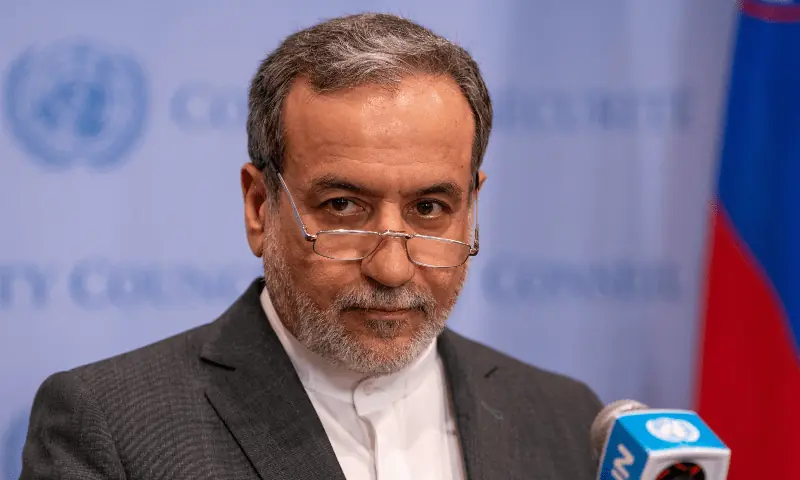

• Araghchi says talks with US ‘scheduled’ for Friday in Oman
• Regional leaders urge United States to proceed with dialogue following reports of breakdown
• Uncertainty triggered after Rubio said talks should include missile programme; Iran wanted issue kept ‘off the table’
• Trump says Iran supreme leader ‘should be very worried’
• Regional players like Pakistan, S. Arabia, Turkiye, Egypt ‘unlikely’ to take part at this stage
ISLAMABAD / WASHINGTON: The prospects for talks between Iran and the United States seemed fraught with uncertainty on Wednesday, even after Iranian Foreign Minister Abbas Araghchi publicly announced the date and timing of the proposed negotiations.
“Nuclear talks with the United States are scheduled to be held in Muscat on about 10 am Friday. I’m grateful to our Omani brothers for making all necessary arrangements,” he posted on X late on Wednesday night.
A US official also confirmed that the negotiations are on track, Reuters reported.
The statement came amid swirling speculation that the talks had already been called off.
Indications of trouble first surfaced after American news website Axios reported that the talks were falling apart, as the US had told Iran that it would not agree to Tehran’s demands to change the location and format of talks.
US officials considered the request to change the venue but then decided to reject it, Axios said. “We told them it is this or nothing, and they said, ‘Ok, then nothing,’” a senior US official was quoted as saying.
The news outlet later reported, citing two US officials, that plans for US-Iran nuclear talks are back on after several Middle Eastern leaders “urgently lobbied the Trump administration on Wednesday afternoon not to follow through on threats to walk away.
“At least nine countries from the region reached out to the White House at the highest levels strongly urging the US not to cancel the meeting,” it added.
Insider accounts suggested the talks were salvaged after persistent requests from regional actors, which had originally been slated to participate in the discussions planned for Turkiye, but were later excluded from the round shifted to Oman.
These countries — including Pakistan, Saudi Arabia and Turkiye — maintain direct stakes, as they would face significant consequences in the event of a conflict, and thus have sustained their strong interest in the dialogue.
Their advocacy seems to have helped preserve at least some channel for de-escalation and prevented the breakdown of diplomacy.
Talking to Dawn from Tehran, Iranian officials had suggested that regional players like were unlikely to take part at this stage. Qatar’s prime minister, however, is more likely to be involved alongside Omani interlocutors.
Troubled talks
Reports about the cancellation of talks started making rounds after US Secretary of State Marco Rubio, in public remarks, insisted that any engagement would need to address Iran’s ballistic missiles, its regional posture and its domestic governance, alongside nuclear issues.
Rubio’s comments, many believed, pointed to divisions within the US administration itself. While President Trump’s envoy, Steve Witkoff, has been tasked with exploring a diplomatic opening, Rubio articulated a far more expansive and hawkish agenda.
For Tehran, this seemed to confirm long-held suspicions that Washington was abandoning the idea of a limited confidence-building process. Iranian officials, therefore, saw the expanded agenda not as a starting point for negotiation, but as an attempt to front-load concessions.
A senior Iranian official, however, said the talks would only be about Iran’s nuclear programme, and that its missile programme was “off the table”.
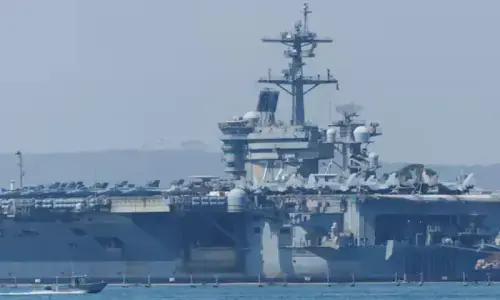
The diplomatic efforts come after Trump’s threats of military action against Iran during its crackdown on protesters last month and the deployment of more naval power to the Gulf.
After Israel and the United States bombed Iran last summer, renewed friction has kindled fears among regional states of a major conflagration that could rebound on them or cause long-term chaos in Iran. Trump has continued to weigh the option of strikes on Iran, sources say. Oil prices have risen due to the tension.
Khamenei ‘should be very worried’
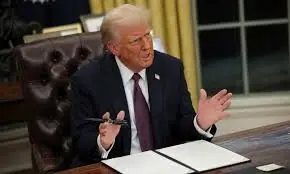
Meanwhile, Trump said on Wednesday that Iran’s supreme leader Ayatollah Ali Khamenei should be “very worried”, as Washington builds up its military forces in the region.
“I would say he should be very worried, yeah, he should be,” Trump said in an interview with US broadcaster NBC News. “As you know, they are negotiating with us.”
Trump also said that Iran had eyed a new nuclear site after US strikes. “They were thinking about starting a new site in a different part of the country,” Trump told NBC. “We found out about it, I said, you do that, we’re going to do very bad things to you.”
Published in Dawn, February 5th, 2026