Nepra pulls the plug on net-metering


• Notifies new regulations, shifts all prosumers to net-billing
• New contracts will be limited to five years; existing seven-year terms will remain valid until expiry
• Buyback rate for future prosumers cut to Rs10-11 per unit from Rs26
• Imported electricity from Discos to be billed separately at Rs37-55 per unit
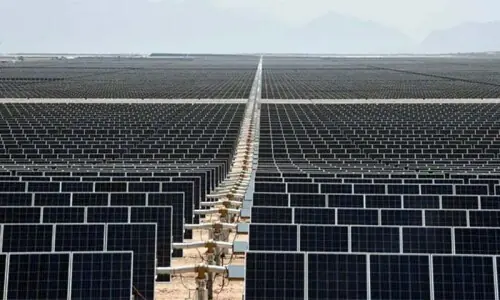
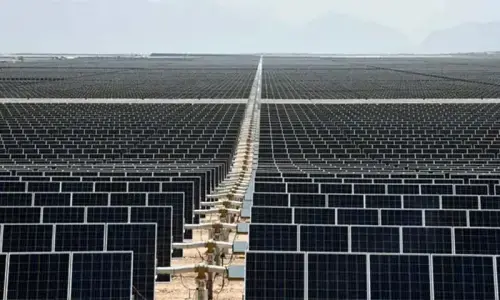
ISLAMABAD: In a rapid move, the National Electric Power Regulatory Authority (Nepra) on Monday drastically changed the terms of contracts for all existing and future net-metered solar consumers — known as prosumers — to contain rising solar energy penetration and protect an expensive and inefficient state-owned power network.
The contractual changes were introduced through a predetermined set of regulations that had been published as draft for public opinion but were notified without any change after a public hearing. The notification effectively terminates the existing net-metering regime and replaces it with net-billing for all.
As a result, earlier public pronouncements by officials and ministers that the terms of contracts with existing prosumers would remain unchanged until completion of their seven-year terms have proven incorrect. Under the new regulations, the existing registered prosumers will be shifted immediately to net-billing instead of net-metering, and their export units will be credited for one month only instead of the current three months. All other existing terms will remain unchanged until expiry of their seven-year contracts.
New prosumers will be granted only five-year contracts, and their export units will be accepted at Rs11 per unit compared to Rs26 under the existing contracts. Consumers’ import units from distribution companies (Discos) will now be billed separately at Rs37-55 per unit, depending on the relevant slab, excluding taxes, surcharges and duties.
Surplus generation exported to Discos will be calculated separately — at Rs26 per unit for existing and around Rs10 per unit for future prosumers. The net difference will be billed to consumers, unlike the existing system of unit-for-unit exchange in import and export.
Nepra held a marathon public hearing on Friday evening but restricted dozens of relevant consumers, independent think tanks and business representatives from suggesting alternative solutions. By the afternoon of the first working day, the regulator notified the same draft without changing a single clause, indicating a predetermined conclusion.
Earlier, the Power Division had proposed similar changes multiple times but withdrew after public criticism over unilateral changes to consumer-financed contracts under a properly announced renewable policy in 2015.
Both the government side and the regulator have blamed prosumers with higher-than-approved solar capacity and non-metered solar homeowners for grid challenges and higher capacity charges. However, the new regulations appear silent on both counts.
The Power Division claimed on-grid (metered) solar capacity had reached 7,000MW and off-grid exceeded 13,000MW. The power minister said millions of consumers had installed hybrid systems without meters to remain in subsidised categories, pushing capacity beyond 19,000MW outside metering. The new rules target only metered solar consumers.
Under the regulations, at the end of each billing cycle following the interconnection of a distributed generation facility, Discos will raise bills after accounting for electricity generated and consumed by the prosumer “under a net-billing arrangement”. Units supplied by Discos to prosumers will be billed at the applicable tariff (Rs37-55 per unit excluding taxes), while units supplied by prosumers to Discos will be billed at the National Average Energy Purchase Price (NAEPP) of around Rs10 per unit.
Net-billing means electricity generated by a prosumer’s distributed facility is purchased by Disco, and a bill is raised on consumption at Rs37-55 per unit after credit for electricity supplied by the prosumer at NAEPP. “In case the billed amount of the units supplied by prosumers exceeds the billed amount of units supplied by Disco, the net billed amount shall be credited against the prosumer’s next billing cycle or shall be paid by the licensee to the prosumer quarterly,” Nepra stated. Discos, however, have not made such payments in the past.
Under the new regulations, prosumers will not be allowed to install solar systems for net-metering beyond their original sanctioned load, effectively reducing the capacity limit by 50 per cent.
Existing prosumers’ contracts will remain valid until expiry of their current seven-year term, after which they may request a five-year extension, subject to Discos’ willingness. The new regulations apply to systems ranging from one kilowatt to one megawatt (1kW to 1MW) under Nepra’s direct regulatory and licensing domain.
At present, consumers below 25kW are licensed directly by Discos.
The solar regulation changes have been notified despite Nepra itself repeatedly blaming power companies for unaffordable and inefficient supplies.
“Compounded by heavy taxes, levies and surcharges, particularly the Debt Servicing Surcharge, these factors collectively inflate electricity costs for consumers. The result is a shifting of consumers towards decentralised or off-grid solutions, further weakening demand for grid-based electricity,” Nepra said recently.
The regulator stated that the new prosumer regulations provide clearer procedures, stricter technical requirements and a shift in billing methodology, aiming to better integrate small-scale generation into the national grid while safeguarding system stability.
Another restriction is a capacity cap at the transformer level. Discos are barred from entertaining new applications if the cumulative distributed generation capacity connected to a particular distribution transformer reaches 80pc of its rated capacity, to avoid overloading and technical instability in local distribution networks.
Published in Dawn, February 10th, 2026