White House tells Iran to do deal as Trump hints at US strikes
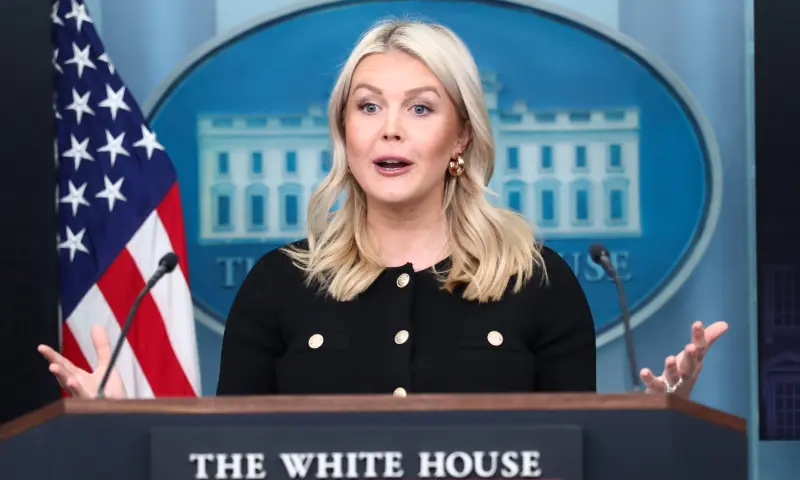

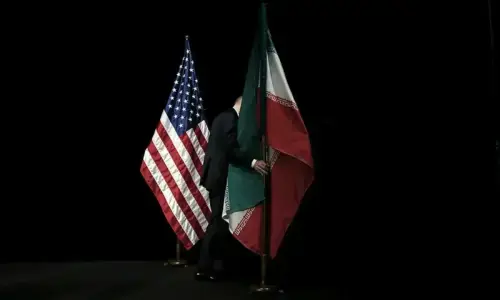
The White House warned on Wednesday that Iran would be “wise” to do a deal with the United States as President Donald Trump once again hinted at military action.
The two sides recently resumed indirect talks, mediated by Oman, after Trump repeatedly threatened military action against Iran over a deadly crackdown on protesters last month.
A previous attempt at negotiations collapsed when Israel launched surprise strikes on Iran last June, beginning a 12-day war that Washington briefly joined to bomb Iranian nuclear sites.
“Iran would be very wise to make a deal with President Trump and with his administration,” White House Press Secretary Karoline Leavitt told reporters.
On Wednesday, Trump again suggested the United States might strike Iran in a post on his Truth Social site, with a US military buildup underway in the Middle East.
He warned Britain against giving up sovereignty over the Chagos Islands in the Indian Ocean, saying that the archipelago’s Diego Garcia airbase might be needed were Iran not to agree a deal, “in order to eradicate a potential attack by a highly unstable and dangerous regime”.
CNN and CBS reported on Wednesday that the US military will be ready to launch strikes against Iran as early as this weekend, though Trump has reportedly not made a final decision yet.
The Wall Street Journal reported on Wednesday that Trump has been briefed on his military options with “all of them designed to maximise damage”, including a campaign to “kill scores of Iranian political and military leaders, with the goal of overthrowing the government”, unnamed US officials told the newspaper.
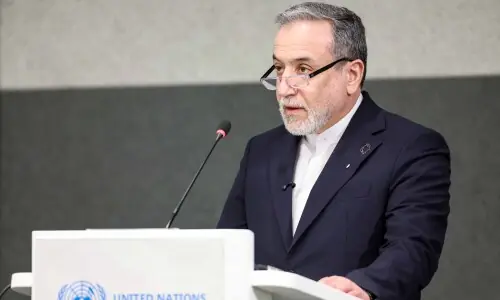
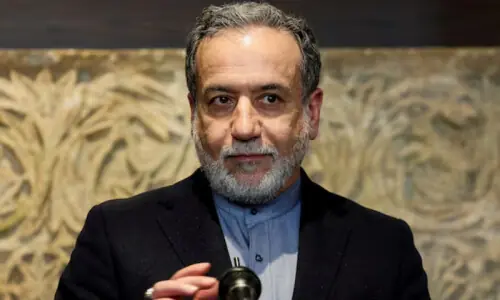
Earlier on Wednesday, Tehran’s top diplomat, Abbas Araghchi, said Iran was “drafting” a framework for future talks with the US.
Iran and the US held a second round of Oman-mediated negotiations on Tuesday in Geneva.
Araghchi said then that Tehran had agreed with Washington on “guiding principles”, but US Vice President JD Vance said Iran had not yet acknowledged all of Washington’s red lines.
‘Do not want war’
Speaking on Wednesday, Iranian President Masoud Pezeshkian insisted “we do not want war” but suggested Tehran could not give in to US demands.
“From the day I took office, I have believed that war must be set aside.
But if they are going to try to impose their will on us, humiliate us and demand that we bow our heads at any cost, should we accept that?”
Earlier on Wednesday, Araghchi held a phone call with Rafael Grossi, the head of the UN nuclear watchdog, the International Atomic Energy Agency.
In the call, the Iranian foreign minister “stressed the Islamic Republic of Iran’s focus on drafting an initial and coherent framework to advance future talks”, according to a statement from his ministry.
Tehran has suspended some cooperation with the IAEA and restricted the watchdog’s inspectors from accessing sites bombed by Israel and the United States, accusing the UN body of bias and of failing to condemn the strikes.
Meanwhile, US Energy Secretary Chris Wright warned that Washington would deter Tehran from acquiring nuclear weapons “one way or the other”.
“They’ve been very clear about what they would do with nuclear weapons.
It’s entirely unacceptable,” Wright told reporters in Paris on the sidelines of meetings of the International Energy Agency.
Displays of military might
The Omani-mediated talks were aimed at averting the possibility of US military action, while Tehran is demanding the lifting of US sanctions that are crippling its economy.
Iran has insisted that the discussions be limited to the nuclear issue, though Washington has previously pushed for Tehran’s ballistic missiles programme and support for armed groups in the region to be on the table.
While talks have resumed, the US has also been building up its military forces near Iran.
Washington has ordered a second aircraft carrier to the region, with the first, the USS Abraham Lincoln and its nearly 80 aircraft, positioned about 700 kilometres from the Iranian coast as of Sunday, satellite images showed.
Iran has sought to display its own military might, with its Islamic Revolutionary Guard Corps beginning a series of war games on Monday in the Strait of Hormuz.
Iranian politicians have repeatedly threatened to block the strait, a major global conduit for oil and gas.
On Tuesday, state TV reported that Tehran would close parts of the waterway for safety measures during the drills.