WASHINGTON: US President Donald Trump’s reported consideration of a limited military strike on Iran — intended to pressure Tehran into accepting his demands — has sparked intense debate among American and international analysts over the likelihood of conflict, the clarity of objectives, and the risk of a broader war.
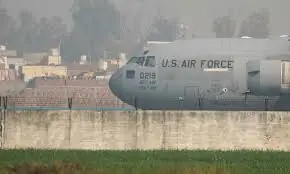
The discussion comes amid a major US force buildup in the region and conflicting signals about Washington’s goals, with many experts warning that military capability is outpacing strategic definition.
Signaling through the media.
A report in The New York Times suggesting Trump is weighing a near-term limited strike, with the possibility of a broader campaign later, is widely seen as part of a pressure strategy on Tehran.
Vali Nasr, former senior advisor at the United States Department of State and professor at Johns Hopkins University, posted on X that “Trump is signaling Iranians via New York Times. He is trying to force a deal by threatening war.”
Adrian Calamel, Vice President of Research at Viking Strategies, pushed back: “You honestly believe Trump is using the New York Times for signaling purposes?”
The exchange reflects a broader uncertainty in Washington: whether these moves are part of a controlled coercive strategy or evidence of drift toward military conflict. Several analysts suggest Trump’s personal instinct is to avoid a major war while still using military pressure as leverage.
William F. Wechsler, Senior Director of Middle East Programs at the Atlantic Council and former deputy assistant secretary of defense for special operations and counterterrorism, said everyone he has spoken with in Trump’s circles “has come away with the same conclusion: Trump does not want this war. He is, with good reason, extremely concerned with where it could lead.”
Wechsler also highlighted operational limits of any regime-change scenario “I can’t imagine that any option will be presented to the president that would include US conventional ground forces.”
Thomas Wright, Senior Fellow at the Brookings Institution and former senior director for strategic planning at the National Security Council, urged patience. “The United States does not need a comprehensive deal with Iran now … Nor is a war necessary. The clock is not ticking on America,” he wrote in The Atlantic.
Vali Nasr warned: “If Iran concludes that even after a deal, economic pressure, isolation, and ‘mowing the lawn’ will continue, then they may take their chances with rejecting capitulation and prepare for war.”
Ali Hashem, Middle East journalist and analyst, in a post on X quoted by Nasr, added: “Washington assumes military pressure buys diplomatic leverage. Tehran sees a challenge to ideological survival.”
Danny Citrinowicz, fellow at the Institute for National Security Studies, told the Atlantic Council: “Military action carries a high risk of regional escalation … and could draw the United States into yet another prolonged Middle Eastern conflict.”
Jason M. Brodsky, member of the Atlantic Council’s Iran Strategy Project Working Group, suggested a “whole-of-government approach aimed at weakening the Iranian regime, using diplomatic, economic, military, kinetic, cyber, and covert tools.”
Max Boot, senior fellow at the Council on Foreign Relations, wrote in The Washington Post “With Trump’s motives and objectives so unclear, it’s little wonder that talks aren’t working.”
Gideon Rachman, Chief Foreign Affairs Commentator at the Financial Times, warned: “Vague or unachievable war aims increase the chances of a prolonged US military operation.”
He added that past externally driven regime collapses in the Middle East produced prolonged conflict, mass casualties, refugee flows, and space for militant groups.
Military scenarios
From these assessments, three realistic pathways emerge:
Limited coercive strike — aligns with Trump’s stated preference for short operations but still risks retaliation across the region.
Sustained air campaign — a rolling effort to degrade Iranian capabilities, which could slide into a long war without decisive political results.
Regime-change strategy without ground forces — widely seen as militarily implausible.
Experts also urge Washington to consider the likely consequences:
Regional: attacks on US forces and partners, maritime disruption, multi-front pressure on Israel.
Iranian domestic politics: an external attack could consolidate, rather than weaken, the ruling system in the short term.
US domestic politics: tension between war fatigue and presidential credibility.
Global: energy market shocks, strain on alliances, and opportunities for rival powers.
The emerging consensus is not that war is inevitable, but that the risk of miscalculation is high because military movement is not matched by strategic clarity.