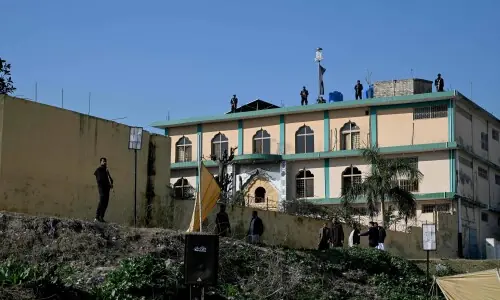
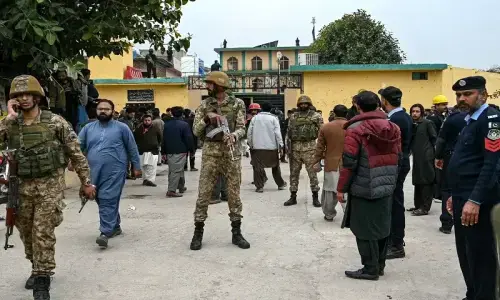
CONSIDERING the relentless wave of terrorist attacks Pakistan has been facing over the past few weeks, the administration has done the right thing by bringing all stakeholders on board in order to formulate a comprehensive response. Moreover, keeping in mind the growing footprint of IS-K locally, it is all the more necessary to neutralise this terrorist group before it can cause further havoc.
A meeting of federal and provincial officials, including senior police officers, on Wednesday decided to confront the wave of terrorism as a “top priority”, with the centre assuring the provinces of provision of resources and technical support. The minister of state for interior, who chaired the meeting, told this paper that the bases of terrorist groups responsible for bloodshed in Pakistan — including the Islamabad imambargah attack — were targeted in Afghanistan, and separately commented that retaliatory attacks were expected after Pakistan took military action. Afghanistan’s unprovoked firing at Pakistani positions on Thursday has confirmed these apprehensions.
Just as the nation came together in the past in the aftermath of the APS tragedy to formulate the National Action Plan, a similar effort is required today to confront the menace of terrorism. Working in silos is not an option; all pillars of the state must work in tandem to defeat terrorism. In this regard, while political differences can exist between the centre and the provincial governments, all stakeholders need to be on the same page to ensure maximum security for all.
The framework exists for a robust counterterrorism drive, such as NAP 2.0 as well as Nacta and the creation of the National Intelligence Fusion and Threat Assessment Centre last year. Just as Pakistan was able to quell the wave of terrorist violence during previous years, it can do so again if holistic policies are pursued, with buy-in from all. The state cannot control what occurs beyond its borders; but internal security can certainly be better managed by cracking down on terrorists and their facilitators.
In this regard, it has emerged that IS-K may prove to be a bigger security threat than the banned TTP — the latter group being at the forefront of the current wave of violence. As reported in this paper, following the Islamabad imambargah attack the mastermind of the atrocity was traced to Nowshera in KP. Subsequent investigations revealed that the suspect was leading an active IS-K cell in Bajaur.
This gang had reportedly been responsible for several targeted killings and suicide bombings, while women were also active members of the cell. One of the women members had reportedly delivered the suicide vest to the capital for the Islamabad bombing. Further probes are required to break any connected cells, with thorough action against IS-K terrorists within the country.
Published in Dawn, February 27th, 2026