
NOTHING is better than a parliamentary joint session on the intense regional situation including the war with the Taliban regime.
The questions disturbing the nation are about how its leadership sees its role in the ongoing conflict in the Gulf and how long the Taliban regime will take to address Pakistan’s concerns about terrorism, despite Pakistan’s tough policy.
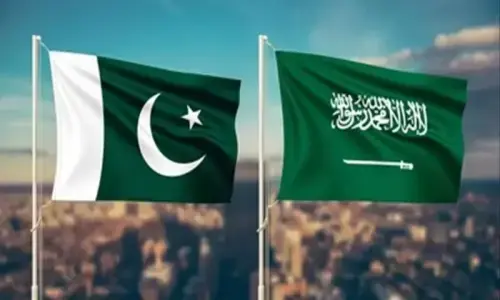
The country is walking on a tightrope in the context of balancing its relations between Iran and its close Arab allies, mainly Saudi Arabia. One had no clue that after signing the defence pact with Saudi Arabia, the testing moment would come so soon.
Of course, the state’s current policy towards Afghanistan needs several clarifications — including what the ultimate goal is — especially whether it reflects a change of mind about the Taliban or a shift in the overall Afghanistan policy. There is certainly a difference between the two approaches.
Perhaps no one wants to elaborate whether the current phase of armed conflict with Afghanistan has anything to do with US President Donald Trump’s desire to take over the Bagram base, which was recently targeted by Pakistani jets. No forum is better than parliament to discuss these matters. However, we have seen that once the state apparatus has taken a decision, there is little room for parliament to resist. Rather, when the former is at a critical juncture in the execution of its policies or when it wants to share the burden of certain decisions, it refers such matters to parliament.
The war in the Gulf has overshadowed Pakistan’s confrontation with Afghanistan.
Perhaps such a moment has arisen again, which forced Prime Minister Shehbaz Sharif to convene an in-camera session of parliamentary parties, in which the decision was taken to convene a joint session of parliament to discuss these matters.
Whatever the faulty or manoeuvred electoral process was, both houses of parliament have representation from almost all major parties, including the nationalist and religious parties from Balochistan and KP. The ANP, which was left behind in the electoral race, was helped by President Asif Ali Zardari, who facilitated a Senate seat for its head.
It would have been better if Sardar Akhtar Mengal’s resignation had not been accepted. The ruling parties could have made a gesture of goodwill by requesting him to reconsider his decision, as Balochistan is a highly sensitive province in the context of both the Iran-US war and Afghanistan, apart from the insurgency going on there.
The PTM, meanwhile, is not an electoral party but represents the sentiments of a large chunk of Pakhtun youth in the tribal districts of KP. Its ideological twin, the NDM, will also be absent from the session as it lost the election. Perhaps opposition leader Mehmood Khan Achakzai represents some of their sentiments, but much depends on the PTI, which skipped the in-camera session. It can be expected, however, that the party will not boycott the joint parliamentary session, as the matter to be discussed is of utmost importance for national security.
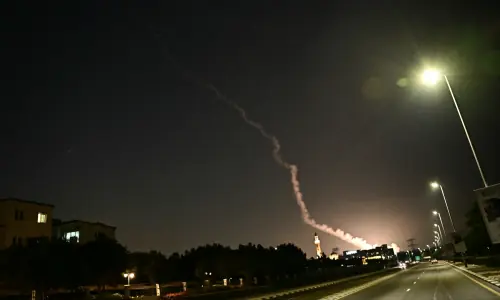
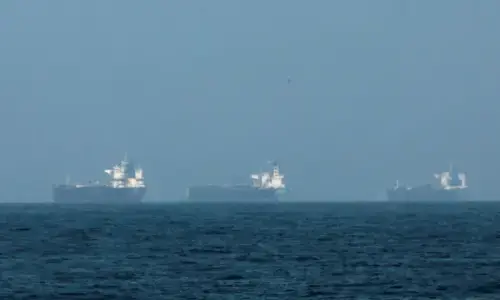
The priority agenda would be the war imposed on Iran by the US and Israel, which has drawn the entire Gulf region into its fold. The Sunni Arab bloc is showing patience, but if the Iranian strikes continue, the moment may come for retaliation, something Israel may actually want. This will also test Pakistan’s geostrategic alignment.
In the context of the defence agreement with Saudi Arabia, the situation could complicate Pakistan’s diplomatic and security position. Apparently, one possible approach could be that Pakistan covertly supports Saudi Arabia while continuing diplomatic support for Iran. It is uncertain how practical this approach would be, as Iran tends to see things in black and white.
Meanwhile, many in Pakistan are emotionally attached to Iran’s position, and the Islamic Revolutionary Guards have allies inside the country who will continue building internal pressure on the government to not overtly intervene in the war. Pakistan’s weak economy and dependence on Gulf oil supplies will also influence its decisions. It would be a challenging situation if the Gulf war directly impacts Balochistan.
The war in the Gulf has overshadowed Pakistan’s war, ie, confrontation with Afghanistan. But it should be debated whether this war is a response to the Taliban’s alleged betrayal and support for terrorists, or whether the establishment is reviewing its entire approach towards Afghanistan. Such a review would include issues like the Durand Line, bilateral relations with India, transnational energy projects, the Wakhan Corridor, and trade and economic ties.
Are Pakistan’s actions aimed purely at forcing the Taliban regime to shut down support for the TTP and other terrorist groups? If the Taliban agree, which seems unlikely, what kind of relationship would Pakistan want to maintain with Afghanistan? Has the state decided not to trust the Taliban and instead find new friends in Afghanistan? Perhaps Pakistan is altering its Afghanistan approach, which was historically Pakhtun-centric, and shifting towards an Afghanistan-focused policy. Afghanistan’s former security head Amrullah Saleh hinted in one of his social media posts that Pakistan had contact with the National Resistance Front. What would such an intervention mean in terms of cost, duration and the chaos it might create? And how would Pakistan’s closest ally China react, given that it seeks minimal tensions in its neighbourhood?
The Taliban thrive on anti-Pakistan sentiments and have created public support that presents a daunting challenge for their opposition to expand its support base. The best policy towards Afghanistan, suggested in the past and still relevant for the future, is to let the Afghans decide who they want to run their country and how they maintain relations with the world, particularly with India. Pakistan can safeguard its interests by engaging Afghanistan in multi-layered security cooperation, trade, economic cooperation, defence agreements, and possibly a friendship treaty. Frequent and functional cooperation is essential.
Terrorism remains a major obstacle between the two countries. Pakistan’s strong action may be justified, but abrupt policy changes towards Afghanistan are risky, as they increase the trust deficit. Let parliament debate these matters. Perhaps some sane advice may emerge that could even impress the establishment.
The writer is a security analyst.
Published in Dawn, March 8th, 2026