Stranded Iranian sailors put Sri Lanka, India in diplomatic dilemma
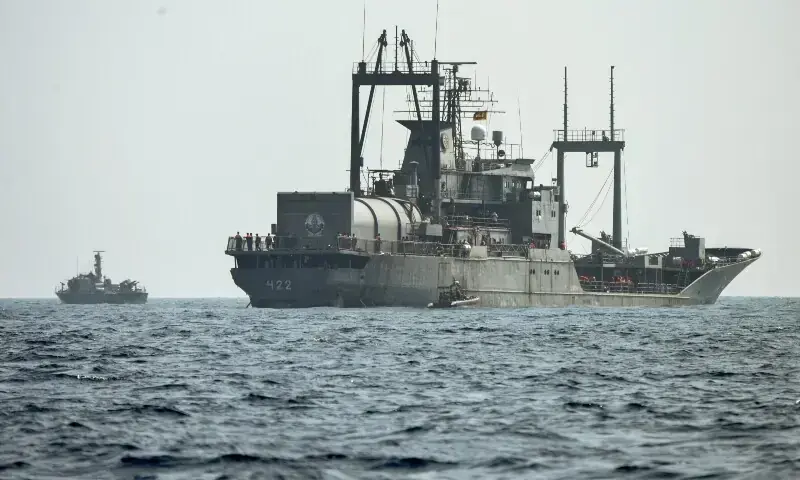

Sri Lanka and India are providing sanctuary to 434 sailors from three Iranian naval vessels targeted or threatened by the United States, a diplomatic conundrum as the US-Israel attack on Iran and the subsequent war spills into the Indian Ocean.
The ships had taken part in a naval exercise organised by India off the coast of Visakhapatnam, when the US and Israel began bombing Iran.
For Sri Lanka and India, wary of a US response, the dilemma of what to do with the ships and crew has sent legal officials scouring conventions and the laws of the sea.
What happened?
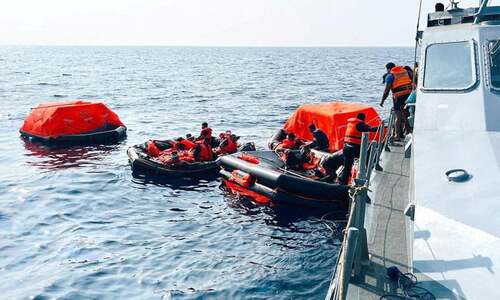
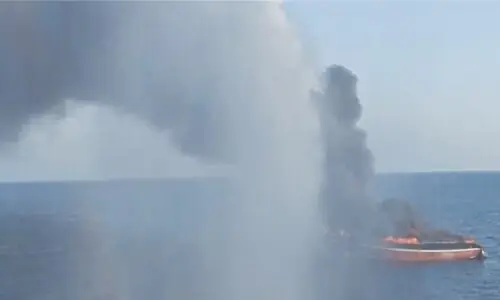
IRIS Dena, a frigate, was sunk with a torpedo fired by a US submarine on Wednesday, just outside Sri Lanka’s territorial waters. Between 130 and 180 sailors were on board, and at least 84 were killed.
Sri Lanka rescued 32 survivors, many since discharged from hospital to be hosted at the Koggala air force base in the island’s south.
IRIS Lavan, an amphibious landing ship, docked in India’s southern port of Kochi on Wednesday. It had 183 sailors aboard, now hosted in naval facilities.
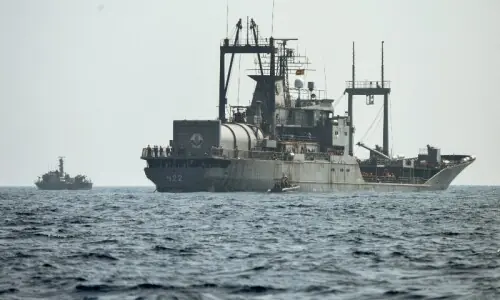
IRIS Bushehr, a supply vessel, entered Sri Lankan waters on Thursday, carrying 219 crew members.
Among those, 15 remain onboard to assist Sri Lanka’s navy, which has taken full control of the vessel. The total of Iranian sailors hosted by Sri Lanka is currently 251.
What have the countries said?
The two South Asian nations have not taken sides in the Middle East war and have justified their decision to host the Iranian sailors on humanitarian grounds.
“Our approach is that every life is as precious as our own,” Sri Lanka’s President Anura Kumara Dissanayake said in a statement.
Sri Lanka maintains close ties with the US, its biggest export market, and Iran, a key buyer of tea, Sri Lanka’s main export commodity.
Indian Foreign Minister Subrahmanyam Jaishankar spoke in parliament in New Delhi on Monday about the sailors.
“We believe that this was the right thing to do and the Iranian Foreign Minister has expressed his country’s thanks for this humane gesture,” Jaishankar said.
Media reports suggested Washington was pressing Sri Lanka not to repatriate the Iranians.
But a US State Department spokesperson said their fate was up to Colombo.
“The United States, of course, respects and recognises Sri Lanka’s sovereignty in the handling of this situation,” the spokesperson told AFP in Washington.
What happens now?
Sri Lanka is keeping the sailors from the two vessels apart because separate international conventions apply.
International humanitarian law applies to the 32 survivors of the first vessel, the sunken IRIS Dena. That means they could be repatriated if they wish.
But the second vessel, IRIS Bushehr and its 219 sailors, falls under the 1907 Hague Convention on the rights and duties of a neutral power, a senior administration official told AFP.
That requires Sri Lanka to hold those sailors and their vessel until the end of hostilities. They are being held in a naval base, just north of Colombo.
“The two groups need to be treated differently under our treaty obligations,” the official said, asking not to be named, saying Sri Lanka has asked the International Committee of the Red Cross for help.
Colombo would follow the Hague Convention, the official added, noting it says that “a neutral power which receives on its territory troops belonging to the belligerent armies shall intern them”.
But the 84 bodies recovered from the IRIS Dena will be sent back to Iran once logistics are possible, the government has said.
Sri Lankan officials said India was also likely to treat the IRIS Lavan and its crew the same way as Colombo will deal with the IRIS Bushehr.
But India, for its part, has not publicly addressed the fate or status of its Iranian guests.