
• Stockholm-based SIPRI says global arms transfers rise nearly 10pc, fuelled by conflicts
• US solidifies role as top supplier; Russian arms exports plummet by nearly two-thirds
• France becomes second-biggest exporter, with India as its biggest client
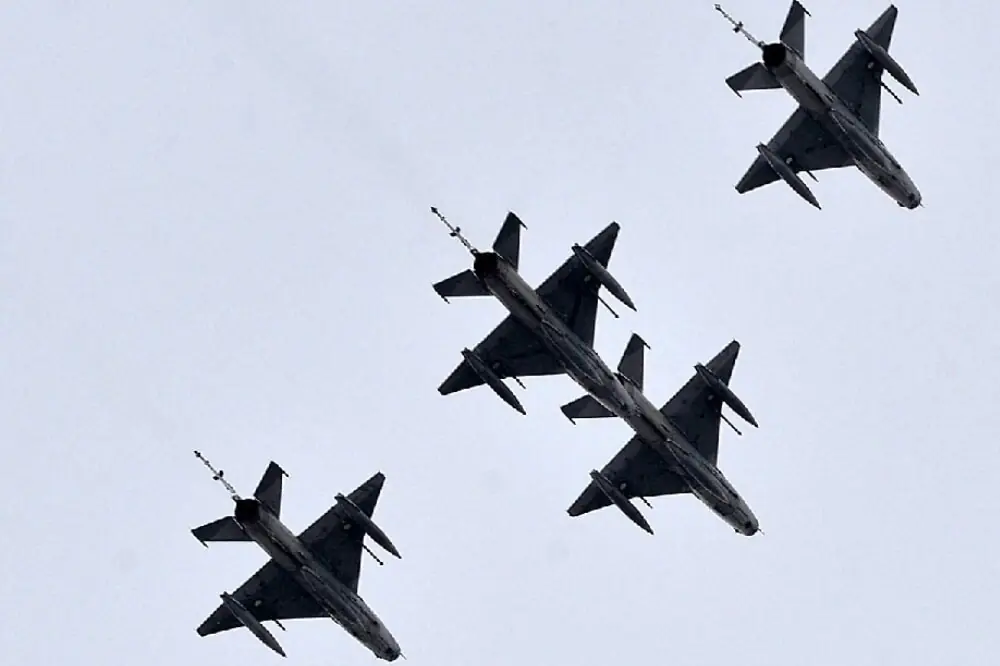
ISLAMABAD: As global transfers of major arms surged by nearly 10 per cent over the past five years, Pakistan’s arms imports grew by 66pc in 2021–25 compared with 2016–20, with its main ally China supplying 80pc of the weapons, a Stockholm-based think tank said.
China’s role as Pakistan’s top arms provider increased from 73pc in the previous 2016-20 period, the new report from the Stockholm International Peace Research Institute noted.
In South Asia, the high volume of arms imported by neighbouring India is largely driven by its perceived threat from China and its long-running conflict with Pakistan, the main recipient of Chinese arms exports.
A senior researcher at SIPRI, Siemon Wezeman, said that imported weapons were used in a 2025 clash between India and Pakistan, both of which are nuclear-armed states.
While Pakistan’s imports soared, India remained the world’s second-largest arms importer despite a marginal decrease of 4pc. India has diversified its suppliers, turning increasingly to Western nations.
Russia’s share of Indian arms imports dropped to 40pc in 2021-25, down significantly from 51pc in 2016-20 and nearly half its 70pc share in 2011-15.
Overall, states in Asia and Oceania imported the second-largest share of arms globally at 31pc, though the region saw a 20pc drop in volume compared with 2016-20. The decline was mainly due to decreasing imports by China (-72pc), South Korea (-54pc), and Australia (-39pc). Still, four nations from the region ranked among the top 10 global importers: India, Pakistan, Japan, and Australia.
“While tensions and conflicts in Asia and Oceania and the Middle East continue to drive large-scale arms imports, the sharp increase in arms flows to European states pushed global arms transfers up almost 10pc,” said Mathew George, director of the SIPRI Arms Transfers Programme.
The analysis comes as the total volume of major international arms transfers increased by 9.2pc between 2016-20 and 2021-25, largely fuelled by a massive surge in weapons flowing into Europe and Middle East.
Arms imports by states in the Middle East shrank by 13pc, yet the region was home to three of the world’s top 10 importers: Saudi Arabia (6.8pc of global imports), Qatar (6.4pc), and Kuwait (2.8pc). The US supplied more than half of the arms to the Middle East.
Israel was the world’s 14th largest arms importer, with its imports rising by 12pc. The US was its top supplier at 68pc, followed by Germany at 31pc. SIPRI noted that throughout the war stemming from its military offensive in Gaza, Israel continued to receive major arms from its suppliers, including combat aircraft and guided bombs.
Meanwhile, Europe became the world’s biggest recipient region with 33pc of all global arms imports.
This 210pc increase between the two five-year periods was overwhelmingly high due to the war in Ukraine and a perceived growing threat from Russia. Ukraine alone received 9.7pc of all arms transfers in 2021-25.
The US remained the world’s largest supplier of arms, increasing its total exports by 27pc. The US share of all international arms transfers grew to 42pc in 2021-25, up from 36pc in 2016-20.
For the first time in two decades, Europe was the top destination for US arms, receiving 38pc of its exports, edging out the Middle East at 33pc. However, Saudi Arabia remained the top single recipient of US arms, accounting for 12pc of American exports.
France cemented its position as the world’s second-largest arms supplier, with its exports increasing by 21pc. France supplied major arms to 63 states, with India (24pc), Egypt (11pc), and Greece (10pc) being its largest clients.
In a stark reversal, Russia’s arms exports fell by 64pc, causing its share of global exports to shrink from 21pc in 2016-20 to just 6.8pc in 2021-25.
It supplied arms to 30 states, but nearly three-quarters of its exports went to just three countries: India (48pc), China (13pc), and Belarus (13pc). Elsewhere, Germany overtook China to become the fourth-largest exporter, accounting for 5.7pc of the global total. Italy’s arms exports grew by 157pc, pushing it to the sixth-largest position.
Published in Dawn, March 10th, 2026