Foreign inflows into T-bills stall amid Gulf crisis


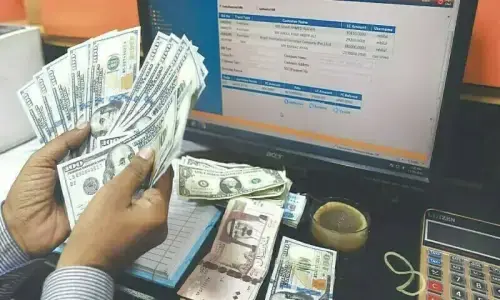
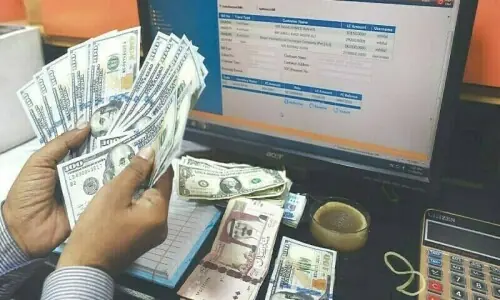
KARACHI: The impact of the Gulf war is not limited to oil and gas markets, as foreign investment from the region in Pakistan’s treasury bills (T-bills) dropped to zero during the first six days of March while outflows during the same period reached $78 million.
Latest data from the State Bank of Pakistan (SBP) showed that foreign investment in T-bills stood at only $9m until March 6, all of it from the United Kingdom, a country not directly affected by the conflict.
Previously, the UAE and Bahrain had been the main investors in Pakistan’s T-bills, which offer returns of up to 11 per cent, among the highest in emerging markets.
However, the Feb 28 attacks on Iran by Israel and the United States have changed the global economic outlook. Analysts warn that Pakistan could face significant economic fallout despite not being directly involved in the conflict.
SBP data shows that the UAE had invested around $267m in T-bills earlier but has halted further investment amid regional instability. Although the UAE is not directly involved in the fighting, Iran has carried out strikes on American and Israeli targets within its territory.
Bahrain has also stopped investing. Before the conflict, the country had invested about $187.5m in Pakistan’s T-bills.
Foreign investment in T-bills has been a key source of inflows, helping support SBP’s foreign exchange reserves, stabilise the exchange rate and cushion the impact of large trade deficits.
Financial sector analysts believe inflows from the Middle East are unlikely to resume in the near term, and other foreign investors may also adopt a cautious approach. Apart from Arab countries, investments during the past eight months have also come from the UK ($220m), Singapore ($77m) and Australia ($34m).
Experts say T-bill returns may rise in the coming months as the conflict pushes inflation higher. To contain inflation, the SBP may be forced to raise interest rates, one of the central bank’s key policy tools, even though higher rates could further dampen investment in trade and industry and slow GDP growth.
In its monetary policy announced on Monday, the SBP kept the interest rate unchanged, although many analysts had expected an increase.
Some experts said the decision reflected the government’s precautionary approach, including an earlier increase in domestic oil prices. However, they warned that further increases in oil prices could drive inflation higher, eventually forcing the central bank to raise interest rates, pushing T-bill yields higher.
Published in Dawn, March 14th, 2026