Pakistan’s solar boom shielding country from Hormuz disruptions: study
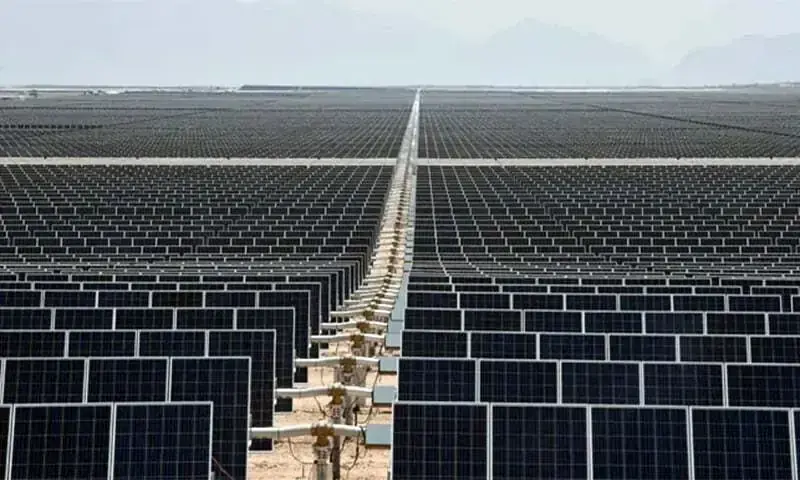

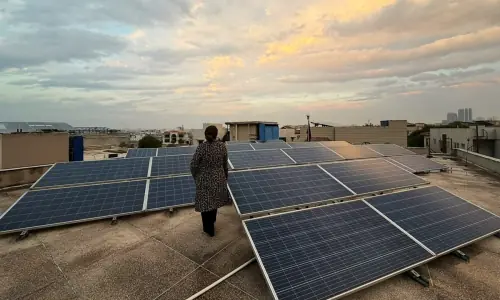
ISLAMABAD: Pakistan’s solar boom, which was driven by the installation of rooftop solar panels, is shielding the country from supply disruptions and price shocks due to the closure of the vital energy route, the Strait of Hormuz.
According to an analysis published by Renewables First and the Centre for Research on Energy and Clean Air, Pakistan would be far more exposed to the price shocks now rippling out of the Middle East without the growth of distributed solar.
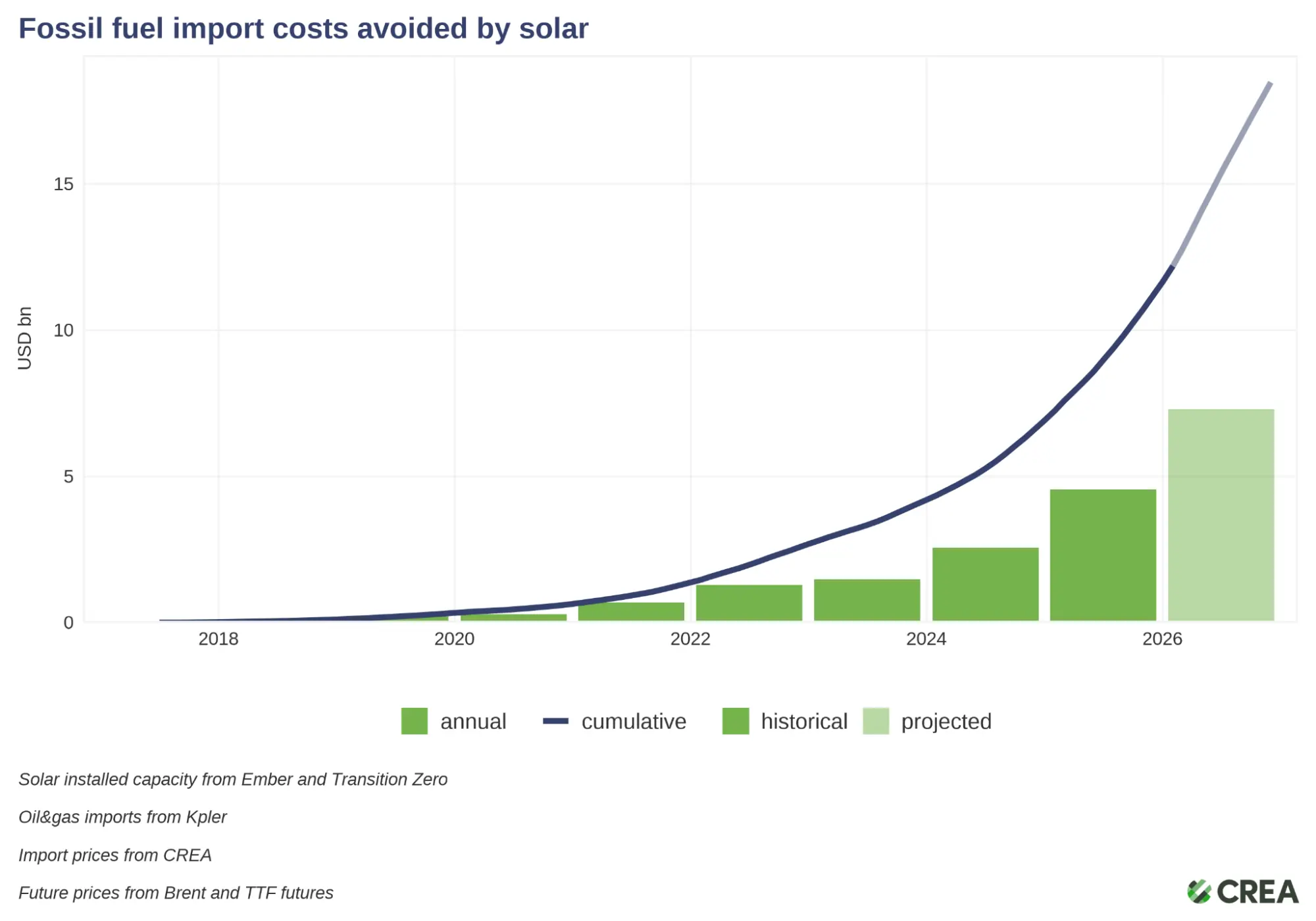
The study noted that Pakistan has avoided more than $12 billion in oil and gas imports since 2018, which would have been needed to meet domestic energy demand.
This “represents not just fiscal relief, but a structural reduction in geopolitical risk exposure that no LNG contract or hedging strategy could have delivered at equivalent scale or speed”, it added.
“At the prices the market expects for this year, Pakistan could save a further $6.3 billion by the end of the year,” the study claimed.
Despite the solar cushion, the Strait of Hormuz remains important for Pakistan.
“In 2024, and despite reducing its reliance, Pakistan still ranked third globally in LNG dependence on Hormuz-transiting cargoes as a share of total consumption, and fifth for oil,” it said, adding that any sustained disruption to the strait would send immediate shockwaves through Pakistan’s energy system.
However, due to rapid solarisation, this imported energy dependence is decreasing. “As rooftop panels spread across homes, farms, and factories, demand for LNG has fallen. The clearest signal sits in Pakistan’s long-term LNG contracts, where some shipments have been diverted to international markets, and the government has been actively renegotiating terms as solar-driven displacement reduces the need for imported volumes.”
According to the study, had it not been for the deployment of rooftop solar, which reduced the reliance on grid power and imported gas, load-shedding and other measures to restrict power supply during peak hours would have been considered during this energy crisis.
“The fact that load shedding and other measures to restrict power supply during peak demand periods are not currently being considered shows how solar is both saving money and providing additional power.”
It may be noted that the government has taken a series of measures to ration fuel amid the closure of the Hormuz Strait. A recent government briefing revealed that the country would run out of LNG by April 14 due to the suspension of its supply from Qatar.
“Pakistan’s solar revolution wasn’t planned in Islamabad — it was built on rooftops. But as tensions around the Strait of Hormuz escalate, those panels are proving to be one of the country’s most effective energy security strategies, with distributed solar now shouldering a growing share of the country’s electricity needs,” said Rabia Babar, energy data manager at Renewables First.
The analysis attributed Pakistan’s solar story to market forces and consumers. It also gave credit to the government for maintaining a “zero-rated tax regime on solar PV imports”, which turbocharged such imports from under 1GW in 2018 to over 51GW by early 2026 — one of the “fastest consumer-led energy transitions on record, and one that drove a 40pc drop in oil and gas imports between 2022 and 2024”.
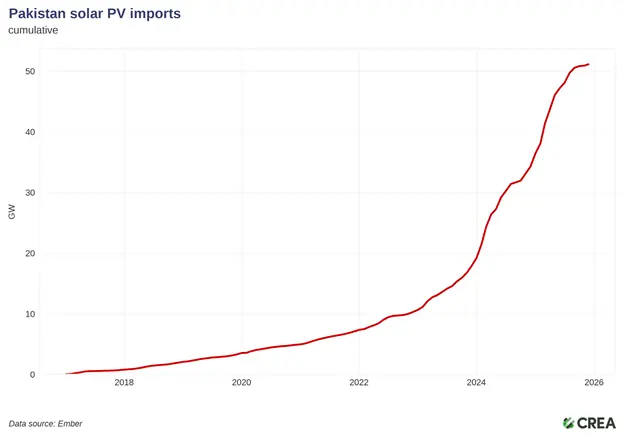
The 2022 energy crisis, after the Ukraine invasion and the “precipitous fall in costs of solar manufacturing in China,” was a catalyst for this solar surge.
“This grassroots solar surge has gathered pace since the energy crisis of 2022 and has quietly delivered what years of state energy policy had not thus far: falling fuel import dependence, stronger energy security, and a measure of relief from spiralling electricity costs for millions of households.”
Lauri Myllyvirta, co-founder at the Centre for Research on Energy and Clean Air, said Pakistan’s solar boom was acting “like an insurance policy against oil and LNG shocks” in this energy crisis.
The study also compared Pakistan with other Asian states, pointing out that other countries such as China, India, and South Korea were “disproportionately exposed” due to disruptions in Hormuz because of their reliance on LNG. Although Pakistan still appears prominently in both the volume and dependency rankings for Hormuz-transiting energy, the trajectory is downward, it added.
“China, India, South Korea and most other Asian economies have increased their LNG imports, while Pakistan’s energy curve has bent the other way,” it said, adding that any sustained disruption would continue to hit Asian economies hardest.
According to the analysis, it is renewables, not oil and gas, that offer the lowest-cost path to energy access for low- and middle-income households, and “every gigawatt of distributed solar deployed is, in effect, a hedge against the brewing energy crisis”.