National Institute of Health says dengue fever burden increasing every year, asks health depts to take precautionary measures
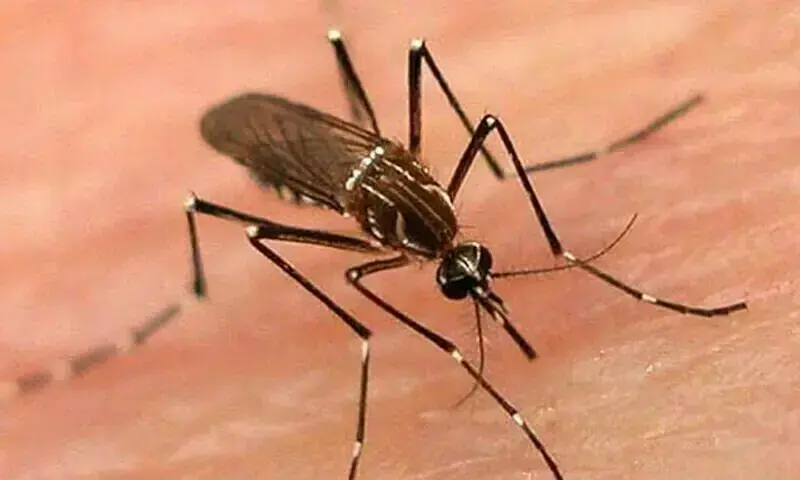

ISLAMABAD: As the dengue season is going to start soon, the Centre for Disease Control (CDC) at the National Institute of Health (NIH) has issued an advisory for the prevention and control of the dengue fever.
It said dengue cases had been increasing every year and suggested health departments to take precautionary measures.
The advisory, signed by chief CDC-NIH Dr Mumtaz Ali Khan, stated that dengue remains a critical public health challenge in Pakistan, caused by the Aedes aegypti and Aedes albopictus mosquitoes.
“These vectors thrive in clean, stagnant water within urban and semi-urban environments. The disease transmission peaks during the monsoon and post-monsoon seasons though sporadic cases occur year-round. Although rapid urbanisation, poor waste management and climate variability specifically increased humidity and rainfall are primary drivers of transmission,” it stated.
According to surveillance data reported to the NIH, dengue fever burden increases every year with 21,016 cases recorded in 2023, 24,182 cases in 2024 and 33,394 laboratory-confirmed cases in 2025 nationwide.
The advisory suggested to all provincial and federal health departments to prioritise enhanced surveillance through early detection and cluster identification, and case management by adopting standardised clinical protocols to keep fatality rates below 1 per cent.
Clinical presentation
It stated that dengue is caused by four virus serotypes. Infection with one serotype provides lifelong immunity to that type, but infection with another serotype may increase the risk of severe disease.
“The incubation period is usually 4-7 days. Clinical presentation ranges from asymptomatic infection to classic dengue fever characterised by sudden high fever, headache, retro-orbital pain, body and joint aches, nausea, vomiting and rash. Severe dengue may occur, particularly in previously infected individuals, but early diagnosis and proper management can reduce the case fatality rate,” it stated.
Clinical management
The advisory added that there is no specific antiviral treatment available for dengue fever. It advised doctors to avoid giving aspirin to patients; however, their hydration level needs to be maintained.
“Early detection of suspected cases, identification of clusters and timely recognition of hotspots are essential to initiate prompt response measures and prevent further transmission. All healthcare facilities are directed to ensure strict adherence to standardised case definitions and immediate reporting through.
Prevention and control of dengue fever require a coordinated and collective effort across multiple sectors. While the health sector leads surveillance, case management and technical guidance, sustained impact can only be achieved through active collaboration with allied departments and partners,” it suggested.
Personal protection
The advisory also recommended adopting personal protection measures like wearing long-sleeved clothes, use of mosquito repellent lotions/sprays and use of mosquito repellent coils. Use of bed nets while sleeping outside in the open environment, use of mesh screens on windows, home isolation of patients with mild illness and visit to hospital in case of development of danger were also suggested.
Published in Dawn, March 18th, 2026