European countries, Japan express ‘readiness’ to safeguard shipping through Strait of Hormuz

Leaders from the United Kingdom, France, Germany, Italy, the Netherlands, and Japan have signalled their readiness to support efforts to ensure the safe passage of commercial vessels through the Strait of Hormuz.
“We express our readiness to contribute to appropriate efforts to ensure safe passage through the strait. We welcome the commitment of nations that are engaging in preparatory planning,” the leaders said in a joint statement.
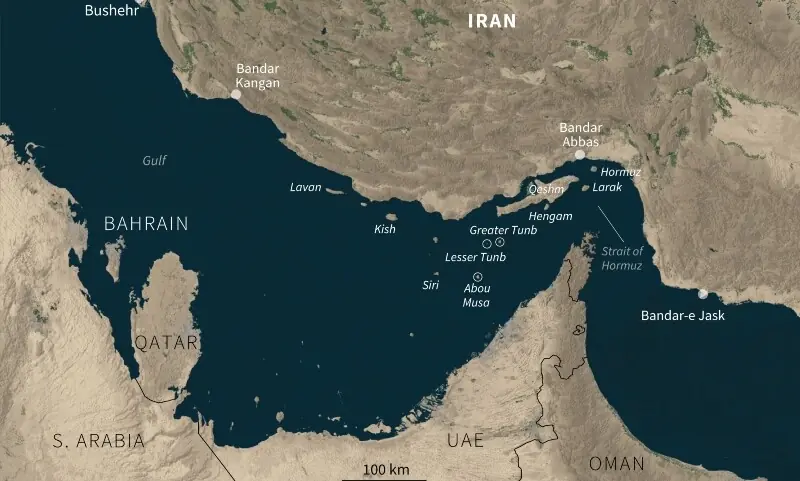
The Strait of Hormuz, a crucial shipping route, has been virtually paralysed by the Middle East war. The war erupted on February 28 when the US and Israel began bombing Iran, prompting it to retaliate with strikes targeting US assets and bases in the Gulf and restricting access to the strait.
Since March 1, 2026, at least 21 commercial vessels, including 10 tankers, have been attacked or reported incidents in the Gulf, the Strait of Hormuz or the Gulf of Oman, according to the British naval maritime security agency UKMTO.
Across all types of vessels, an additional four attacks claimed by the Iranian Revolutionary Guards have not been confirmed by international authorities.
The leaders condemned the attacks in the Gulf, saying: “We condemn in the strongest terms recent attacks by Iran on unarmed commercial vessels in the Gulf, attacks on civilian infrastructure, including oil and gas installations, and the de facto closure of the Strait of Hormuz by Iranian forces.”
They urged Tehran to halt the attacks, calling on Iran to “cease immediately its threats, laying of mines, drone and missile attacks and other attempts to block the Strait to commercial shipping, and to comply with UN Security Council Resolution 2817”.
Highlighting the broader impact, the statement warned that “the effects of Iran’s actions will be felt by people in all parts of the world, especially the most vulnerable,” and maintained that “freedom of navigation is a fundamental principle of international law, including under the UN Convention on the Law of the Sea.”
The countries also underlined that interference with international shipping “constitute[s] a threat to international peace and security” and called for “an immediate comprehensive moratorium on attacks on civilian infrastructure, including oil and gas installations.”
On energy security, the statement welcomed the International Energy Agency’s decision to release strategic petroleum reserves and pledged further action to stabilise markets. “We will take other steps to stabilise energy markets, including working with certain producing nations to increase output.”
Regional escalation continued to flare since Israel and the US launched a joint offensive on Iran, killing so far more than 1,200 people, including supreme leader Ali Khamenei.
Iran has retaliated with drone and missile attacks across the region and has effectively closed for most ships the Strait of Hormuz, a key oil transit route that normally handles about 20 million barrels per day, and roughly 20 per cent of global liquefied natural gas trade.