People leaving Shewa tehsil of North Waziristan due to ‘insecurity’
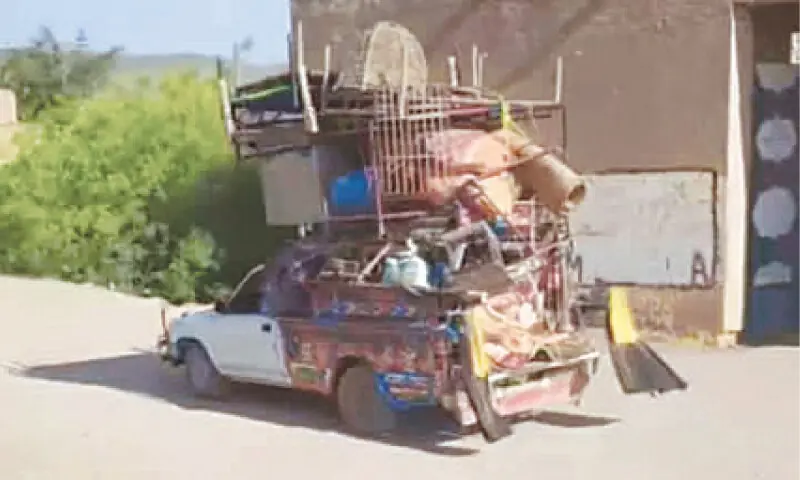

NORTH WAZIRISTAN: The rising insecurity in Shewa tehsil here has escalated into a serious humanitarian crisis, with several villages completely abandoned and displacement from surrounding areas increasing rapidly.
After the evacuation of Darozanda, Alamkhel, Malokhel and Anarkhel villages, families from nearby localities are also fleeing their homes to safer districts like Bannu, Kohat, Dera Ismail Khan, Lakki Marwat and Peshawar.
Witnesses described a grim situation in many areas, where houses remain locked and streets lie deserted.
“We have never witnessed anything like this before. Entire villages have been emptied. Only one or two people stay behind to take care of livestock and property,” said a local resident.
Historically, Shewa was considered one of the relatively peaceful areas of North Waziristan. Residents primarily depended on agriculture, livestock and small-scale businesses, and the area was known for its simplicity and strong tribal cohesion. Even during the military operations launched after 2014, locals say Shewa remained comparatively less affected, and normal life returned sooner than in other parts of the district.
Elders demand relief measures, efforts for sustainable peace
However, over the past year, the situation has deteriorated sharply. Residents attribute the worsening conditions to a rise in targeted killings, quadcopter attacks and increased activity by outlawed militant groups.
“We would go to sleep each night unsure whether we would wake up safely the next morning,” said the head of a displaced family. “Children’s education has been disrupted, markets have shut down, and fear dominates everyday life.”
Women have been particularly affected by the crisis. “When we left, we could only take essential belongings. Everything else was left behind. We do not know when we will return,” said a displaced woman.
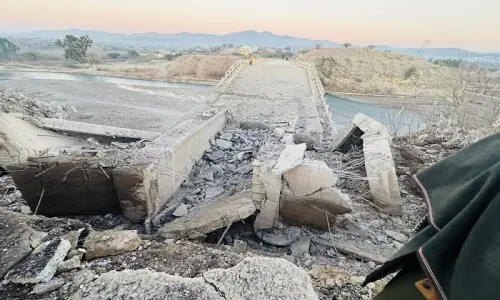
The destruction of a key bridge over the Kurram River has further compounded the difficulties faced by residents. The bridge served as a vital link between several villages, and its demolition has not only disrupted mobility but also intensified the sense of insecurity.
In response to the deteriorating situation, elders of the Kabulkhel tribe and other tribal leaders held a jirga with security officials, where they raised serious concerns over public safety and demanded immediate action.
“We clearly told the authorities that either peace must be restored or a clear course of action should be provided so we can protect our people,” a tribal elder said after the meeting.
Sources said security officials assured participants that a high-level meeting would be convened and a comprehensive strategy would be formulated to address the crisis.
In a significant development, local elders and displaced residents have expressed conditional support for a possible operation against militants in the vacated villages. They, however, stressed that the protection of civilians and their property should be ensured and that concrete steps should be taken to facilitate the dignified return of displaced families.
“We want peace. If an operation is the only solution, we do not oppose it. But we want to return to our homes with dignity,” said a displaced youth.
Experts warned that if the pace of displacement continued, the situation could evolve into a full-scale humanitarian crisis.
They said displaced families were already facing severe challenges related to shelter, food, education and healthcare, with host districts coming under increasing pressure.
Civil society groups and tribal elders urged the government to take immediate relief measures, establish an effective system for the registration and rehabilitation of displaced persons, and, most importantly, ensure sustainable peace in the area so that residents can safely return to their homes.
Published in Dawn, March 27th, 2026