Rubio says war on Iran to last ‘weeks not months’, no US ground troops needed
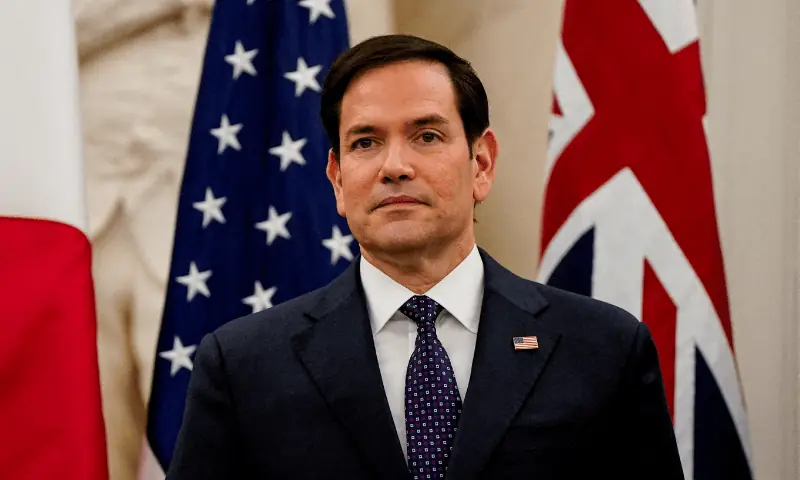

The war in the Gulf is still expected to last weeks, not months, and Washington can meet all its objectives without using ground troops, US Secretary of State Marco Rubio said on Friday.
Rubio told reporters after meeting G7 counterparts in France that Washington was “on or ahead of schedule in that operation, and expect to conclude it at the appropriate time here — a matter of weeks, not months.”
While he said Washington could achieve its aims without ground troops, he acknowledged that it was deploying some to the region “to give the president maximum optionality and maximum opportunity to adjust the contingencies, should they emerge”.
Washington has dispatched two contingents of thousands of Marines to the region, the first of which is due to arrive around the end of March aboard a huge amphibious assault ship. The Pentagon is also expected to deploy thousands of elite airborne soldiers.
The deployments have raised concern that an air war that has already disrupted global energy supplies could turn into a prolonged ground battle.
But US President Donald Trump also emphasised this week what he described as “productive negotiations” aimed at a diplomatic solution to the war, despite repeated assertions from Tehran that no such talks have begun.
Rubio said Washington was still waiting for a formal response from Iran to a 15-point proposal it sent this week.
“We’ve had an exchange of messages and indications from the Iranian system, whatever’s left of it, about a willingness to talk about certain things,” Rubio said. “We’re waiting for further clarification about … who is it that we will be talking to, what will we be talking about and when will we be talking.”
For its part, Iran says it has rejected the proposal.
On Thursday, Trump extended a deadline by 10 days for Iran to reopen the blockaded Strait of Hormuz or face attacks against its civilian energy grid. He said talks were “going very well”.
A source briefed on the matter told Reuters that Trump and top White House officials had been told via interlocutors that an Iranian counter-proposal was likely to arrive later on Friday.
The US proposal is reported to include demands ranging from dismantling Iran’s nuclear and missile programmes to relinquishing control of the world’s most important trade route for energy supplies.
While Iranian officials have publicly rebuffed US diplomacy, they have said they are keeping channels open through third countries to exchange messages.
An Iranian official told Reuters on Thursday that senior officials had reviewed the US proposal and felt it served only US and Israeli interests, although diplomacy had not ended.