Netanyahu restores access after Latin Patriarch blocked from Holy Sepulchre in Jerusalem
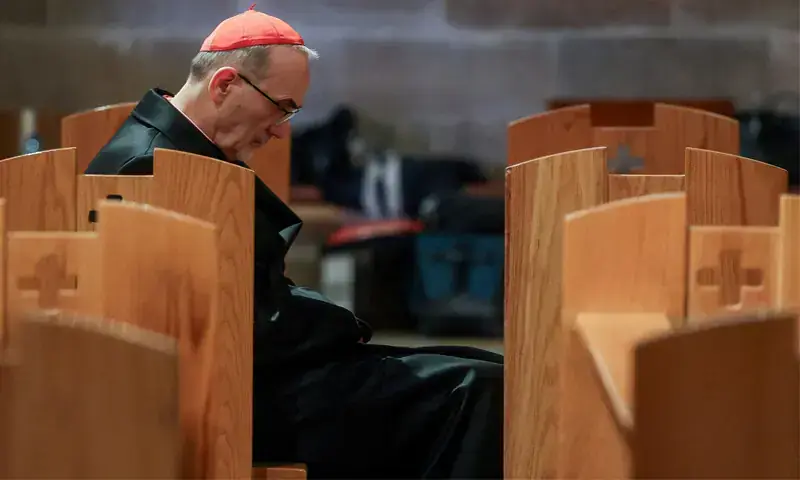

Israel said the Latin Patriarch of Jerusalem would regain access to Christianity’s holiest site after the decision to block him from entering the Holy Sepulchre on Palm Sunday triggered international condemnation.
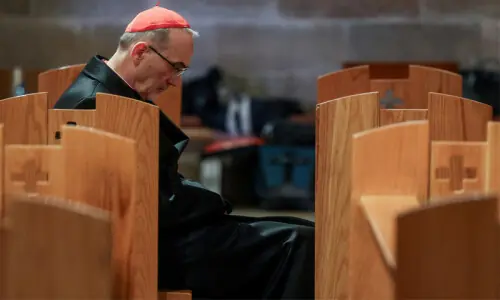
Israeli police prevented Cardinal Pierbattista Pizzaballa from entering the church, citing security concerns as Israel enforces a ban on gatherings in synagogues, churches and mosques during the ongoing war with Iran, which has brought missile strikes near holy sites.
After widespread backlash, Israeli Prime Minister Benjamin Netanyahu said on Monday the Latin Patriarch would get “full and immediate access”.
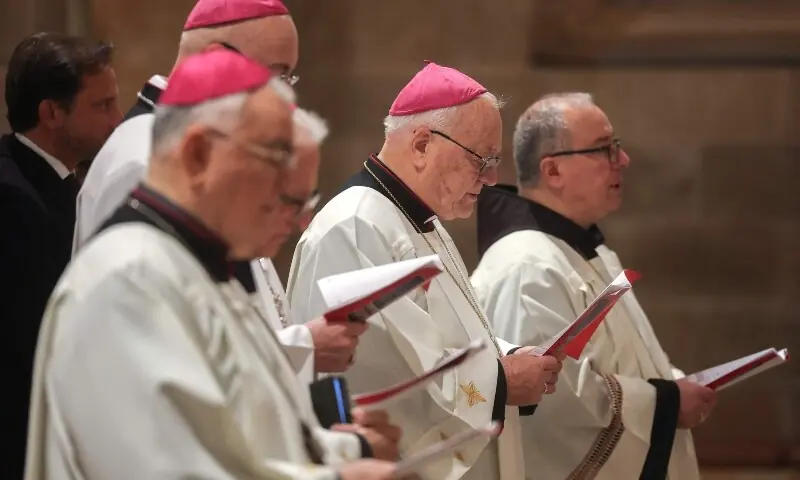
The Latin Patriarchate said in a statement that Pizzaballa and the Custos of the Holy Land, Father Francesco Ielpo, were travelling privately without a ceremonial procession when officers at the church entrance forced them to turn back.
“As a result, and for the first time in centuries, the Heads of the Church were prevented from celebrating the Palm Sunday Mass at the Church of the Holy Sepulchre,” it said, calling the incident a “grave precedent” that disregards the sensibilities of Christians worldwide.
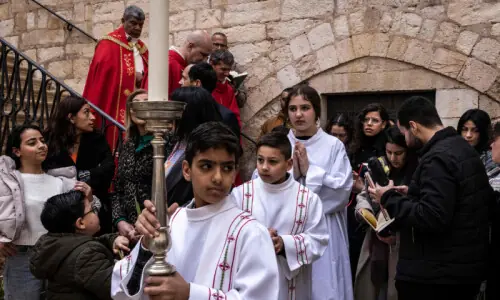
Palm Sunday, which opens Holy Week for Christians, marks Jesus Christ’s final entry into Jerusalem, days before his crucifixion and resurrection, as described in the Gospels.
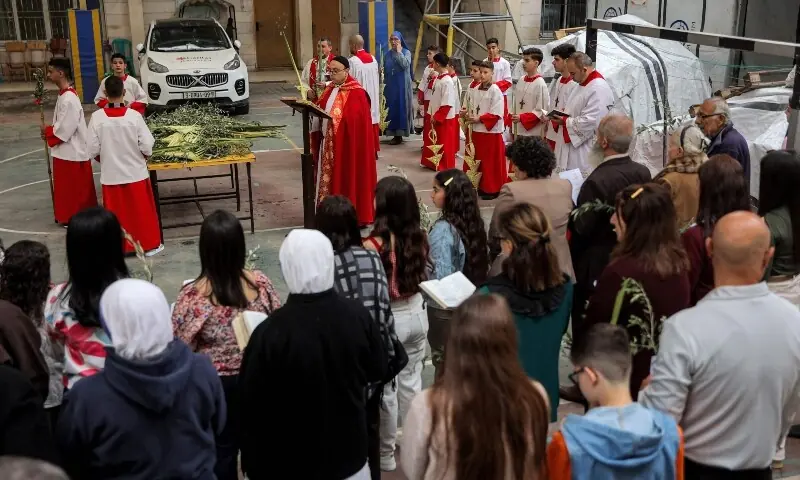
The Church of the Holy Sepulchre contains the sites where Christians believe Christ was crucified, buried and resurrected.
Religious freedom concerns
“War will not erase the resurrection. Grief will not extinguish hope,” Pizzaballa said at a Palm Sunday mass he held later at the Church of All Nations, also known as the Church of Gethsemane, on the Mount of Olives.
The Patriarchate had already announced the cancellation of the traditional Palm Sunday procession from the Mount of Olives into Jerusalem, which normally draws thousands.
Israeli police said all holy sites in Jerusalem have been closed since the start of the war.
“The Patriarch’s request was reviewed yesterday, and it was clarified that it could not be approved,” it said in a statement to AFP.
“The Old City and the holy sites constitute a complex area that does not allow access for large emergency and rescue vehicles, which significantly challenges response capabilities and poses a real risk to human life in the event of a mass casualty incident,” the force said.
In the Old City of Jerusalem, shops were shuttered and streets lay largely deserted as Christian worshippers expressed sorrow over the cancellation of the traditional Palm Sunday processions.
“This year, because of the war, we cannot celebrate in the streets like always,” Simon Hosh, 25, a resident of the Old City, said.
“So, this year we just celebrate in the church. It’s bad.” Pope Leo XIV, speaking after the Angelus prayer in Rome on Sunday, paid tribute to “the Christians of the Middle East, who suffer the consequences of a terrible conflict and in many cases cannot fully live the rites of these holy days”.
EU foreign policy chief Kaja Kallas said barring the patriarch was a “violation of religious freedom” and urged Israel to guarantee worship “for all faiths”.
World leaders from France, Spain, Italy and Jordan condemned the restriction.
Netanyahu’s office said there had been “no malicious intent” behind denying the cardinal entry.
The premier elaborated on Israel’s security concerns in a post.
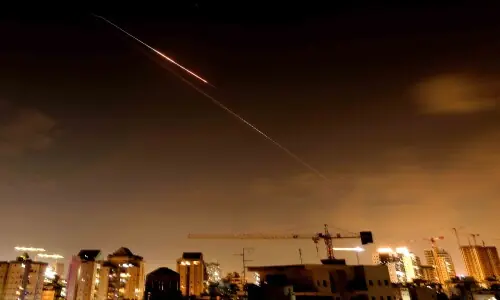
“Over the past several days, Iran has repeatedly targeted the holy sites of all three monotheistic religions in Jerusalem with ballistic missiles,” Netanyahu wrote on X.
On March 16, Israeli police said they found missile and interceptor fragments at holy sites in the Old City, including near the Church of the Holy Sepulchre, sharing photos of debris on a roof near the church.