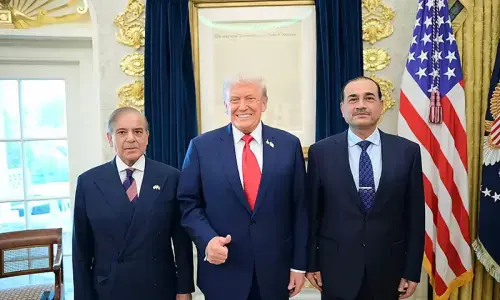
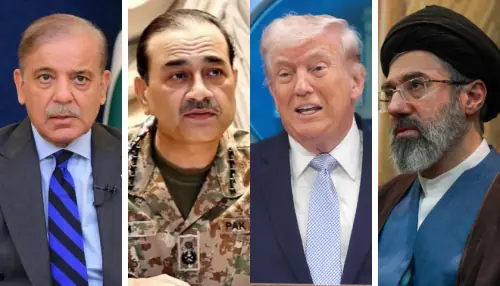
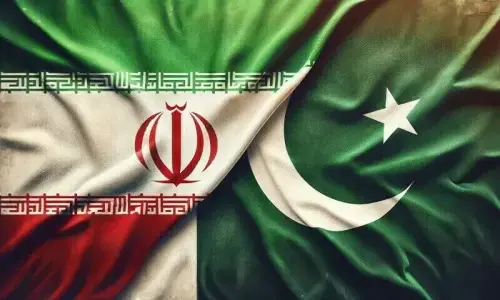
THE world’s eyes are focused on Islamabad. Pakistan, through its deft diplomacy, has managed to stave off a devastating escalation between the US and Iran, and today, it will host the adversaries to see if the two-week truce it has helped broker can be transformed into a longer-term peace. There is immense uncertainty, largely because of the huge wall of mistrust between Washington and Tehran; but there is also hope that negotiations can prevent a relapse into more violence and greater pain for the global economy.
A security blanket has been placed over the federal capital as well as Rawalpindi on account of the sensitivity of the talks and the high-profile participants — with the US sending Vice-President J.D. Vance and Iran represented by Foreign Minister Abbas Araghchi to explore how hostilities can be ended.
By bringing the US and Iran together under one roof to talk peace, Pakistan has managed to pull off a major diplomatic coup. But that may well be the ‘easy’ part; obtaining meaningful results from the parleys will neither be tension-free nor quick. At best, we can expect the US and Iran to agree to pursue the talks; at worst, the diplomatic exercise can go south, especially if there is lack of consensus on the key points of the agenda, and if Israel continues its brutal assault on Lebanon.The Iranians’ mistrust of America is considerable.
This is because the US has twice used negotiations as a ruse to wage war on Iran. It is hoped that this time, matters turn out differently. Already, there have been attempts to derail the negotiations, primarily by Israel, which is averse to seeing peace in the Middle East. The Iranian deputy foreign minister said his country was ready to respond to “ceasefire violations” before Pakistan stepped in and attempted to calm matters. There will be several such diplomatic minefields to navigate before a lasting peace is achieved.
On some of the points Iran has proposed, the US may be willing to play ball. This could include partial or total lifting of sanctions and compensation for war damages. However, Iranian demands to expel the American military from the region, and Tehran’s nuclear programme, may be harder to agree on. Yet every effort should be made to reach a peaceful settlement.
There has been enough war and bloodshed, and a permanent end to hostilities must be found. The sobering conclusion to the events of the past month is that military ambitions aimed at effecting regime change and bringing a country to its knees can backfire, with colossal repercussions for an entire region. In this case, Iran has successfully defended itself and should be approached with respect. Only then can a just agreement be reached under the tenets of international law.
Published in Dawn, April 11th, 2026