Gas supply to power sector may double amid LNG shortfall

• Govt mulls diversion from households, CNG and fertiliser
• Minister warns unless additional gas diverted, tariffs may rise sharply or result in massive loadshedding
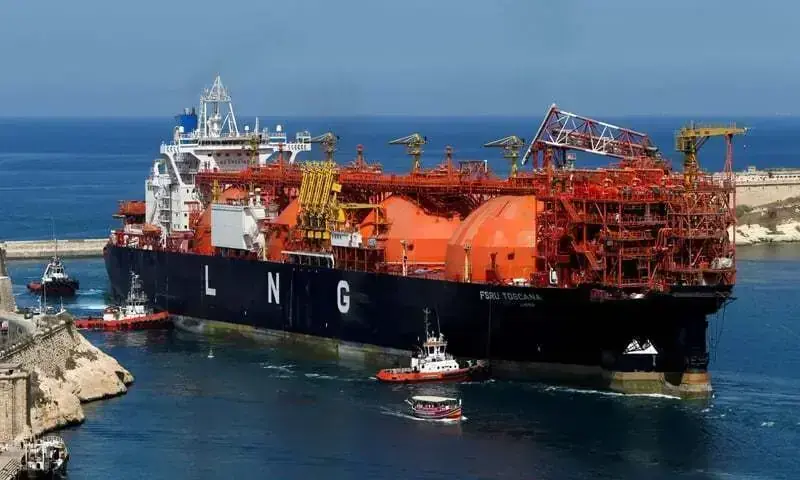
ISLAMABAD: Domestic natural gas supply to the power sector is expected to at least double by the end of the current month to minimise tariff hikes and loadshedding, which have become inevitable following the non-availability of imported liquefied natural gas (LNG) and upcoming hike in summer consumption.
Informed sources told Dawn that arrangements were being made on a war footing to increase gas supply to around 160-170 million cubic feet per day (mmcfd) by end-April or early May, up from about 85-90mmcfd at present. An additional 20-25mmcfd could be diverted from the CNG sector, provided the government is able to sustain political pressure.
Gas supplies to the fertiliser sector would be protected as far as possible, alongside vigilance on stocks due to a wide price gap between locally produced urea at Rs4,500 per bag and imported one at Rs15,000 per bag, creating a scope for smuggling.
However, fertiliser plants may not receive uninterrupted gas and could be operated on an alternate basis to meet demand for both the current and next seasons.
Minister’s warning
Sources said Power Minister Awais Ahmad Khan Leghari, at a recent meeting of the special cabinet committee on petroleum prices and supplies, warned that unless additional gas was diverted to the power sector to replace LNG, fuel costs in electricity tariffs could rise exponentially or result in massive loadshedding. His ministry suggested diverting supplies from residential consumers, CNG or fertiliser.
Some ministers reminded that diverting gas from domestic consumers could cause a political backlash, affecting more than seven million users.
“It is a choice between the uproar of 7m gas consumers or 30m power consumers,” an official quoted the power minister as telling the cabinet committee. The only alternative fuel for domestic use, particularly cooking, is liquefied petroleum gas (LPG), whose prices have surged to more than double the rates set by the Oil and Gas Regulatory Authority (Ogra) due to weak enforcement.
The power division also pointed out that the fuel cost adjustment (FCA) for February stood at Rs1.42 per unit and could have been around Rs2 without the use of furnace oil and RLNG, given subdued demand. It warned that the FCA for April could be slightly higher than March but might more than double in May if furnace oil was used extensively, unless excessive loadshedding was carried out. Furnace oil prices have more than doubled between February and early April.
The matter has now been taken up by the National Coordination and Management Council, led by General Zafar Iqbal, to address electricity shortages and ensure maximum supply to economic sectors at affordable rates.
Without RLNG, about 5,000MW of efficient plants in Punjab become either redundant or expensive to run on diesel. The fuel cost gap between RLNG and high-speed diesel ranges from Rs20-21 to Rs50-54 per unit, while furnace oil-based generation costs around Rs35-45 per unit.
Sources said additional gas supplies had become available following completion of a pipeline enabling flows from the Bettani gas field in Lakki Marwat, Khyber Pakhtunkhwa, to Punjab, along with other enhancements.
The government has already resorted to at least two hours of loadshedding in recent days, which is expected to increase, particularly at night when solar generation declines and demand on the national grid rises.
As part of hybrid load management, early market closures have been ordered for conservation.
Despite improved water availability, hydropower generation will depend on Wapda’s management of Tarbela, where delays in tunnels 4 and 5 persist, while the 969MW Neelum-Jhelum plant remains out of order.
Furnace oil remains the key replacement fuel during peak summer demand. Current stocks exceed 500,000 tonnes, sufficient for more than 35 days of full requirement, though the cost differential remains enormous. Summer peak demand typically rises to 27,000-28,000MW, compared to less than 14,000MW currently during peak hours, partly due to increased reliance on solar power.
Given these constraints, the government is expected to enforce two to three hours of daily loadshedding on average, alongside conservation measures.
Published in Dawn, April 13th, 2026