At UN panel organised by Pakistan, experts warn of terror groups exploiting AI, crypto

UNITED NATIONS: Terrorist groups are increasingly exploiting artificial intelligence, encrypted platforms and digital currencies, transforming the global threat into a more decentralized and harder-to-detect phenomenon.
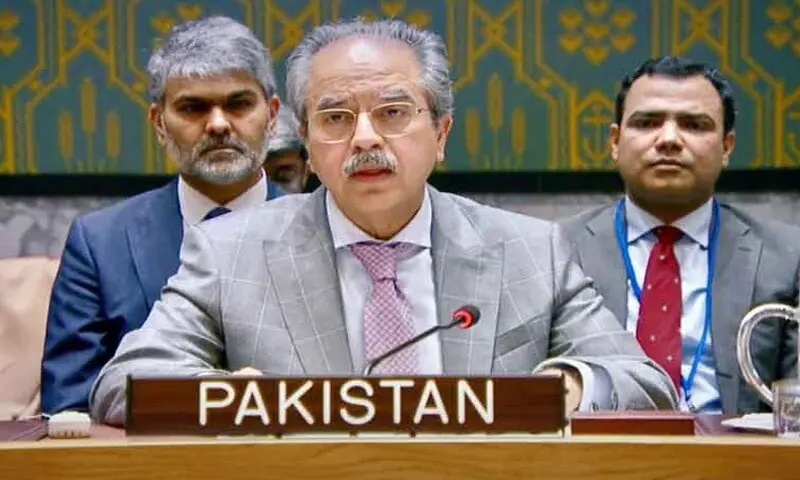
These trends were discussed at a panel organised by the Permanent Mission of Pakistan in collaboration with the United Nations Office of Counter-Terrorism (UNOCT) at the UN headquarters in New York, where diplomats, security experts and academics examined emerging patterns in global terrorism.
According to the panelists, the shift has expanded the reach of extremist networks beyond traditional conflict zones, enabling remote recruitment, propaganda and financing through online ecosystems that operate across borders and often outside regulatory control.
The convergence of these tools with rising ideological extremism — including far-right movements in Western societies — has further complicated efforts to define and counter terrorism, as loosely organised groups operate without clear leadership or geographic limits.
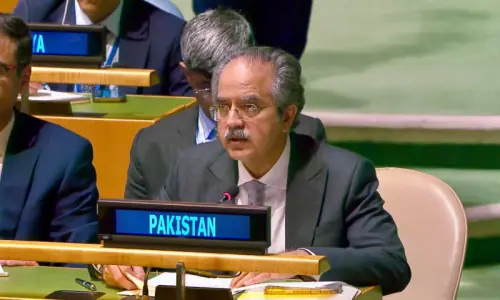
Pakistan’s Permanent Representative to the UN, Asim Iftikhar Ahmad, said the threat landscape was “fast evolving,” pointing to “xenophobia, racism and religious intolerance, as well as gaps in the global counter-terrorism architecture and sanctions regimes.”
He also highlighted challenges faced by governments in regulating social media platforms and ensuring accountability of technology companies operating across jurisdictions.
Acting Under-Secretary-General of UNOCT Alexander Zouev said terrorism had become “multipolar and sophisticated,” stressing the need for preventive action to address risks linked to artificial intelligence, encrypted services and digital assets.
Other speakers, including China’s Permanent Representative Fu Cong, UN sanctions monitoring coordinator Colin Smith and human rights expert Fionnuala Ní Aoláin, highlighted the growing misuse of information technologies, including social media, artificial intelligence tools and virtual assets, for propaganda, recruitment and financing.
Experts noted that while traditional financing methods remain dominant, terrorist groups are increasingly experimenting with cryptocurrencies and digital wallets. The use of encrypted messaging platforms and online networks for disinformation and coordination has also made detection more difficult.
Participants also drew attention to persistent threats from militant groups operating in Afghanistan and beyond, including the Tehrik-i-Taliban Pakistan (TTP), the Balochistan Liberation Army (BLA) and its Majeed Brigade, the East Turkestan Islamic Movement (ETIM), and the Islamic State – Khorasan Province (ISIL-K).
In Africa, groups such as Jama’at Nasr al-Islam wal Muslimin (JNIM) were identified as key actors driving instability in the Sahel region.
The discussion also highlighted the growing use of ungoverned spaces and fragile states as operational bases, combined with digital tools that allow global coordination without centralized command structures.
The urgency of regulating online spaces has increased since incidents such as the Christchurch mosque shootings, which demonstrated how attacks can be amplified worldwide in real time.
The meeting comes as the UN General Assembly reviews its Global Counter-Terrorism Strategy, with member states under pressure to adapt policies to an increasingly complex and technology-driven threat environment.
Pakistan, currently serving on the UN Security Council for 2025–26, has identified counter-terrorism as a key priority and is advocating a comprehensive approach that combines security measures with efforts to address root causes of conflict and instability.