ISLAMABAD: The United Nations Population Fund (UNFPA) announced on Monday that it remains firmly committed to supporting Pakistan in strengthening midwifery education, workforce development and health systems.
In a statement to mark the observance of ‘International Day of the Midwife’ on May 5, UNFPA’s representative in Pakistan, Dr Luay Shabaneh, said that the Fund will continue to work in close partnership with the government and all stakeholders to advance this agenda.
“The path forward is clear, the evidence is strong and the returns are undeniable. The question is not whether we can afford to invest in midwives, but whether we can afford not (to do) so.
“Let us stand with our midwives by protecting them, valuing their contribution and enabling them to reach their full potential, investing not only in health, but in the dignity, prosperity and future of Pakistan,” the UNFPA representative said.
He added that Pakistan now had an opportunity to act by expanding midwifery education, scaling up the B.S. Midwifery Programme, strengthening training standards and ensuring recruitment and deployment where they were most needed.
Shabaneh called for midwives to be fully integrated into the health system with clear career pathways, professional recognition and leadership opportunities. He added that they should be paid fairly, protected legally and prioritised in health sector planning and budgets.
“Access to skilled midwifery care is a fundamental right. No woman should lose her life while giving life,” he said.
The representative termed midwives “guardians of life at its most critical moments, ensuring the safety of mothers, newborns and families, and supporting health and well-being far beyond birth”.
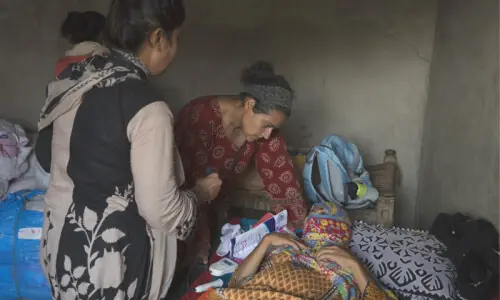
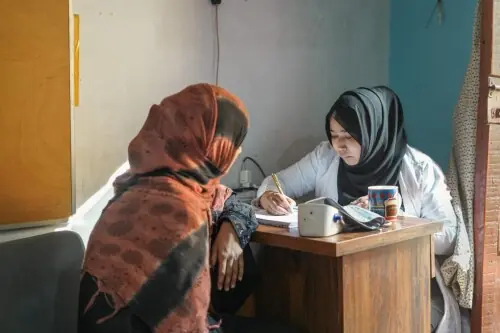
He noted that they were often the first and most trusted point of care in rural and underserved communities across Pakistan — providing skilled care, preventing complications, identifying risks early and ensuring timely referrals during pregnancy, childbirth and the postnatal period.
Yet the reality and state of midwives is worrying, he pointed out, noting that Pakistan accounts for approximately four per cent of global maternal deaths. Nearly 100 women die for every 100,000 live births, most from preventable causes, he added.
According to Shabaneh, the country faces a shortage of nearly 82,000 midwives, with only 2.2 midwives per 10,000 people — half the global average.
“These are not just statistics,” he said. “They represent lives lost, families changed forever and a gap that must and can be closed.”
When properly educated, supported and integrated into the health system, the representative added that midwives could deliver most essential maternal and newborn health services, reduce preventable deaths, improve health outcomes and strengthen primary health care.
He highlighted that investing in midwives was a “smart economic choice” as it reduced costly emergency care, lowered pressure on hospitals, improved workforce productivity, and strengthened families and communities, delivering long-term returns in both human and economic development.
However, he said, “midwives in Pakistan are too often expected to carry this responsibility without adequate support”. This support includes essential equipment, medicines, supervision, safe working conditions and fair compensation.
An advanced midwifery clinical skills training programme was launched in Tharparkar in March. According to a press release, the programme aims at enhancing maternal and neonatal healthcare services in one of the most underserved areas of the province.