• Centcom deploys destroyers, over 100 aircraft and 15,000 troops
• Trump frames operation as ‘humanitarian gesture’ to free trapped commercial fleets
• Iran warns it will attack any US or foreign military forces entering the strait
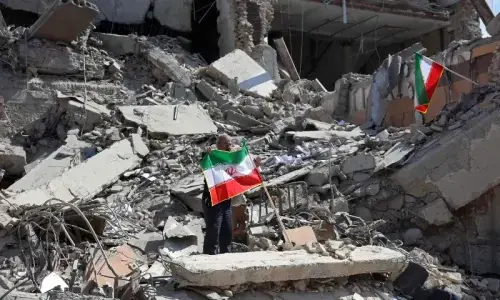
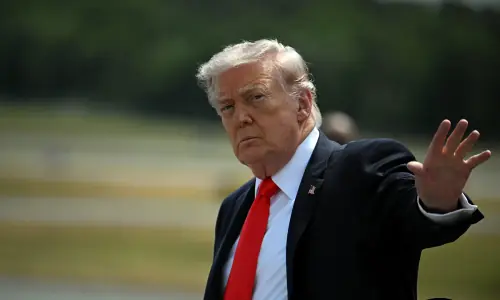
US PRESIDENT Donald Trump has launched a maritime military initiative “Project Freedom”, ordering US forces to ‘assist’ commercial vessels currently trapped within the Strait of Hormuz following an ongoing blockage by Iranian forces in swift response to the US-Israel war on Iran.
The move signifies an escalation in US involvement in the region, positioning thousands of troops and substantial naval hardware at the world’s most critical maritime chokepoint.
Trump framed the operation as a “rescue mission” for mariners caught in the crossfire of escalating tensions.
According to the US president, multiple nations worldwide requested American assistance to free their commercial fleets from what he characterised as humanitarian distress.
“The ship movement is merely meant to free up people, companies, and countries that have done absolutely nothing wrong — They are victims of circumstance,” Trump wrote.
He noted that vessels were experiencing critical supply shortages, with crews “running low on food, and everything else necessary for large-scale crews to stay on board in a healthy and sanitary manner.”
He added this was “a Humanitarian gesture on behalf of the United States, Middle Eastern Countries but, in particular, the Country of Iran” - as many of these vessels were “running low on food, and everything else necessary for largescale crews to stay on board in a healthy and sanitary manner”.
According to BBC News, Trump’s announcement appears mild compared to previous statements against Iran.
It even makes it sound like Iran is a party to the operation — the president went as far as to say “Project Freedom” was being undertaken on behalf of Iran, too.
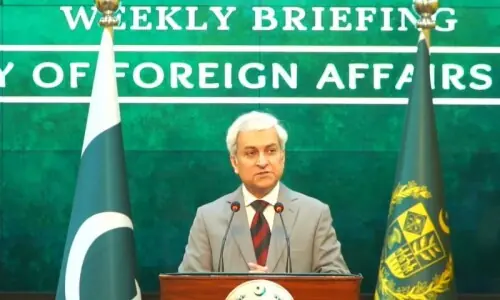
But that is not how Iran sees the operation. Tehran rejected the US characterisation and issued stark warnings against American intervention.
Maj Gen Ali Abdollahi, commander of Iran’s central command, declared that Iranian forces would attack “any foreign armed force” attempting to enter the Strait, singling out “the aggressive US army” specifically.
The military leadership emphasised that Iranian military authorities maintain complete control over the waterway and that all transit must receive coordination from Tehran “under all circumstances”, according to statements from Iran’s command structure.
Detailed troop allocations soon followed Trump’s online announcement. US Central Command confirmed via public records that a task force comprising guided-missile destroyers, more than 100 land-based and sea-based aircraft, multi-domain unmanned platform fleets, and 15,000 US service members would be operationalised.
While Centcom officials did not clarify exactly how destroyers and fighter aircraft would facilitate transit without potentially clashing with Iranian sensors and blockade units, the scale of deployment indicates a shift toward tactical superiority in the Gulf waters.
Initial reports on the implementation of guidance yielded contradictory statements on Monday. In an announcement later in the afternoon, US Central Command noted its guided-missile destroyers had successfully transited the strait to support ship manoeuvres.
“As a first step, 2 US-flagged merchant vessels have successfully transited through the Strait of Hormuz and are safely headed on their journey,” Centcom reported.
The agency stated that military elements are “actively assisting efforts to restore transit” but declined to list exact identifiers for the successfully rescued commercial vessels.
Meanwhile, the Iranian military claimed it had “prevented” the entry of American and Israeli warships into the strait, with a “firm warning”.
Centcom also denied Iranian military claims that two missiles had successfully struck an American destroyer.
However, non-combatants continue to remain at risk in the transition zone. Adnoc, the state-owned oil enterprise of the United Arab Emirates, reported that one of its tankers was targeted by two drones while moving through the corridor.
No injuries were reported in that engagement, but the ministry from Abu Dhabi refrained from clarifying if that vessel was moving as part of the formal ‘Project Freedom’ guidelines.
The UK Maritime Trade Operations Centre issued an updated bulletin classifying transit safety as “critical”, highlighting current mining dangers along established lanes.
Published in Dawn, May 5th, 2026