
Once again, this year’s mango season will be challenging for producers for a variety of reasons, including current marketing prospects, unending orchard diseases, the closure of the Afghanistan border and highly unstable conditions in the Middle East and Iran amidst the US-Israel and Iran war. This region remains a prospective market for Pakistani mangoes’ trade every season.
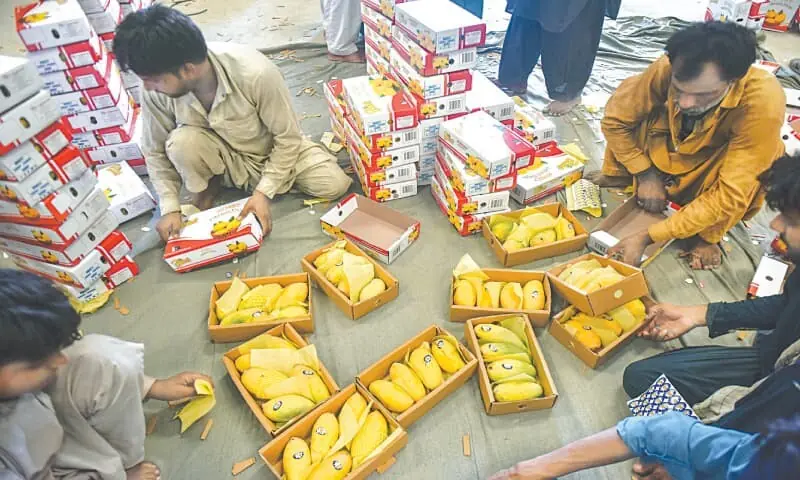
While the picking of some mango varieties, including Sindhri and Saroli, has begun in lower Sindh’s Mirpurkhas district, the full-fledged harvesting season is expected to take off by late May.
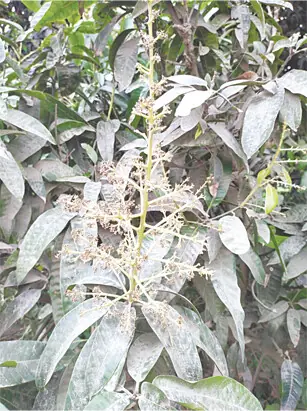
Unfortunately, malformation, hopper and thrips continue to affect mangoes. The pace of disease has increased over the last few years, taking a heavy economic toll on mango producers. Orchard owners, as well as contractors, have endeavoured to control them as best as possible to ensure that production is not affected at all.
The impact of the disease is generally more severe in lower Sindh districts such as Tando Allahyar. Reports from these areas also suggest that several orchard contractors have walked away from their agreements with orchard owners midway through the season.
With the conflict in Iran and the Afghan border closed, many producers are turning away from the king of fruits
This means they forfeit the payments already made at the time of signing the contract while avoiding any further payments to orchard owners. Typically, mango orchard owners avoid disclosing such contract details when contractors fail to honour commitments, as it can affect the orchard’s reputation and market profile.
While individual growers experience varying levels of loss, cumulatively, losses in the mango crop could be considerable. Those who were able to salvage their crop had to work laboriously to reap a better harvest.
“Such contractors left the orchards because they fear that diseases on the one hand and market conditions on the other will not work in their favour, and that keeping their contracts intact could result in heavy losses,” says contractor Rasool Bux.
He says he himself chose not to take on any orchard despite receiving offers because, apart from his own financial constraints, the closure of the Afghanistan border could significantly affect the mango market and prove economically damaging for him.
Agriculture Research officials have also visited Mirpurkhas and Tando Allahyar districts for their annual survey of mango farms ahead of the season, as per their yearly practice. In Mirpurkhas, the researchers’ team visited three mango farms where they found two per cent to 17pc malformation in orchards and 1pc to 3pc insect/pest in all varieties of mangoes.
In Tando Allahyar district, the team visited five mango farms, ranging from 50 to 1,200 acres, where anthracnose disease was mild to moderate, and hopper spread was moderate to severe. In the 1,200-acre farm, neither disease nor hopper prevalence was noticed, according to the team’s findings.
DG Agriculture Research Sindh, Dr Mazhar Keerio, informed that the pest didn’t affect farms which were managed by orchard owners themselves. He said that, usually, farmers don’t pay attention to researchers’ advice. All those orchard owners who followed their advice remained better off in terms of pest management and, as a result, achieved better production.
Karamullah Saand from Jhuddo started picking mangoes in his orchard in the last week of April and has dispatched consignments for Lahore and Peshawar. Until the first week of May, he had traded around 6,000 maunds of mangoes at Rs3,200 per 40kg. His area has early sowing and harvesting trends of all kharif and rabi crops.
Similar to last year, he confirmed that diseases such as hopper and thrips did not spare the crop. However, having learnt from last year’s experience, he began timely farm management in October-November, which helped reduce the intensity of the pest attacks.
“Thrips affects mangoes during the flowering stage in February, when the trees begin flowering, and that is the time it needs to be controlled, which I did,” he said.
Since large-scale harvesting of Sindhri is still some time away, orchard owners such as Mir Shah Mohammad Talpur are continuing management efforts through contractors across around 450 acres of orchards on the outskirts of Hyderabad, bordering Tando Allahyar.
“Sprays are being carried out by contractors’ workers to control malformation, and we supervised the exercise,” he said, adding that production appeared to be on the lower side, though still better than in 2025, which he described as a particularly poor year for output.
Mr Talpur, however, was concerned about market prospects in light of the US-Iran war. According to him, conditions in the Middle East — a regular and ideal market for Pakistani mangoes — remain unstable on multiple fronts, prompting contractors to walk away from agreements due to uncertainty surrounding exports and fears that the fruit may instead have to be absorbed by the domestic market.
“The Afghanistan border has remained closed since last year, even though it is a major destination for Pakistani mango exports. Similarly, there is uncertainty around the Iranian market. If Iran’s market remains open for us, then rates may move in our favour, which could benefit the trade,” he asserted. Sindh Abadgar Board president Mahmood Nawaz Shah pointed out that market conditions were quite unpredictable, while trade with Afghanistan had been suspended since last year. The challenges to mangoes were understandably many this season, he said.
Quite a few growers have individually reported production losses of up to 50pc. Reports of orchard contractors abandoning agreements midway due to pest-related issues were also true, as many had become sceptical about recovering their investments amid negative signals surrounding exports.
“Even if the ongoing war ends right now, the situation will still take time to return to normal. By then, however, the mango season will already be over,” he said.
Published in Dawn, The Business and Finance Weekly, May 11th, 2026