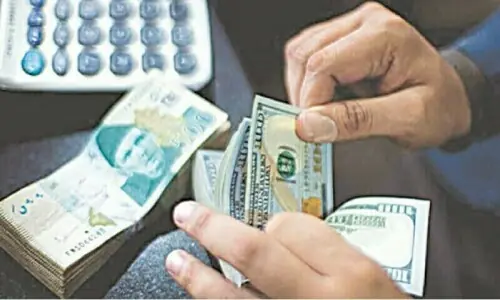
PRIME Minister Shehbaz Sharif is right to note that the US-Iran conflict has adversely affected Pakistan and other regional economies. It is no surprise that wars, energy disruptions and geopolitical uncertainty hurt fragile economies like Pakistan. However, his emphasis — often repeated by our economic managers — on ‘stabilisation’ raises a critical question. This is one term that is heard daily in official discourse.
Over the years, ‘stabilisation’ has perhaps become the most misunderstood and abused term in policy jargon. Broadly speaking, stabilisation for the sake of stabilisation is not an economic strategy; it is merely survival management to temporarily prevent a balance-of-payments collapse, steady the exchange rate or improve headline macroeconomic indicators. It does not itself create sustainable growth. In fact, prolonged austerity often produces the opposite outcomes. Pakistan’s recent experience demonstrates this.
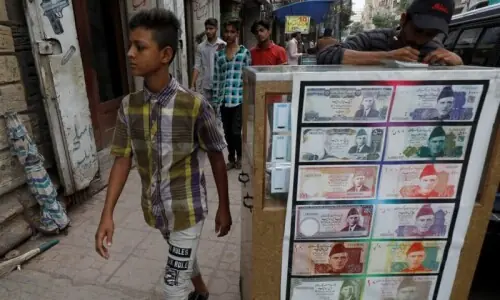
Under the banner of stabilisation, the economy has slowed sharply, industrial activity has weakened, purchasing power has collapsed and businesses have either downsized or shut operations. Job creation has stalled while poverty and economic insecurity have risen in the last three years of stabilisation. Foreign investors continue to exit the market, discouraged by policy unpredictability, weak demand and declining profitability. Domestic capital increasingly seeks safer destinations abroad.
This is not real stabilisation. It is merely postponing another crisis. True economic stabilisation only succeeds when accompanied by deep structural reforms that address the economy’s underlying weaknesses and focus on expanding productivity, reforming the tax structure, improving governance, boosting institutions, investing in human capital, modernising industry and creating export competitiveness.
Countries that successfully stabilised their economies did not do so through endless compression of demand and suppression of growth. They used periods of adjustment to restructure their economies, enhance competitiveness and prepare for expansion. Pakistan, by contrast, repeatedly uses stabilisation to delay difficult reforms while relying on consumption cuts and import controls to manage recurring crises.
The result is an economy trapped in stagnation. Every time the country attempts to return to growth, the same structural weaknesses — low exports, poor productivity, heavy taxation and external dependence — re-emerge, triggering another balance-of-payments crisis cycle. Had the economy truly stabilised and returned on the path of growth, the impact of the Middle East war and ensuing energy price shocks would not have been so severe.
The government must move beyond promising more stabilisation and celebrating it as an achievement in itself. Economic management cannot be evaluated solely by reserve levels or forced fiscal discipline. The real test is whether policies are creating jobs, attracting investment, raising incomes and improving long-term productive capacity. Without that transformation, stabilisation will remain little more than a pause before the next economic emergency.
Published in Dawn, May 16th, 2026